



Aston Martin Valhalla Review: The Supercar Benchmark for the 2020s
The arrival of the 2026 Aston Martin Valhalla represents a watershed moment in automotive engineering and performance. Forged in the crucible of Formula 1 technology and refined for the road, this vehicle transcends the label of “supercar,” carving its own niche in the hypercar echelon. It is a celebration of British engineering prowess, offering a thrilling driving experience that is at once exhilarating and remarkably user-friendly.
A Long-Awaited Revelation
The journey of the Valhalla began in 2019 as the AM-RB 003 prototype, a visionary concept born from Aston Martin’s partnership with the Red Bull Racing F1 team. The name itself, derived from Norse mythology, evokes a sense of destiny and glory. Yet, much like a hero’s journey, the path to production was not without its trials and transformations. The split from Red Bull Racing following the 2020 season and the strategic shift under Lawrence Stroll’s leadership necessitated a reinvention of the Valhalla’s identity. The powertrain, initially planned as an in-house V-6 hybrid, evolved to leverage a hybridized V-8 engine.
When I first encountered a mockup of the Valhalla at the Pebble Beach Concours in 2022, the anticipated power output had already climbed to 1,012 hp. The final production specifications, however, have exceeded even those ambitious projections. This is not merely an iterative update; it is a comprehensive overhaul that pushes the boundaries of what is possible in a mid-engine road car. The production Valhalla is powered by a bespoke 4.0-liter V-8 engine with a flat-plane crankshaft, boasting 817 hp. This is complemented by three Aston-designed radial-flux permanent-magnet motors—one on the front axle and a third integrated into the new eight-speed dual-clutch transmission—delivering a combined total of 1,064 hp and 811 lb-ft of torque.
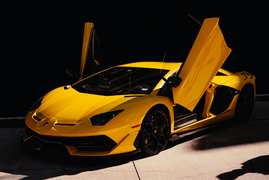 The Valhalla is also a plug-in hybrid, capable of 8.7 miles of EV-only range at speeds up to 80 mph. This hybrid system utilizes a 560-cell battery pack, immersed in dielectric oil, ensuring rapid charge and discharge cycles that are essential for track performance. It is this marriage of brute force and technological finesse that defines the Valhalla’s character.
The Hypercar Divide
The automotive world is rapidly bifurcating into the realms of supercars and hypercars. While Aston Martin has positioned the Valhalla as its first mid-engine supercar, its performance metrics place it firmly in the upper echelons of hypercars. The Valkyrie, with its staggering price tag and limited production run, casts a long shadow, forcing marketing teams to delineate the two categories carefully. However, for the discerning enthusiast, the distinctions blur. When viewed against the backdrop of the automotive landscape in 2025, the Valhalla stands as a triumph of engineering and design, challenging the notion of what constitutes a \”super\” car.
In the 1990s, the McLaren F1 redefined automotive performance, but in the 2020s, the bar has been raised to unprecedented heights. The automotive market is now flooded with million-dollar machines that produce power outputs previously reserved for Formula 1 cars. From the Ferrari F80 and the 849 Testarossa to the Czinger 21C VMax, the performance landscape is more crowded and competitive than ever. The emergence of hybrid powerhouses like the Corvette ZR1X further blurs the lines, showcasing the dramatic evolution of automotive technology.
Comparison: A Double-Edged Sword
In an era where the pursuit of peak performance has become a defining characteristic of modern hypercars, \”comparison is the thief of joy.\” The 2026 Aston Martin Valhalla is a testament to this maxim. With so many incredible machines entering the market, orchestrating a direct comparison test has become nearly impossible. Ferrari, in particular, has maintained a long-standing aversion to providing cars for head-to-head comparisons, a decision that has frustrated automotive enthusiasts and critics alike.
Despite these challenges, the Valhalla’s true value lies in its ability to transcend direct comparison. Its performance on the road and track is the true benchmark, offering an experience that must be felt to be believed. While the Valkyrie represents the absolute pinnacle of what Aston Martin can achieve, the Valhalla offers a more accessible, yet equally exhilarating, taste of hypercar performance.
Driving the Valhalla: A Road-Car Experience
When I first experienced the Aston Martin Valhalla at the Pebble Beach Concours in 2022, the driving position was immediately striking. The F1-inspired reclined and elevated-leg seating position, coupled with the 560-cell battery pack consuming the frunk space, places the driver in a cockpit that feels both race-ready and road-friendly. The driving experience is immediately engaging, with a natural feel that belies the car’s staggering power output.
The Valhalla’s suspension system, a blend of Bilstein DTX active dampers and a five-link rear layout, provides a remarkably comfortable ride for a mid-engine supercar. The Spanish road route I drove was a challenging mix of smooth tarmac and uneven surfaces, yet the Valhalla handled it with grace and composure. The Race mode offers a stiffer ride, but even that remains tractable on a well-maintained road.
The Valhalla is also a plug-in hybrid, capable of 8.7 miles of EV-only range at speeds up to 80 mph. This hybrid system utilizes a 560-cell battery pack, immersed in dielectric oil, ensuring rapid charge and discharge cycles that are essential for track performance. It is this marriage of brute force and technological finesse that defines the Valhalla’s character.
The Hypercar Divide
The automotive world is rapidly bifurcating into the realms of supercars and hypercars. While Aston Martin has positioned the Valhalla as its first mid-engine supercar, its performance metrics place it firmly in the upper echelons of hypercars. The Valkyrie, with its staggering price tag and limited production run, casts a long shadow, forcing marketing teams to delineate the two categories carefully. However, for the discerning enthusiast, the distinctions blur. When viewed against the backdrop of the automotive landscape in 2025, the Valhalla stands as a triumph of engineering and design, challenging the notion of what constitutes a \”super\” car.
In the 1990s, the McLaren F1 redefined automotive performance, but in the 2020s, the bar has been raised to unprecedented heights. The automotive market is now flooded with million-dollar machines that produce power outputs previously reserved for Formula 1 cars. From the Ferrari F80 and the 849 Testarossa to the Czinger 21C VMax, the performance landscape is more crowded and competitive than ever. The emergence of hybrid powerhouses like the Corvette ZR1X further blurs the lines, showcasing the dramatic evolution of automotive technology.
Comparison: A Double-Edged Sword
In an era where the pursuit of peak performance has become a defining characteristic of modern hypercars, \”comparison is the thief of joy.\” The 2026 Aston Martin Valhalla is a testament to this maxim. With so many incredible machines entering the market, orchestrating a direct comparison test has become nearly impossible. Ferrari, in particular, has maintained a long-standing aversion to providing cars for head-to-head comparisons, a decision that has frustrated automotive enthusiasts and critics alike.
Despite these challenges, the Valhalla’s true value lies in its ability to transcend direct comparison. Its performance on the road and track is the true benchmark, offering an experience that must be felt to be believed. While the Valkyrie represents the absolute pinnacle of what Aston Martin can achieve, the Valhalla offers a more accessible, yet equally exhilarating, taste of hypercar performance.
Driving the Valhalla: A Road-Car Experience
When I first experienced the Aston Martin Valhalla at the Pebble Beach Concours in 2022, the driving position was immediately striking. The F1-inspired reclined and elevated-leg seating position, coupled with the 560-cell battery pack consuming the frunk space, places the driver in a cockpit that feels both race-ready and road-friendly. The driving experience is immediately engaging, with a natural feel that belies the car’s staggering power output.
The Valhalla’s suspension system, a blend of Bilstein DTX active dampers and a five-link rear layout, provides a remarkably comfortable ride for a mid-engine supercar. The Spanish road route I drove was a challenging mix of smooth tarmac and uneven surfaces, yet the Valhalla handled it with grace and composure. The Race mode offers a stiffer ride, but even that remains tractable on a well-maintained road.
 The steering is precise and intuitive, offering a perfect balance of weight and feedback. The steering wheel, though somewhat unconventional with its molded creases, provides a secure grip and responsive control. But it is the powertrain that truly defines the Valhalla experience. The 0-62 mph sprint is achieved in just 2.5 seconds, with the engine’s flat-plane-crank V-8 delivering 90% of its peak torque from 2,500 rpm to 6,700 rpm. This linear power delivery ensures that the acceleration never lets up, propelling the driver forward with relentless force.
However, the Valhalla is not without its quirks. The redline is set at 7,000 rpm, and the engine note is a complex mix of exhaust, induction, and electric motor whines. While loud enough to be satisfying, it doesn’t quite reach the symphonic levels of other Italian exotics. Still, for an engine that produces over 1,000 horsepower, the noise is a fitting complement to the raw performance.
Valhalla on the Track: A Masterclass in Engineering
The real test of the Valhalla’s capabilities comes on the racetrack, where its hybrid powertrain and aerodynamics truly shine. The Circuito de Navarra provided the perfect stage for exploring the car’s limits, and the Valhalla delivered a performance that was both awe-inspiring and reassuring.
The Race mode is essential for optimal track performance, adjusting the electric motor output to prevent battery depletion. The 15% recharge reserve ensures that power remains consistent, even during aggressive laps. This thoughtful engineering allows the driver to focus on the driving experience without worrying about running out of battery power. The Valhalla feels benign and controllable at speed, even for a driver with limited track experience. Its stable platform inspires confidence, making it easy to push harder and harder without fear of spinning out.
The Valhalla’s braking system, a combination of conventional and regenerative braking, provides consistent stopping power under hard braking. The brake-by-wire system offers a firm pedal feel, though some may prefer the nuances of traditional hydraulic brakes. Aerodynamically, the car features a deployable rear wing and an F1-style underbody front wing that adjust based on speed and dynamic conditions. The rear wing serves as an air brake, and when deployed, it blocks the rearview camera—a small inconvenience that highlights the car’s single-minded focus on performance.
While the Valhalla is designed to be a driver’s car, it is also a testament to the engineering excellence that Aston Martin has achieved. The car’s ability to provide consistent downforce without altering the aerodynamic center of pressure is a masterclass in engineering. The Valhalla produces a staggering 935 pounds of downforce at 124 mph, and 1,345 pounds at 149 mph. This consistent downforce ensures stable handling at high speeds, providing the driver with the confidence to push the car to its limits.
A New Benchmark for Performance
The 2026 Aston Martin Valhalla is a statement piece. It represents a new benchmark for performance, technology, and design in the supercar market. For those seeking the ultimate driving experience, the Valhalla delivers in spades. It is a car that pushes the boundaries of what is possible, offering a thrilling and rewarding experience on the road and track.
Whether you are a seasoned enthusiast or a newcomer to the world of supercars, the Valhalla will leave you breathless. Its ability to blend raw power with user-friendly handling, advanced technology with natural feel, and track-ready performance with road-car comfort is a rare achievement in the automotive world. As chief engineer Andrew Kay acknowledged, it is nearly impossible to cover everything that makes the Valhalla so special in a single review. But for those who have experienced it, the answer to the question \”How was it?\” is simple: Exactly as you would expect it to be, and yet, something you wouldn’t have believed possible just a few short years ago.
The steering is precise and intuitive, offering a perfect balance of weight and feedback. The steering wheel, though somewhat unconventional with its molded creases, provides a secure grip and responsive control. But it is the powertrain that truly defines the Valhalla experience. The 0-62 mph sprint is achieved in just 2.5 seconds, with the engine’s flat-plane-crank V-8 delivering 90% of its peak torque from 2,500 rpm to 6,700 rpm. This linear power delivery ensures that the acceleration never lets up, propelling the driver forward with relentless force.
However, the Valhalla is not without its quirks. The redline is set at 7,000 rpm, and the engine note is a complex mix of exhaust, induction, and electric motor whines. While loud enough to be satisfying, it doesn’t quite reach the symphonic levels of other Italian exotics. Still, for an engine that produces over 1,000 horsepower, the noise is a fitting complement to the raw performance.
Valhalla on the Track: A Masterclass in Engineering
The real test of the Valhalla’s capabilities comes on the racetrack, where its hybrid powertrain and aerodynamics truly shine. The Circuito de Navarra provided the perfect stage for exploring the car’s limits, and the Valhalla delivered a performance that was both awe-inspiring and reassuring.
The Race mode is essential for optimal track performance, adjusting the electric motor output to prevent battery depletion. The 15% recharge reserve ensures that power remains consistent, even during aggressive laps. This thoughtful engineering allows the driver to focus on the driving experience without worrying about running out of battery power. The Valhalla feels benign and controllable at speed, even for a driver with limited track experience. Its stable platform inspires confidence, making it easy to push harder and harder without fear of spinning out.
The Valhalla’s braking system, a combination of conventional and regenerative braking, provides consistent stopping power under hard braking. The brake-by-wire system offers a firm pedal feel, though some may prefer the nuances of traditional hydraulic brakes. Aerodynamically, the car features a deployable rear wing and an F1-style underbody front wing that adjust based on speed and dynamic conditions. The rear wing serves as an air brake, and when deployed, it blocks the rearview camera—a small inconvenience that highlights the car’s single-minded focus on performance.
While the Valhalla is designed to be a driver’s car, it is also a testament to the engineering excellence that Aston Martin has achieved. The car’s ability to provide consistent downforce without altering the aerodynamic center of pressure is a masterclass in engineering. The Valhalla produces a staggering 935 pounds of downforce at 124 mph, and 1,345 pounds at 149 mph. This consistent downforce ensures stable handling at high speeds, providing the driver with the confidence to push the car to its limits.
A New Benchmark for Performance
The 2026 Aston Martin Valhalla is a statement piece. It represents a new benchmark for performance, technology, and design in the supercar market. For those seeking the ultimate driving experience, the Valhalla delivers in spades. It is a car that pushes the boundaries of what is possible, offering a thrilling and rewarding experience on the road and track.
Whether you are a seasoned enthusiast or a newcomer to the world of supercars, the Valhalla will leave you breathless. Its ability to blend raw power with user-friendly handling, advanced technology with natural feel, and track-ready performance with road-car comfort is a rare achievement in the automotive world. As chief engineer Andrew Kay acknowledged, it is nearly impossible to cover everything that makes the Valhalla so special in a single review. But for those who have experienced it, the answer to the question \”How was it?\” is simple: Exactly as you would expect it to be, and yet, something you wouldn’t have believed possible just a few short years ago.
 Are you ready to experience the future of performance? Contact your local Aston Martin dealer today to schedule your test drive and discover what makes the Valhalla a true icon of the 2020s.