


Aston Martin Valhalla Review: The Dawn of the Drama-Free Supercar?
“So, how was it?!”
That’s the inevitable question that greets anyone who’s just driven the Aston Martin Valhalla. And frankly, it’s a fair one. For a car that retails for upwards of $1.1 million and churns out 1,064 horsepower, the traditional review format almost feels… inadequate. In the age of the hypercar, where $300,000 sports coupes can outrun yesteryear’s supercars, the $1 million benchmark no longer feels like the pinnacle of performance—it feels like the price of entry.
When I drove the production-spec 2026 Aston Martin Valhalla, the answer I gave friends was a rather anticlimactic, “Exactly as you’d expect it to be.” But that response only makes sense to those who have experienced the state of the automotive art here in the 2020s. To the casual observer, it may sound dismissive. But for those of us immersed in the supercar world, it was the highest possible praise.
A Long Road to the Final Product
It’s funny to think back to 2019 at the Geneva Motor Show. Aston Martin unveiled what was then known as the AM-RB 003. That name, born from a partnership with Red Bull Racing, quickly became less relevant after Aston rebranded its F1 team and parted ways with Red Bull. But the name wasn’t the only thing that changed. The automotive landscape was shifting, and so was Aston Martin.
Internal chaos and a shifting market necessitated a pivot in the Valhalla’s development. Initially slated to feature an in-house V-6, the Valhalla evolved into a hybridized Mercedes-AMG GT Black Series-derived V-8. To be fair, Aston didn’t just borrow the V-8; they enhanced it with larger turbos, a bespoke inlet manifold, reinforced pistons, and different camshafts. The result? Nearly 100 additional horsepower and 50 lb-ft of torque.
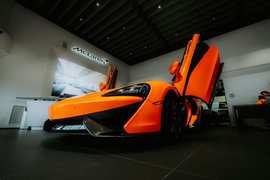 When I first saw a mockup of the Valhalla at Pebble Beach in 2022, I was captivated. The F1-style reclined seating and low-slung cockpit were immediately apparent. At that point, Aston projected the V-8 hybrid powertrain to produce 1,012 hp, but they stressed that the car was still very much in development. Yet, even back then, I knew I had to drive it.
Worth the Wait
Based on Aston Martin’s development timeline, I didn’t anticipate another three and a half years passing before getting behind the wheel. But the final product exceeded all expectations.
The Valhalla’s powertrain is a masterpiece of engineering. The 4.0-liter twin-turbo V-8, featuring a flat-plane crank and dry-sump lubrication, generates 817 hp. This is supplemented by three electric motors—two on the front axle and one integrated into Aston’s first eight-speed dual-clutch transmission. The total output? 1,064 hp and 811 lb-ft of torque.
To support this power, the Valhalla utilizes a 560-cell battery pack. While Aston engineers source the battery cells from AMG, they’ve designed an advanced thermal management system that immerses the cells in dielectric oil. As chief engineer Andrew Kay explained, “We’re able to push energy into the battery and cycle it out very quickly [meaning recharge and deployment of electrical energy]. This is very good for track use, in particular.”
Unlike the original concept and its even more extreme stablemate, the Valkyrie, the production Valhalla is a plug-in hybrid. It can drive on electric power alone for up to 8.7 miles and reach a top speed of 80 mph in EV mode. For a deeper dive into the technical specifications, check out our previous rundown here.
A Shift in the Automotive Landscape
Let’s address the “supercar” vs. “hypercar” debate. Aston Martin insists the Valhalla is their first-ever mid-engine supercar. But surely, it’s a hypercar?
The only reason it isn’t called a hypercar is the existence of the Valkyrie. Apparently, “first-ever” claims are tricky when you’ve already launched something more extreme. In marketing terms, “super” is the safer prefix.
But let’s be honest—the Valkyrie is barely a street car. With a starting price north of $3 million and a production run of only 285 units, the Valhalla’s $1 million price tag and 999-unit inventory start to look almost reasonable by comparison.
Of course, that sounds absurd in the real world. But it speaks to the incredible evolution of high-performance automobiles. Millennials, Gen Z, and Gen Alpha have grown up seeing million-dollar cars on social media every other week. They’re accustomed to unheard-of power figures, blistering acceleration times, and endless lists of tech, features, and options that are longer than the Nürburgring circuit.
For those of us who aren’t Gen Z, we remember the shockwave created by the $800,000 McLaren F1 in 1993-94. We remember the Bugatti Veyron, the first car to breach the 1,000-hp barrier and the $1 million price point just 20 years ago.
Today? Since I first sat in the Valhalla prototype, we’ve driven the Porsche 911 GT3 RS with half the horsepower but so much racing-derived hardware that it requires pro-driver skills to max out on a track. Its suitability as a road car is debatable, given the suspension setup.
When I first saw a mockup of the Valhalla at Pebble Beach in 2022, I was captivated. The F1-style reclined seating and low-slung cockpit were immediately apparent. At that point, Aston projected the V-8 hybrid powertrain to produce 1,012 hp, but they stressed that the car was still very much in development. Yet, even back then, I knew I had to drive it.
Worth the Wait
Based on Aston Martin’s development timeline, I didn’t anticipate another three and a half years passing before getting behind the wheel. But the final product exceeded all expectations.
The Valhalla’s powertrain is a masterpiece of engineering. The 4.0-liter twin-turbo V-8, featuring a flat-plane crank and dry-sump lubrication, generates 817 hp. This is supplemented by three electric motors—two on the front axle and one integrated into Aston’s first eight-speed dual-clutch transmission. The total output? 1,064 hp and 811 lb-ft of torque.
To support this power, the Valhalla utilizes a 560-cell battery pack. While Aston engineers source the battery cells from AMG, they’ve designed an advanced thermal management system that immerses the cells in dielectric oil. As chief engineer Andrew Kay explained, “We’re able to push energy into the battery and cycle it out very quickly [meaning recharge and deployment of electrical energy]. This is very good for track use, in particular.”
Unlike the original concept and its even more extreme stablemate, the Valkyrie, the production Valhalla is a plug-in hybrid. It can drive on electric power alone for up to 8.7 miles and reach a top speed of 80 mph in EV mode. For a deeper dive into the technical specifications, check out our previous rundown here.
A Shift in the Automotive Landscape
Let’s address the “supercar” vs. “hypercar” debate. Aston Martin insists the Valhalla is their first-ever mid-engine supercar. But surely, it’s a hypercar?
The only reason it isn’t called a hypercar is the existence of the Valkyrie. Apparently, “first-ever” claims are tricky when you’ve already launched something more extreme. In marketing terms, “super” is the safer prefix.
But let’s be honest—the Valkyrie is barely a street car. With a starting price north of $3 million and a production run of only 285 units, the Valhalla’s $1 million price tag and 999-unit inventory start to look almost reasonable by comparison.
Of course, that sounds absurd in the real world. But it speaks to the incredible evolution of high-performance automobiles. Millennials, Gen Z, and Gen Alpha have grown up seeing million-dollar cars on social media every other week. They’re accustomed to unheard-of power figures, blistering acceleration times, and endless lists of tech, features, and options that are longer than the Nürburgring circuit.
For those of us who aren’t Gen Z, we remember the shockwave created by the $800,000 McLaren F1 in 1993-94. We remember the Bugatti Veyron, the first car to breach the 1,000-hp barrier and the $1 million price point just 20 years ago.
Today? Since I first sat in the Valhalla prototype, we’ve driven the Porsche 911 GT3 RS with half the horsepower but so much racing-derived hardware that it requires pro-driver skills to max out on a track. Its suitability as a road car is debatable, given the suspension setup.
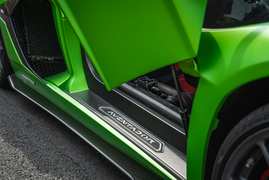 Stepping up in price and technology, we’ve recently tested the Ferrari F80, the 849 Testarossa, the Czinger 21C VMax, and even the “standard but blisteringly fast” Porsche 911 Turbo S. And who could forget the hybrid Corvette ZR1X with its 1,250 hp—something nobody saw coming when the Valhalla was a mere spark in Aston Martin’s and Adrian Newey’s eyes.
The Power of the Drive
With such an overwhelming array of incredible machines available today, Teddy Roosevelt’s quote—”comparison is the thief of joy”—has never been more relevant in the world of supercars and hypercars. It also happens to be relevant here because the odds of staging a proper comparison test with the vehicles listed above—aside from maybe the ZR1X—are virtually zero. Ferrari, in particular, is notorious for hoarding their best cars and rarely sharing them for head-to-head showdowns. (Shame on you, Ferrari.)
However, given how high the dynamic limits of these cars are, it’s far more rewarding to drive something like the Valhalla on its own merits and appreciate the experience it provides.
Don’t get me wrong—the overall experience is critical. It’s no longer good enough for a car to be thrilling on the road but handle like an understeering pig on the track, or vice versa. Aston’s Angus MacKenzie sampled a “prototype” that was essentially the finished article (save for some transmission calibration) a few months back and declared it a winner on all fronts.
On the Road
Unlike Angus, who only had access to the Stowe circuit at Silverstone, Aston granted me a 50-minute road loop. One might expect a car that looks like a Le Mans Hypercar with its aggressive aerodynamics and low stance to be a compromise on the road. But that’s not the case.
The only real sacrifice is luggage space. There are some small door cubbies, but no frunk. That space is occupied by three high-temperature radiators, the electric motors, and a racing-style, pushrod-actuated inboard suspension system.
This suspension layout is a direct consequence of the F1-inspired driving position. You sit so low that a conventional suspension would have raised the bodywork too high for an unobstructed view of the road ahead. There’s no backrest angle adjustment, so you must adapt to the seating position. And because the seats are bolted directly to the carbon-fiber monocoque, there’s no power seat adjustment. To move forward or back, you pull a leather strap between your legs and push to adjust the position.
It takes a few miles to get used to, but it’s not as extreme as it sounds. The Valhalla-specific Bilstein DTX active damper system and the overall suspension (a five-link rear end) make for an incredibly comfortable ride for a hypercar. The roads in Spain were far from perfect, but the difference between Sport and Sport+ settings wasn’t vast—a trait we’ve praised on other new Astons like the Vantage. Race mode introduces a harsher ride, which you’d likely tire of in daily driving, but it’s perfectly livable on a fast, sweeping road when it’s time to play.
The square steering wheel feels good, but the molded crease running vertically up the grip might not be comfortable for everyone. The steering feel is intuitive, with a pleasing weight that remains consistent across different drive modes.
Unleashing the Power
Stepping up in price and technology, we’ve recently tested the Ferrari F80, the 849 Testarossa, the Czinger 21C VMax, and even the “standard but blisteringly fast” Porsche 911 Turbo S. And who could forget the hybrid Corvette ZR1X with its 1,250 hp—something nobody saw coming when the Valhalla was a mere spark in Aston Martin’s and Adrian Newey’s eyes.
The Power of the Drive
With such an overwhelming array of incredible machines available today, Teddy Roosevelt’s quote—”comparison is the thief of joy”—has never been more relevant in the world of supercars and hypercars. It also happens to be relevant here because the odds of staging a proper comparison test with the vehicles listed above—aside from maybe the ZR1X—are virtually zero. Ferrari, in particular, is notorious for hoarding their best cars and rarely sharing them for head-to-head showdowns. (Shame on you, Ferrari.)
However, given how high the dynamic limits of these cars are, it’s far more rewarding to drive something like the Valhalla on its own merits and appreciate the experience it provides.
Don’t get me wrong—the overall experience is critical. It’s no longer good enough for a car to be thrilling on the road but handle like an understeering pig on the track, or vice versa. Aston’s Angus MacKenzie sampled a “prototype” that was essentially the finished article (save for some transmission calibration) a few months back and declared it a winner on all fronts.
On the Road
Unlike Angus, who only had access to the Stowe circuit at Silverstone, Aston granted me a 50-minute road loop. One might expect a car that looks like a Le Mans Hypercar with its aggressive aerodynamics and low stance to be a compromise on the road. But that’s not the case.
The only real sacrifice is luggage space. There are some small door cubbies, but no frunk. That space is occupied by three high-temperature radiators, the electric motors, and a racing-style, pushrod-actuated inboard suspension system.
This suspension layout is a direct consequence of the F1-inspired driving position. You sit so low that a conventional suspension would have raised the bodywork too high for an unobstructed view of the road ahead. There’s no backrest angle adjustment, so you must adapt to the seating position. And because the seats are bolted directly to the carbon-fiber monocoque, there’s no power seat adjustment. To move forward or back, you pull a leather strap between your legs and push to adjust the position.
It takes a few miles to get used to, but it’s not as extreme as it sounds. The Valhalla-specific Bilstein DTX active damper system and the overall suspension (a five-link rear end) make for an incredibly comfortable ride for a hypercar. The roads in Spain were far from perfect, but the difference between Sport and Sport+ settings wasn’t vast—a trait we’ve praised on other new Astons like the Vantage. Race mode introduces a harsher ride, which you’d likely tire of in daily driving, but it’s perfectly livable on a fast, sweeping road when it’s time to play.
The square steering wheel feels good, but the molded crease running vertically up the grip might not be comfortable for everyone. The steering feel is intuitive, with a pleasing weight that remains consistent across different drive modes.
Unleashing the Power
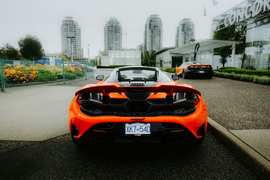 When I found a long, empty stretch of country road, I pulled over, applied the brakes, and launched the Valhalla. Aside from a slight rear-end wiggle as the tires hooked up, it was simply… goooooo. Aston claims a 0-