


The Icons: 5 Porsche 911 Models That Defined Decades of Engineering
For the last 40 years, I’ve had the privilege of testing some of the automotive world’s most iconic machinery. Among them, the Porsche 911 stands in a category of its own. Since my first drive in a white 3.0-liter Carrera with Fuchs alloys, the 911 has evolved dramatically, yet it remains one of the few new cars I would still purchase with my own money.
Driving the original 911 for the first time was a humbling experience. I remember comparing it to a contemporary 944 Turbo, which was faster and more potent in everyday driving. But the 911 wasn’t about pure numbers. It was an imperfect machine that demanded respect, and that’s what drew me in. As I wrote back then, “The 944 Turbo is so competent, it can make a bad driver look good. Its soaring, searing performance is superbly counterbalanced by a chassis of astounding ability. But the 911 tugged at the emotions. The gloriously imperfect 911 Carrera is a sports car of a different age and reflects different values. It’s not tailored to meet the needs of most drivers. It demands understanding and respect. That’s why I’d take it home.”
Over four decades, Porsche has honed the 911, transforming it into a sophisticated sports car that remains thrilling and engaging. From the raw power of the original Turbo to the precision engineering of the modern GT3 RS, here are the five 911 models that stand out in my memory as the most remarkable.
The Original 911 Turbo (930): 50 Years of Raw Power
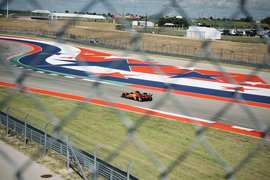 When veteran road-test journalists spoke of the original Porsche 911 Turbo, they used words like “respect” and “widowmaker.” They described a car that punished sloppiness and required quick hands. After 35 years, I finally got behind the wheel of one of the first 30 production Turbos ever built.
Driving the 930 today is a revelation. The 3.0-liter flat-six is surprisingly docile at low RPMs. Around 2,000 rpm, it idles contentedly, making highway cruising comfortable. However, once the turbo hits 3,500 rpm, there’s a distinct surge of torque. It’s not the brute force I expected, but the car demands attention. To keep the power flowing, you need to keep the engine spinning above 4,000 rpm.
Yes, the turbo lag is noticeable by modern standards, but it is manageable. This car feels remarkably quick even today. First gear hits 50 mph, second pushes past 90 mph, and third reaches almost 130 mph. That means you can cover most winding roads using only second and third gear. Despite its modest 256 horsepower, the 930 weighs only 2,513 pounds, making it surprisingly nimble through corners. It feels raw, analog, and utterly intoxicating—a true icon of the ’70s sports car era.
The 993-Generation 911: Porsche’s Engineering Masterpiece
For purists, the 993 is the last of the true 911s. It’s the car that combines the raw sensation of an air-cooled flat-six with cutting-edge engineering. Back in 1994, the 993 was a preview of the future, a car that challenged the laws of physics. While it still had the 911’s signature nose-heavy feel and slightly twitchy rear end on rough turns, the 993 felt more coherent than any of its predecessors.
The engineering innovations in the 993 are staggering. Ulrich Bez, who later headed Aston Martin, spearheaded a new multilink rear suspension. This setup replaced the semi-trailing arms with a design that offered precise toe-out on corner entry and progressive toe-in as lateral loads increased. It significantly reduced the camber change that had plagued 911s since the 1960s.
Combined with a new six-speed manual and quicker steering, the 993 felt light, responsive, and agile. The engine was more powerful, boasting 268 hp thanks to internal refinements and Bosch Motronic 2.0 management. The exterior, redesigned by Harm Lagaay, looked sleeker and more proportioned than the 964 it replaced. The interior was cleaner and more refined. The 993 was a faster, more forgiving, and arguably more desirable 911. It was a seamless integration of classic character and modern technology.
The 996-Generation 911: The Game Changer
When Porsche introduced the water-cooled flat-six in the 996-series 911, it was heresy to many aficionados. It was as if Bob Dylan had abandoned his acoustic guitar for an electric one at the 1965 Newport Folk Festival. But for me, the 996 was a hero car. It was the first clean-sheet redesign of the 911 in 34 years and, most importantly, it saved Porsche from financial ruin.
Porsche’s strategy was audacious. The 996 was engineered under Horst Marchart and shared 38% of its components with the all-new, less expensive mid-engine roadster, the Boxster. Design boss Harm Lagaay later quipped, “We did two cars for the price of one-and-a-half.”
When veteran road-test journalists spoke of the original Porsche 911 Turbo, they used words like “respect” and “widowmaker.” They described a car that punished sloppiness and required quick hands. After 35 years, I finally got behind the wheel of one of the first 30 production Turbos ever built.
Driving the 930 today is a revelation. The 3.0-liter flat-six is surprisingly docile at low RPMs. Around 2,000 rpm, it idles contentedly, making highway cruising comfortable. However, once the turbo hits 3,500 rpm, there’s a distinct surge of torque. It’s not the brute force I expected, but the car demands attention. To keep the power flowing, you need to keep the engine spinning above 4,000 rpm.
Yes, the turbo lag is noticeable by modern standards, but it is manageable. This car feels remarkably quick even today. First gear hits 50 mph, second pushes past 90 mph, and third reaches almost 130 mph. That means you can cover most winding roads using only second and third gear. Despite its modest 256 horsepower, the 930 weighs only 2,513 pounds, making it surprisingly nimble through corners. It feels raw, analog, and utterly intoxicating—a true icon of the ’70s sports car era.
The 993-Generation 911: Porsche’s Engineering Masterpiece
For purists, the 993 is the last of the true 911s. It’s the car that combines the raw sensation of an air-cooled flat-six with cutting-edge engineering. Back in 1994, the 993 was a preview of the future, a car that challenged the laws of physics. While it still had the 911’s signature nose-heavy feel and slightly twitchy rear end on rough turns, the 993 felt more coherent than any of its predecessors.
The engineering innovations in the 993 are staggering. Ulrich Bez, who later headed Aston Martin, spearheaded a new multilink rear suspension. This setup replaced the semi-trailing arms with a design that offered precise toe-out on corner entry and progressive toe-in as lateral loads increased. It significantly reduced the camber change that had plagued 911s since the 1960s.
Combined with a new six-speed manual and quicker steering, the 993 felt light, responsive, and agile. The engine was more powerful, boasting 268 hp thanks to internal refinements and Bosch Motronic 2.0 management. The exterior, redesigned by Harm Lagaay, looked sleeker and more proportioned than the 964 it replaced. The interior was cleaner and more refined. The 993 was a faster, more forgiving, and arguably more desirable 911. It was a seamless integration of classic character and modern technology.
The 996-Generation 911: The Game Changer
When Porsche introduced the water-cooled flat-six in the 996-series 911, it was heresy to many aficionados. It was as if Bob Dylan had abandoned his acoustic guitar for an electric one at the 1965 Newport Folk Festival. But for me, the 996 was a hero car. It was the first clean-sheet redesign of the 911 in 34 years and, most importantly, it saved Porsche from financial ruin.
Porsche’s strategy was audacious. The 996 was engineered under Horst Marchart and shared 38% of its components with the all-new, less expensive mid-engine roadster, the Boxster. Design boss Harm Lagaay later quipped, “We did two cars for the price of one-and-a-half.”
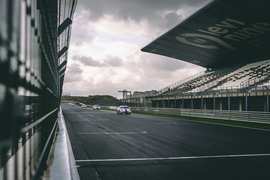 While the media focused on the new engine and the Boxster connection, the 996’s real importance lay in its efficiency. It took 130 hours to build a 993, but only 60 hours to build a 996. The modern 911 had arrived. It was roomier, filled with modern features, yet still unmistakably a 911.
Most importantly, it drove like a 911—only better. The new veneer of sophistication didn’t dull the visceral feedback that made the 911 unique. The 996 combined performance with usability, delivering a driving experience that was refined, precise, and exhilarating. Along with the original Boxster, the 996 ensured Porsche’s survival, proving that the 911’s spirit could evolve without sacrificing its soul.
The 991.2-Generation 911 Carrera: The Unexpected Champion
Of all the 911s I’ve driven, the base 991.2 Carrera stands out for its sheer brilliance. Most press fleets are stacked with high-spec models, so Porsche’s decision to include a base Carrera in the 991.2 launch felt like a bold move. In reality, it was inspired.
The 991.2 introduced a new 3.4-liter turbocharged engine, offering 370 hp in the base model or 420 hp in the S. Even in its base configuration, the Carrera delivered a broad torque curve and impressive efficiency. What truly impressed me was the chassis. Even on the standard wheel and tire setup, it felt incredibly communicative and adjustable.
Visually, the 991.2 was a subtle refresh of the 991.1, maintaining the larger size and superb proportions while upholding classic 911 aesthetics. The interior featured a sleek new infotainment system that was both beautiful and functional. While Porsche’s PDK automatic remains a benchmark for smooth, precise shifts, the seven-speed manual in the base Carrera was a revelation. Its oily, rifle-bolt action made us all fall in love with driving again.
Testing Director Kim Reynolds summed it up perfectly: “When all cars but one are autonomous, please let this be it, the last human-driven car. For posterity’s sake.” It’s been nearly a decade, but I vividly remember that Guards Red car with red seat belts. Every now and then, I scour the classifieds, running the math and dreaming of buying one back.
The 992.1-Generation 911 GT3 RS: The Track Monster
RS stands for RennSport—racing sport. These initials debuted 50 years ago on the legendary Carrera RS 2.7, a homologation special designed to allow Porsche into Group 4 GT racing. Since then, RS has been reserved for Porsche’s most driver-focused 911s. The 992-series GT3 RS is the most significant RS model because it represents the pinnacle of performance engineering. Previous RS models were road cars developed for track use; this one is essentially a race car you can drive on public roads.
A few laps around Silverstone proved just how formidable the GT3 RS is. The only other road-legal car that can match its jaw-dropping cornering speed and braking force is the McLaren Senna. The biggest mindset shift when driving the GT3 RS is trusting the aerodynamic grip. Even when you think you’re pushing the limit, the car has more to give.
While the media focused on the new engine and the Boxster connection, the 996’s real importance lay in its efficiency. It took 130 hours to build a 993, but only 60 hours to build a 996. The modern 911 had arrived. It was roomier, filled with modern features, yet still unmistakably a 911.
Most importantly, it drove like a 911—only better. The new veneer of sophistication didn’t dull the visceral feedback that made the 911 unique. The 996 combined performance with usability, delivering a driving experience that was refined, precise, and exhilarating. Along with the original Boxster, the 996 ensured Porsche’s survival, proving that the 911’s spirit could evolve without sacrificing its soul.
The 991.2-Generation 911 Carrera: The Unexpected Champion
Of all the 911s I’ve driven, the base 991.2 Carrera stands out for its sheer brilliance. Most press fleets are stacked with high-spec models, so Porsche’s decision to include a base Carrera in the 991.2 launch felt like a bold move. In reality, it was inspired.
The 991.2 introduced a new 3.4-liter turbocharged engine, offering 370 hp in the base model or 420 hp in the S. Even in its base configuration, the Carrera delivered a broad torque curve and impressive efficiency. What truly impressed me was the chassis. Even on the standard wheel and tire setup, it felt incredibly communicative and adjustable.
Visually, the 991.2 was a subtle refresh of the 991.1, maintaining the larger size and superb proportions while upholding classic 911 aesthetics. The interior featured a sleek new infotainment system that was both beautiful and functional. While Porsche’s PDK automatic remains a benchmark for smooth, precise shifts, the seven-speed manual in the base Carrera was a revelation. Its oily, rifle-bolt action made us all fall in love with driving again.
Testing Director Kim Reynolds summed it up perfectly: “When all cars but one are autonomous, please let this be it, the last human-driven car. For posterity’s sake.” It’s been nearly a decade, but I vividly remember that Guards Red car with red seat belts. Every now and then, I scour the classifieds, running the math and dreaming of buying one back.
The 992.1-Generation 911 GT3 RS: The Track Monster
RS stands for RennSport—racing sport. These initials debuted 50 years ago on the legendary Carrera RS 2.7, a homologation special designed to allow Porsche into Group 4 GT racing. Since then, RS has been reserved for Porsche’s most driver-focused 911s. The 992-series GT3 RS is the most significant RS model because it represents the pinnacle of performance engineering. Previous RS models were road cars developed for track use; this one is essentially a race car you can drive on public roads.
A few laps around Silverstone proved just how formidable the GT3 RS is. The only other road-legal car that can match its jaw-dropping cornering speed and braking force is the McLaren Senna. The biggest mindset shift when driving the GT3 RS is trusting the aerodynamic grip. Even when you think you’re pushing the limit, the car has more to give.
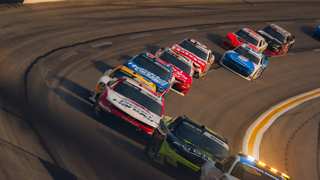 What’s even more remarkable is that the aerodynamic grip doesn’t smother the chassis sensitivity. Even average drivers can clearly feel what’s happening at the front and rear contact patches. The GT3 RS communicates its limits with remarkable clarity, and you don’t need Max Verstappen’s reflexes to control it. It’s the ultimate track-day