


The Pantheon of the Porsche 911: 40 Years of Icons
For over four decades, I’ve been privileged to experience the evolution of one of automotive history’s most enduring legends: the Porsche 911. From my first encounter with a pristine white 3.0-liter Carrera—a car that, while less powerful than its contemporaries, possessed a unique allure—I knew this was a machine that transcended mere transportation. It demanded respect, understanding, and offered a depth of connection that few vehicles can replicate.
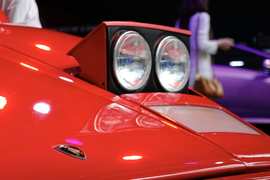 In the world of performance cars, few nameplates carry the weight, prestige, and sheer emotional pull of the Porsche 911. It is the benchmark against which sports cars are measured, a vehicle that has continuously reinvented itself while staying true to its core identity. As the automotive landscape hurtles toward electric vehicles and autonomous driving, the 911 remains a bastion of pure, unadulterated driving engagement. This journey spans the development of the classic 911 to the cutting-edge Porsche 911 GT3 RS, tracing the lineage that continues to dominate track days and thrill enthusiasts.
The landscape of supercars and sports cars has changed dramatically since the early 1980s. We’ve seen engines shrink and turbocharge, electronics become more integrated, and lightweight materials become standard. Yet, the fundamental appeal of the 911—its rear-engine layout, its iconic silhouette, and its thrilling driving dynamics—has remained remarkably consistent. It’s a classic sports car that continues to set standards, year after year. For performance car enthusiasts, the 911 range offers a variant for every taste, whether you’re seeking a track day car, a luxury sports car, or a vintage sports car for weekend drives.
The Original 930: The Widowmaker That Defined a Legend
When I first drove the original 930 Turbo in 2011, a rare find from the first 30 production cars, it carried the legendary, fearsome reputation of the “widowmaker.” Veteran road testers spoke of it in hushed, awed tones, warning that it demanded absolute precision. The 930 Turbo was a car that did not forgive mistakes, a raw testament to the brutal power of 1970s turbocharging.
Out on the road, aware of its fearsome reputation, I took it very easy at first, playing with the throttle, feeling the boost come in and watching the tach, trying to build a mental map of the power and torque curves. The engine was remarkably tractable, happy to murmur at 2,000 rpm in top gear as the 911 Turbo trickled along at 45 mph. Once the engine hit 3,500 rpm, though, there was a noticeable acceleration surge as the turbocharger huffed 0.8 bar into the induction system. But the sledgehammer blow between the shoulder blades I expected wasn’t there.
I learned the trick to smooth and quick progress in the original 911 Turbo was to keep the 3.0-liter flat-six spinning at 4,000 rpm or more to keep the turbocharger energized. Yes, there’s turbo lag—very noticeable turbo lag by modern standards—but it’s manageable. It might be more than 50 years old, but even today this 911 is an impressively fast car on the road. First gear runs to 50 mph, second to 90 mph, and third to almost 130 mph, which means it will destroy most winding two-lanes using only second and third. And while it might have a mere 256 hp, it weighs just 2,513 pounds, which means it readily gets into and out of corners. Half a century ago its performance would have seemed otherworldly.
The Porsche 930 stands as a monument to an era when car performance was defined by visceral sensation rather than digital precision. It represents the genesis of turbocharged sports cars, the brutal honesty of engineering before stability control and traction management tamed the wildest power outputs. For modern enthusiasts looking back at classic German cars, the 930 is the ultimate challenge, a testament to the saying that “in the early days of Porsche, the driver had to be better than the car,” a sentiment that truly captures the spirit of this iconic machine. It is, for many, the definition of a vintage sports car that truly tests a driver’s mettle.
The 993 Generation: The Last of the Air-Cooled Icons
In the world of performance cars, few nameplates carry the weight, prestige, and sheer emotional pull of the Porsche 911. It is the benchmark against which sports cars are measured, a vehicle that has continuously reinvented itself while staying true to its core identity. As the automotive landscape hurtles toward electric vehicles and autonomous driving, the 911 remains a bastion of pure, unadulterated driving engagement. This journey spans the development of the classic 911 to the cutting-edge Porsche 911 GT3 RS, tracing the lineage that continues to dominate track days and thrill enthusiasts.
The landscape of supercars and sports cars has changed dramatically since the early 1980s. We’ve seen engines shrink and turbocharge, electronics become more integrated, and lightweight materials become standard. Yet, the fundamental appeal of the 911—its rear-engine layout, its iconic silhouette, and its thrilling driving dynamics—has remained remarkably consistent. It’s a classic sports car that continues to set standards, year after year. For performance car enthusiasts, the 911 range offers a variant for every taste, whether you’re seeking a track day car, a luxury sports car, or a vintage sports car for weekend drives.
The Original 930: The Widowmaker That Defined a Legend
When I first drove the original 930 Turbo in 2011, a rare find from the first 30 production cars, it carried the legendary, fearsome reputation of the “widowmaker.” Veteran road testers spoke of it in hushed, awed tones, warning that it demanded absolute precision. The 930 Turbo was a car that did not forgive mistakes, a raw testament to the brutal power of 1970s turbocharging.
Out on the road, aware of its fearsome reputation, I took it very easy at first, playing with the throttle, feeling the boost come in and watching the tach, trying to build a mental map of the power and torque curves. The engine was remarkably tractable, happy to murmur at 2,000 rpm in top gear as the 911 Turbo trickled along at 45 mph. Once the engine hit 3,500 rpm, though, there was a noticeable acceleration surge as the turbocharger huffed 0.8 bar into the induction system. But the sledgehammer blow between the shoulder blades I expected wasn’t there.
I learned the trick to smooth and quick progress in the original 911 Turbo was to keep the 3.0-liter flat-six spinning at 4,000 rpm or more to keep the turbocharger energized. Yes, there’s turbo lag—very noticeable turbo lag by modern standards—but it’s manageable. It might be more than 50 years old, but even today this 911 is an impressively fast car on the road. First gear runs to 50 mph, second to 90 mph, and third to almost 130 mph, which means it will destroy most winding two-lanes using only second and third. And while it might have a mere 256 hp, it weighs just 2,513 pounds, which means it readily gets into and out of corners. Half a century ago its performance would have seemed otherworldly.
The Porsche 930 stands as a monument to an era when car performance was defined by visceral sensation rather than digital precision. It represents the genesis of turbocharged sports cars, the brutal honesty of engineering before stability control and traction management tamed the wildest power outputs. For modern enthusiasts looking back at classic German cars, the 930 is the ultimate challenge, a testament to the saying that “in the early days of Porsche, the driver had to be better than the car,” a sentiment that truly captures the spirit of this iconic machine. It is, for many, the definition of a vintage sports car that truly tests a driver’s mettle.
The 993 Generation: The Last of the Air-Cooled Icons
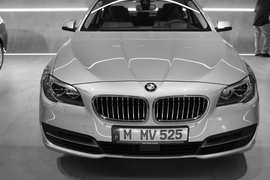 For Porsche purists, the 993-generation 911 represents the end of an era. It is the last of the line, the final iteration of the air-cooled 911. Driving it feels like stepping back in time, a raw experience where your knuckles graze the dash and the snarling metallic clatter of an air-cooled flat-six reverberates behind you. But in 1994, when I first drove it, the 993 was the 911 of the future, the first of the line to challenge Isaac Newton’s laws of physics.
While the 993 retained the characteristic pat-pat-pattery front end that demanded to be loaded on corner entry, and the rear end still rhumbaed through the rougher turns, there was a new level of consistency between them. The 993 still did 911 things, but within a much better margin.
Key to this engineering leap was a new rear suspension that replaced the semi-trailing arms of old with a modern multilink setup. This allowed for very slight initial toe-out on corner entry and then progressive toe-in as lateral loads increased, all while reducing the camber change that had been the Achilles’ heel of 911s since 1963. This was combined with steering that at 2.5 turns lock-to-lock was 16 percent quicker and made the front end feel much more decisive, plus a new six-speed manual transmission that made the most of the 3.6-liter flat-six that zinged harder to its 268-hp power peak at 6,100 rpm thanks to lighter internals, a Bosch Motronic 2.0 engine management system, and a new dual exhaust system.
Compared with the 964 model it replaced, the 993 was a revelation. It wasn’t just the engineering upgrades, done under the leadership of Ulrich Bez, later the head of Aston Martin: The exterior redesign, executed under the direction of design chief Harm Lagaay, corrected visual problems with the 964, a car he thought was too tall at the front and too pulled down at the rear. The interior was cleaner, too, with fewer buttons in random locations. The 993 was a 911 that was faster and more forgiving than ever. And, most important, it was more desirable, too.
The 993 911 is the ultimate classic Porsche and often cited as the best 911 by enthusiasts. It represents a perfect blend of vintage charm and modern engineering, bridging the gap between the raw experiences of the 930 and the high-tech performance of later models. Its collectible car status is undisputed, with 993 Carrera prices consistently reaching record highs. For anyone looking to invest in the classic car market, the 993 is a premium choice, offering a driving experience that remains relevant even in the age of the electric car.\n\n### 3. The 996 Generation: The Revolution That Saved Porsche
When Porsche decided to install a water-cooled flat-six in the tail of the 996-series 911, it was considered heresy by the aficionados. To them, it was the automotive equivalent of Bob Dylan ditching his six-string acoustic and picking up a Fender Strat at the 1965 Newport Folk Festival. But the 996, the first clean-sheet redesign of Porsche’s indefatigable sports car in 34 years, was a hero car to me. It was the 911 that saved Porsche.
Engineered and developed under the direction of Porsche R&D chief Horst Marchart, the 996 was a clever 911, not least because it shared 38 percent of its parts with an all-new, less expensive mid-engine roadster the world would come to know as the Boxster. Iconoclastic Porsche boss Wendelin Weideking knew the Boxster was needed to give dealers something else to sell when the aging 928 and 968 models went out of production. “We did two cars for the price of one-and-a-half,” design boss Lagaay said with a smile after the company unveiled the 996.
For Porsche purists, the 993-generation 911 represents the end of an era. It is the last of the line, the final iteration of the air-cooled 911. Driving it feels like stepping back in time, a raw experience where your knuckles graze the dash and the snarling metallic clatter of an air-cooled flat-six reverberates behind you. But in 1994, when I first drove it, the 993 was the 911 of the future, the first of the line to challenge Isaac Newton’s laws of physics.
While the 993 retained the characteristic pat-pat-pattery front end that demanded to be loaded on corner entry, and the rear end still rhumbaed through the rougher turns, there was a new level of consistency between them. The 993 still did 911 things, but within a much better margin.
Key to this engineering leap was a new rear suspension that replaced the semi-trailing arms of old with a modern multilink setup. This allowed for very slight initial toe-out on corner entry and then progressive toe-in as lateral loads increased, all while reducing the camber change that had been the Achilles’ heel of 911s since 1963. This was combined with steering that at 2.5 turns lock-to-lock was 16 percent quicker and made the front end feel much more decisive, plus a new six-speed manual transmission that made the most of the 3.6-liter flat-six that zinged harder to its 268-hp power peak at 6,100 rpm thanks to lighter internals, a Bosch Motronic 2.0 engine management system, and a new dual exhaust system.
Compared with the 964 model it replaced, the 993 was a revelation. It wasn’t just the engineering upgrades, done under the leadership of Ulrich Bez, later the head of Aston Martin: The exterior redesign, executed under the direction of design chief Harm Lagaay, corrected visual problems with the 964, a car he thought was too tall at the front and too pulled down at the rear. The interior was cleaner, too, with fewer buttons in random locations. The 993 was a 911 that was faster and more forgiving than ever. And, most important, it was more desirable, too.
The 993 911 is the ultimate classic Porsche and often cited as the best 911 by enthusiasts. It represents a perfect blend of vintage charm and modern engineering, bridging the gap between the raw experiences of the 930 and the high-tech performance of later models. Its collectible car status is undisputed, with 993 Carrera prices consistently reaching record highs. For anyone looking to invest in the classic car market, the 993 is a premium choice, offering a driving experience that remains relevant even in the age of the electric car.\n\n### 3. The 996 Generation: The Revolution That Saved Porsche
When Porsche decided to install a water-cooled flat-six in the tail of the 996-series 911, it was considered heresy by the aficionados. To them, it was the automotive equivalent of Bob Dylan ditching his six-string acoustic and picking up a Fender Strat at the 1965 Newport Folk Festival. But the 996, the first clean-sheet redesign of Porsche’s indefatigable sports car in 34 years, was a hero car to me. It was the 911 that saved Porsche.
Engineered and developed under the direction of Porsche R&D chief Horst Marchart, the 996 was a clever 911, not least because it shared 38 percent of its parts with an all-new, less expensive mid-engine roadster the world would come to know as the Boxster. Iconoclastic Porsche boss Wendelin Weideking knew the Boxster was needed to give dealers something else to sell when the aging 928 and 968 models went out of production. “We did two cars for the price of one-and-a-half,” design boss Lagaay said with a smile after the company unveiled the 996.
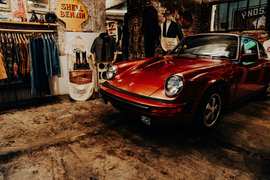 But while media attention focused on its relationship with the Boxster and the water-cooled engine, the 996’s real story ran much deeper. In 1994, it had taken Porsche 130 hours to build a 993-series 911; the 996 took just 60 hours to build. The modern 911 had arrived: roomier and equipped with all the features expected of a late 20th-century sports car but still recogniz