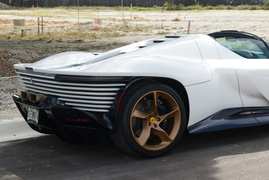
Toyota’s All-New Sports Car Lineup: Decoding the GR GT, GR GT3, and Lexus LFA Sequel
In a landmark reveal that sent ripples through the global automotive community, Toyota has unveiled a trio of high-performance machines that signal a dramatic escalation of its ambition in the ultra-competitive sports car segment. The “Holy Trinity,” as these new models have been dubbed by insiders and media alike, includes the GR GT road car, the GR GT3 race prototype, and a concept for a next-generation Lexus LFA supercar. This strategic play represents a bold statement from Toyota Motor Corporation (TMC) Chairman Akio Toyoda, not just to compete at the highest levels of performance engineering, but to preserve and pass on the fundamental skills of carmaking to the next generation.
Speaking at the launch event held at Toyota’s state-of-the-art Woven City, Akio Toyoda—known to enthusiasts as “Master Driver Morizo”—framed the initiative through the lens of “Toyota’s Shikinen Sengu.” This ancient Shinto shrine-rebuilding ritual, where artisans recraft core structures and pass down specialized skills, serves as a powerful metaphor for Toyota’s commitment to preserving its automotive heritage while embracing cutting-edge technology. By launching two flagship sports cars and one race-dedicated machine, each featuring distinct powertrain technologies, Toyota is making a significant investment in its engineering talent pipeline.
We had the exclusive opportunity to sit down with Chief Program Manager Takashi Doi and the engineering teams responsible for the chassis, powertrain, design, and aerodynamics of these revolutionary vehicles. While the team was naturally guarded about specifics, the conversations revealed a clear roadmap for the GR GT’s production timeline and hinted at the immense complexity underpinning these machines.
Toyota GR GT: A 2028 Supercar Arriving with a Bang
The Toyota GR GT is slated to be the first of the trio to reach production, with a target launch in 2027, likely hitting showrooms as a 2028 model. Positioned as the homologation-spec version of the GR GT3 race car, the road car inherits much of the race car’s DNA, promising an uncompromised, track-ready driving experience.
Pricing and Positioning: Targeting the $200K Mark
When pressed on pricing, Project Manager Doi strategically pointed to the competitive set, including the Porsche 911 and Mercedes-AMG GT models. By comparing their specifications, we can gain a clear indication of where the GR GT will sit in the hierarchy.
| Vehicle | Curb Weight | Horsepower | Weight/Power | Base Price |
| :— | :— | :— | :— | :— |
| 2028 Toyota GR GT | 3,858 lb | 641 hp | 6.0 lb/hp | N/A |
| 2026 Porsche 911 GT3 | 3,278 lb | 502 hp | 6.2 lb/hp | $235,500 |
| 2026 Porsche 911 Turbo S | 3,859 lb | 701 hp | 5.5 lb/hp | $275,650 |
| 2026 AMG GT Pro 4Matic | 4,299 lb | 603 hp | 7.1 lb/hp | $202,200 |
| 2026 Aston Martin Vantage S | 3,847 lb | 671 hp | 5.7 lb/hp | $235,000 |
Note: Prices reflect manufacturer suggested retail prices as of late 2025 and are subject to change.
With a claimed power output of 641 hp and a curb weight of 3,858 lbs, the GR GT boasts a favorable power-to-weight ratio of 6.0 lb/hp. Based on this metric and its competitive positioning, the GR GT is expected to be priced well north of the $200,000 mark, slotting comfortably into the upper echelon of premium sports coupes alongside the Porsche 911 Turbo S and Aston Martin Vantage. This pricing strategy aligns with Toyota’s intention to position the GR GT as a halo car for the Gazoo Racing brand.
Powertrain and Performance: A Hybrid Masterpiece
The heart of the GR GT is its intricate hybrid powertrain, designed to deliver both blistering speed and engaging handling. The engineering team has developed a system that includes a mechanical limited-slip differential (LSD), which is the key to unlocking the kind of tire-smoking performance enthusiasts crave. Expect dramatic burnout capabilities, smoky donuts, and eye-watering drifts.
Driving Modes: Traction Control and Drift Capability
A critical question for performance enthusiasts is whether drivers will have the ability to completely disable traction and stability control. While the official announcement was non-committal, our inspection of the steering wheel revealed a dial labeled ‘TRC/VSC’ with an ‘Off’ option. This strongly suggests that drivers will indeed be permitted to turn these systems off, allowing for full control over the vehicle’s limits.
Future Variants and Nürburgring Ambitions
When asked about the possibility of future higher-performance models—such as a Nürburgring Edition, GRMN, GT R, or GT3 RS version—Doi-san offered a tantalizing clue: “Obviously we can’t talk about future product, but variations and improvements is something we’re always looking for. And that’s crucial, very important for a sports car.” This implies that Toyota is committed to developing a full range of high-performance variants based on the GR GT platform, potentially mirroring the successful roadmap of its predecessor, the Lexus LFA.
The Nürburgring Nordschleife remains a central focus for Toyota. During the unveiling, Akio Toyoda displayed an image of the circuit with the word “humiliation,” referencing his own challenging development laps in previous Toyota sports cars. This experience has driven the development of the GR GT, and when questioned about lap times, Doi-san affirmed the importance of the Nürburgring to Toyota’s motorsports endeavors. He emphasized that the GR GT will not be a car that gets passed on the Green Hell. Given the performance benchmarks set by modern hypercars like the Corvette ZR1X (6:49) and Mustang GTD (6:52), we can anticipate that the GR GT will be targeting a sub-7-minute lap time to prove its pedigree.
Lexus LFA: The Return of a Legend with Advanced EV Technology
The GR GT concept shares its all-new all-aluminum spaceframe chassis with the long-awaited sequel to the legendary Lexus LFA. If you’re holding your breath for the next LFA, you might need to keep waiting. Lexus representatives indicated that the production debut is “several years” away, and pricing remains a significant question mark.
Pricing and Availability: The EV Dilemma
The original LFA debuted in 2010 at a staggering $375,000, and the Nürburgring Edition sold for $445,000. Doi-san acknowledged that the market has evolved significantly, and returning as an electric vehicle complicates the pricing strategy. “Several years” away and a return as an EV implies that the next LFA will need to be considerably less expensive than its predecessor, likely falling below the $350,000 threshold.
The Market Gap: Finding a Niche for an EV Flagship
The market for high-end electric sports coupes is still in its infancy. While there are luxury EVs like the Lucid Air Sapphire, Rolls-Royce Spectre, and Cadillac Celestiq that exceed $200,000, none fit the competitive profile of the LFA. The electric hypercar segment, occupied by the Rimac Nevera and Lotus Evija, operates at a different price point entirely (north of $2.3 million), which is decidedly outside Lexus territory. The closest analog might be the rumored second-generation Tesla Roadster, which is anticipated to fall in the $200,000 to $250,000 range—if it ever materializes.
Solid-State Battery: The Game-Changing Technology
There is one technological factor that could justify a higher price point for the Lexus LFA: the potential integration of solid-state battery (SSB) technology. While no one at the event confirmed this under direct questioning, it remains a strong possibility.
Toyota has been heavily invested in solid-state battery development since 2020 through its joint venture with Panasonic, Prime Planet Energy & Solutions, Inc. In 2024, the company announced plans to introduce SSBs in 2027 to 2028, boasting a range of 621 miles (1,000 km) and 10-minute recharge times. This level of performance would represent a monumental technological leap, making the LFA a true halo car for Lexus. It could also provide a solution to a significant packaging challenge.
Solving the LFA Packaging Puzzle
The current industry standard for electric vehicles is the skateboard chassis, where heavy battery cells are mounted as low as possible in the floorpan, usually filling the space between the wheels. This approach keeps the center of gravity low and enhances handling. However, this presents a challenge for the LFA’s production engineers, as the all-aluminum spaceframe shared with the GR GT does not have a traditional floorpan. Instead, it utilizes thick structural members, leaving minimal space for traditional battery packs