Toyota’s Sports Car Revolution: Everything We Know About the GR GT, GR GT3, and Lexus LFA
After the electrifying debut of Toyota’s “Holy Trinity” of performance cars—the Lexus LFA Concept, GR GT, and GR GT3—we secured an exclusive behind-the-scenes look. These aren’t just concepts; they represent a comprehensive strategy to preserve legendary car-making skills and drive technological innovation. Attending technical briefings with Chief Program Manager Takashi Doi and engineering teams allowed us to extract crucial details, even navigating some deliberate deflections. The biggest takeaway is clear: Toyota is meticulously planning every step of this journey, from concept unveiling to the day customers receive the keys.
Toyota GR GT: The Next-Gen GT Benchmark
The Toyota GR GT is slated for market as a production road car, with Toyota aiming for a 2027 release, positioning it as a 2028 model. It also serves as the homologation version of the GR GT3 race car, though we’ve historically seen race cars precede road homologation, as with the recent Ford GT.
Pricing and Market Positioning
When pressed on the GR GT pricing, project manager Doi encouraged us to examine Porsche 911 GT3 and Mercedes-AMG AMG GT models with similar specifications. Using the GR GT’s claimed 641 horsepower and 3858-pound curb weight, we calculated a power-to-weight ratio of 6.0 lb/hp.
| Vehicle | Curb Weight | Horsepower | Weight/Power | Base Price |
| :— | :— | :— | :— | :— |
| 2028 Toyota GR GT | 3858 lb | 641 hp | 6.0 lb/hp | N/A |
| 2026 Porsche 911 GT3 | 3278 lb | 502 hp | 6.2 lb/hp | $235,500 |
| 2026 Porsche 911 Turbo S | 3859 lb | 701 hp | 5.5 lb/hp | $275,650 |
| 2026 AMG GT Pro 4Matic | 4299 lb | 603 hp | 7.1 lb/hp | $202,200 |
| 2026 Aston Martin Vantage S | 3847 lb | 671 hp | 5.7 lb/hp | $235,000 |
Note: Prices reflect current dealer estimates and specifications.
This competitive set suggests the GR GT will likely exceed $200,000.
Electromechanical Engineering and Driver Engagement
The GR GT boasts a fiendishly complex hybrid powertrain, featuring a mechanical limited-slip differential (LSD) designed for highly engaging driving dynamics and maximum tire-scorching potential. When asked if it will feature a drift mode, Doi confirmed development of various driving modes but remained tight-lipped on specifics.
Further clues emerge from the GR GT’s steering wheel. A knob on the right labeled “Sport Boost” likely engages a performance-boosting function. On the lower left, a traction and stability control button (TRC/VSC) can be toggled “Off,” confirming the driver’s ability to fully disable stability systems for maximum control.
Looking ahead, we inquired about higher-performance variants like a Nürburgring Edition, GRMN, GT R, or GT3 RS. Doi stated, “Obviously we can’t talk about future product, but variations and improvements is something we’re always looking for. And that’s crucial, very important for a sports car.”
The Nürburgring: From Humiliation to Redemption
The Nürburgring Nordschleife is central to the GR GT’s narrative. Akio “Master Driver Morizo” Toyoda, grandson of Toyota’s founder and the driving force behind Gazoo Racing, stood before a massive screen displaying the word “humiliation” during the unveiling. He recounted the humbling experience of being passed by faster, better-handling German sports cars at the ’Ring, including a fourth-generation Supra, just a few years prior.
This core Japanese philosophy of using humiliation as a catalyst for improvement drives the GR GT development. While Doi wouldn’t confirm specific lap targets (such as the sub-7-minute times set by competitors like the Mustang GTD, Corvette ZR1, and ZR1X), he emphasized the importance of the Nürburgring to Toyota, the GR brand, and motorsports programs. He firmly stated that the GR GT will not be the one getting passed on the Green Hell, signaling an aggressive pursuit of track performance.
Given the engineering ethos of Japanese automotive engineers and the competitive benchmark of the Porsche 911 and AMG GT—both significantly sub-7-minute performers—we confidently predict the GR GT will achieve a sub-7-minute lap at the Nürburgring.
Toyota GR GT3: The Race-Bred Thunderbolt
The GR GT3 race car is the homologated version of the production GR GT, positioned to compete at the highest levels of international motorsports. It features a purpose-built racing chassis optimized for aerodynamics and handling, ensuring Toyota maintains its competitive edge against global rivals.
Race Car Aerodynamics and Design
The GR GT3 showcases a dramatic race-car aesthetic, featuring aggressive aerodynamics that differentiate it from its production sibling. Key elements include:
Massive Rear Wing: A double-plane rear wing ensures maximum downforce for high-speed stability and cornering grip.
Aggressive Diffuser: A pronounced rear diffuser manages airflow beneath the car, further enhancing downforce and reducing drag.
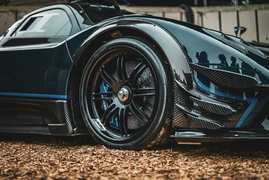
Widebody Styling: The flared wheel arches and wide stance accommodate racing slicks and improve stability.
Functional Vents: Numerous functional vents, louvers, and canards are strategically placed to manage heat, reduce drag, and optimize aerodynamic balance.
Technical Platform and Homologation
Built on an all-new, all-aluminum spaceframe chassis shared with the GR GT and LFA Concept, the GR GT3 platform provides a lightweight and rigid foundation for racing. This chassis architecture represents a significant leap for Toyota, marking its first production application of such a high-tech structural design.
Motorsport Partnership and Global Exposure
In the lead-up to the unveiling, Toyota Gazoo Racing (TGR) announced its title sponsorship of the Haas Formula 1 team, which will now be known as TGR HAAS Formula 1. Toyota has a rich history in all major racing disciplines, including Formula 1, World Rally, 24 Hours of Le Mans, NASCAR, NHRA, and Super GT. As competitors like Audi, Cadillac, and Ford enter F1 next year, Toyota’s renewed commitment ensures its presence at the pinnacle of motorsport.
Conspicuously absent from the global motorsports arena are the emerging Chinese car companies. While their “new energy vehicles” gain market share worldwide, they lack the brand-burnishing prestige of top-tier sports cars competing on the world stage.
The GR GT3 Competitive Edge
The GR GT3 race car is poised to challenge established GT3 stalwarts like Porsche, AMG, and Aston Martin. Its lightweight construction, high-performance hybrid powertrain, and aerodynamic optimization position it as a serious contender for international endurance racing.
Lexus LFA: The Electric Hypercar Redemption
The Lexus LFA Concept represents Toyota’s boldest move yet—a return to the LFA legacy as a next-generation electric hypercar. While Toyota remains tight-lipped on specific details, we can piece together the likely trajectory of this groundbreaking vehicle.
Pricing and Market Positioning
When asked about the LFA’s debut and pricing, representatives stated it will arrive in “several years,” including Doi. Regarding price, we believe the new LFA must be significantly less expensive than its predecessor, which debuted in 2010 at a shocking $375,000 and exited the market at $445,000 for the LFA Nürburgring Edition.
Doi acknowledged that the world has changed since the Lexus V10 supercar ended production, and returning as an EV complicates things. This suggests the next LFA needs to be under $350,000.
We think it must be substantially less for two primary reasons: The market for luxury sports coupes is already minuscule, and there are currently no electric sports coupes priced above $200,000. While a few electric luxury and performance cars exceed $200,000 (including the Lucid Air Sapphire, Rolls-Royce Spectre, and Cadillac Celestiq), none fit the LFA’s competitive profile. The closest comparison is the second-generation Tesla Roadster, rumored to be in the $200,000 to $250,000 range—if it ever materializes.
Solid-State Battery Technology: The Enabling Factor