

Top 5 Porsche 911s That Defined My Career: A 40-Year Perspective
It’s hard to fathom that over 40 years have passed since I first tested a Porsche 911. I still vividly remember that initial drive—a pristine white 3.0-liter Carrera, complete with black Fuchs wheels. It was the epitome of classic Porsche: a narrow body, no rear wing, no power steering, and a five-speed manual transmission. To many, it represented the perfect sports car of its era. However, my initial assessment was mixed. I found it fast, yes, but also decidedly flawed. Perhaps my skepticism was amplified because I was driving it alongside a Porsche 944 Turbo, a car that, in my home country of Australia at the time, commanded roughly the same price. The 944 offered more power, more torque, and significantly easier acceleration on the demanding roads of the Australian outback. Yet, despite the logical superiority of the 944, I fell undeniably in love with the 911.
 After two days and 600 miles, I admitted something profound in my review: “I know the 944 Turbo is the better car. But I also know that if it came down to it, if I had to spend my own money, I’d take the 911 Carrera home.” This wasn’t a decision I reached lightly. I recognized the 944’s competence, noting that it “can make a bad driver look good.” Its electrifying performance was perfectly counterbalanced by an “astounding chassis.” However, the 911 possessed a soul that the 944 lacked. “The gloriously imperfect 911 Carrera is a sports car of a different age and reflects different values,” I wrote. “It’s not tailored to meet the needs of most drivers. It demands understanding and respect. That’s why I’d take it home.”
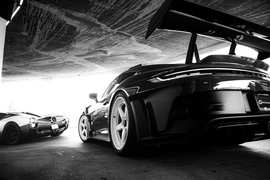
Since that seminal experience, I have had the privilege of driving dozens of 911 iterations. Apart from the 964—a model that, in the early 1990s, seemed to foreshadow the end of the 911’s journey—I have marveled at Porsche’s ability to continually refine and perfect its iconic sports car. By the 2010s, Porsche had transformed the 911 into a global benchmark for performance, engineering, and luxury, but it had somehow managed to retain the visceral driving experience that had captivated me decades earlier. Four decades after my first drive, the Porsche 911 remains one of the very few new cars I would still choose to buy with my own money. As a seasoned auto critic with four decades of experience, I have compiled a list of the five most memorable Porsche 911s I have ever driven.
The Original 911 Turbo (930)
Long before I ever sat behind the wheel of the legendary 930 Turbo, veteran road-test journalists spoke of the original 911 Turbo in hushed, reverent tones. It was known as the “widowmaker”—a car that demanded absolute respect and absolute precision. They said it tested a driver’s resolve, featuring a binary boost system that made the traditional 911 tightrope walk—between corner-entry understeer and corner-exit oversteer—a task requiring quick hands and sheer nerve. The 911 Turbo did not forgive mistakes and did not tolerate sloppiness. To drive it fast was to dance on the razor’s edge of control.
It took me 35 years to actually drive one of these early Turbos and discover the truth behind the legend. The car was one of the first 30 production Turbos ever built, now a treasured part of Porsche’s prestigious classic fleet. Even driving it conservatively, I was mindful of its fearsome reputation. I started slowly, modulating the throttle, feeling the turbo build boost, and tracking the tachometer, trying to build a mental map of the power and torque delivery. Surprisingly, the engine proved remarkably tractable at low revs. Under 2,000 rpm, the 911 Turbo ambled along at 45 mph in top gear, feeling effortlessly smooth. However, the engine hit 3,500 rpm, a noticeable surge in acceleration arrived as the turbocharger forced 0.8 bar of boost into the intake. Yet, the sledgehammer-like impact that veteran journalists had described never truly materialized for me.
I discovered that the trick to smooth yet rapid progress in the original 911 Turbo was to keep the 3.0-liter flat-six engine spinning at 4,000 rpm or higher. This kept the turbocharger energized and the power ready. Yes, there is turbo lag—very noticeable by modern standards—but it is manageable. Even today, over 50 years after its debut, this 911 is blisteringly fast on the road. First gear reaches 50 mph, second gear extends to 90 mph, and third gear creeps close to 130 mph, meaning it can effortlessly devour most winding two-lane roads using only second and third gear. While it produces a modest 256 hp, it weighs only 2,513 pounds, allowing it to dance through corners with agility. Half a century ago, its performance felt absolutely otherworldly.
The Porsche 993 Generation
After two days and 600 miles, I admitted something profound in my review: “I know the 944 Turbo is the better car. But I also know that if it came down to it, if I had to spend my own money, I’d take the 911 Carrera home.” This wasn’t a decision I reached lightly. I recognized the 944’s competence, noting that it “can make a bad driver look good.” Its electrifying performance was perfectly counterbalanced by an “astounding chassis.” However, the 911 possessed a soul that the 944 lacked. “The gloriously imperfect 911 Carrera is a sports car of a different age and reflects different values,” I wrote. “It’s not tailored to meet the needs of most drivers. It demands understanding and respect. That’s why I’d take it home.”
Since that seminal experience, I have had the privilege of driving dozens of 911 iterations. Apart from the 964—a model that, in the early 1990s, seemed to foreshadow the end of the 911’s journey—I have marveled at Porsche’s ability to continually refine and perfect its iconic sports car. By the 2010s, Porsche had transformed the 911 into a global benchmark for performance, engineering, and luxury, but it had somehow managed to retain the visceral driving experience that had captivated me decades earlier. Four decades after my first drive, the Porsche 911 remains one of the very few new cars I would still choose to buy with my own money. As a seasoned auto critic with four decades of experience, I have compiled a list of the five most memorable Porsche 911s I have ever driven.
The Original 911 Turbo (930)
Long before I ever sat behind the wheel of the legendary 930 Turbo, veteran road-test journalists spoke of the original 911 Turbo in hushed, reverent tones. It was known as the “widowmaker”—a car that demanded absolute respect and absolute precision. They said it tested a driver’s resolve, featuring a binary boost system that made the traditional 911 tightrope walk—between corner-entry understeer and corner-exit oversteer—a task requiring quick hands and sheer nerve. The 911 Turbo did not forgive mistakes and did not tolerate sloppiness. To drive it fast was to dance on the razor’s edge of control.
It took me 35 years to actually drive one of these early Turbos and discover the truth behind the legend. The car was one of the first 30 production Turbos ever built, now a treasured part of Porsche’s prestigious classic fleet. Even driving it conservatively, I was mindful of its fearsome reputation. I started slowly, modulating the throttle, feeling the turbo build boost, and tracking the tachometer, trying to build a mental map of the power and torque delivery. Surprisingly, the engine proved remarkably tractable at low revs. Under 2,000 rpm, the 911 Turbo ambled along at 45 mph in top gear, feeling effortlessly smooth. However, the engine hit 3,500 rpm, a noticeable surge in acceleration arrived as the turbocharger forced 0.8 bar of boost into the intake. Yet, the sledgehammer-like impact that veteran journalists had described never truly materialized for me.
I discovered that the trick to smooth yet rapid progress in the original 911 Turbo was to keep the 3.0-liter flat-six engine spinning at 4,000 rpm or higher. This kept the turbocharger energized and the power ready. Yes, there is turbo lag—very noticeable by modern standards—but it is manageable. Even today, over 50 years after its debut, this 911 is blisteringly fast on the road. First gear reaches 50 mph, second gear extends to 90 mph, and third gear creeps close to 130 mph, meaning it can effortlessly devour most winding two-lane roads using only second and third gear. While it produces a modest 256 hp, it weighs only 2,513 pounds, allowing it to dance through corners with agility. Half a century ago, its performance felt absolutely otherworldly.
The Porsche 993 Generation
 To many Porsche purists, the 993 is the last of the true line—the final expression of the pure, air-cooled 911 philosophy. It is the car you drive with your knuckles occasionally grazing the dashboard, the snarling, metallic clamor of an air-cooled flat-six echoing behind you. But back in 1994, when I first tested it, the 993 was the 911 of the future, the first generation to truly engage with Isaac Newton’s laws of physics. While the 993 still featured the distinctive pat-pat-patter of the front end that required careful loading to hit the apex, and the rear still exhibited a playful rhumba on rougher turns, the connection between the front and rear axles was finally harmonious. The 993 was undeniably a 911, but it operated within a much safer and more predictable margin for error.
Key to this transformation was a revolutionary rear suspension redesign. Porsche replaced the long-serving semi-trailing arms with a sophisticated new multilink setup. This allowed for slight initial toe-out on corner entry, followed by progressive toe-in as lateral loads increased, all while drastically reducing the camber change that had been the Achilles’ heel of 911s since 1963. This breakthrough was combined with a new, quicker steering system. At 2.5 turns lock-to-lock, it was 16 percent faster than the previous generation, making the front end feel remarkably decisive. Powering the rear wheels was a new six-speed manual transmission that perfectly exploited the 3.6-liter flat-six. Thanks to lighter internals, Bosch Motronic 2.0 engine management, and a revised dual exhaust, the engine sang to a peak output of 268 hp at 6,100 rpm.
Compared to the 964 it replaced, the 993 was a revelation. It was more than just the engineering upgrades, which were implemented under the leadership of Ulrich Bez, who would later become the CEO of Aston Martin. The exterior redesign, led by design chief Harm Lagaay, corrected the visual imbalances of the 964, a car he considered too tall at the front and pulled down at the rear. The interior was cleaner, too, with fewer buttons scattered haphazardly throughout the cockpit. The 993 was a 911 that was both faster and more forgiving than ever. And, most importantly, it was more desirable, too. It redefined what a 911 could be without betraying its heritage.
The 996 Generation: Porsche’s Savior
At the time of its launch, it was nothing short of heresy. Porsche’s decision to install a water-cooled flat-six engine in the tail of the 996-series 911 was, in the eyes of many purists, the automotive equivalent of Bob Dylan trading his acoustic six-string for a Fender Stratocaster at the 1965 Newport Folk Festival. But the 996, the first clean-sheet redesign of Porsche’s indefatigable sports car in 34 years, was a hero car in my eyes. It was the 911 that saved Porsche from the brink of extinction.
Engineered and developed under the watchful eye of Porsche R&D chief Horst Marchart, the 996 was a remarkably clever 911. It famously shared 38 percent of its components with an all-new, less expensive mid-engine roadster that the world would soon come to know as the Boxster. Iconoclastic Porsche boss Wendelin Wiedeking knew the Boxster was essential to give dealers something else to sell once the aging 928 and 968 models were discontinued. As design boss Lagaay later explained with a smile after the company unveiled the 996, “We did two cars for the price of one-and-a-half.”
To many Porsche purists, the 993 is the last of the true line—the final expression of the pure, air-cooled 911 philosophy. It is the car you drive with your knuckles occasionally grazing the dashboard, the snarling, metallic clamor of an air-cooled flat-six echoing behind you. But back in 1994, when I first tested it, the 993 was the 911 of the future, the first generation to truly engage with Isaac Newton’s laws of physics. While the 993 still featured the distinctive pat-pat-patter of the front end that required careful loading to hit the apex, and the rear still exhibited a playful rhumba on rougher turns, the connection between the front and rear axles was finally harmonious. The 993 was undeniably a 911, but it operated within a much safer and more predictable margin for error.
Key to this transformation was a revolutionary rear suspension redesign. Porsche replaced the long-serving semi-trailing arms with a sophisticated new multilink setup. This allowed for slight initial toe-out on corner entry, followed by progressive toe-in as lateral loads increased, all while drastically reducing the camber change that had been the Achilles’ heel of 911s since 1963. This breakthrough was combined with a new, quicker steering system. At 2.5 turns lock-to-lock, it was 16 percent faster than the previous generation, making the front end feel remarkably decisive. Powering the rear wheels was a new six-speed manual transmission that perfectly exploited the 3.6-liter flat-six. Thanks to lighter internals, Bosch Motronic 2.0 engine management, and a revised dual exhaust, the engine sang to a peak output of 268 hp at 6,100 rpm.
Compared to the 964 it replaced, the 993 was a revelation. It was more than just the engineering upgrades, which were implemented under the leadership of Ulrich Bez, who would later become the CEO of Aston Martin. The exterior redesign, led by design chief Harm Lagaay, corrected the visual imbalances of the 964, a car he considered too tall at the front and pulled down at the rear. The interior was cleaner, too, with fewer buttons scattered haphazardly throughout the cockpit. The 993 was a 911 that was both faster and more forgiving than ever. And, most importantly, it was more desirable, too. It redefined what a 911 could be without betraying its heritage.
The 996 Generation: Porsche’s Savior
At the time of its launch, it was nothing short of heresy. Porsche’s decision to install a water-cooled flat-six engine in the tail of the 996-series 911 was, in the eyes of many purists, the automotive equivalent of Bob Dylan trading his acoustic six-string for a Fender Stratocaster at the 1965 Newport Folk Festival. But the 996, the first clean-sheet redesign of Porsche’s indefatigable sports car in 34 years, was a hero car in my eyes. It was the 911 that saved Porsche from the brink of extinction.
Engineered and developed under the watchful eye of Porsche R&D chief Horst Marchart, the 996 was a remarkably clever 911. It famously shared 38 percent of its components with an all-new, less expensive mid-engine roadster that the world would soon come to know as the Boxster. Iconoclastic Porsche boss Wendelin Wiedeking knew the Boxster was essential to give dealers something else to sell once the aging 928 and 968 models were discontinued. As design boss Lagaay later explained with a smile after the company unveiled the 996, “We did two cars for the price of one-and-a-half.”
 While much of the media attention focused on its relationship with the Boxster and the controversial water-cooled engine, the 996’s true significance ran much deeper. In 1994, it took Porsche a