


The Ultimate Porsche Playlist: From Icons to Instant Obsessions
For decades, the name Porsche has been synonymous with engineering excellence, track-honed performance, and timeless style. The iconic 911, in particular, has graced test tracks and headlines for over half a century, undergoing a seemingly endless cycle of evolution. As a seasoned automotive evaluator with a decade of experience behind the wheel of Stuttgart’s finest, I’ve piloted a dizzying array of 911 variants. Yet, a select few remain etched in my memory, not just for their raw statistics, but for the unique character, visceral feedback, and profound connection they forged on the asphalt.
Choosing the “best” is a subjective exercise, a tapestry woven with personal preference and the specific demands of the road. However, if forced to distill this experience into a definitive list, certain models consistently rise to the top. These aren’t necessarily the fastest or the most expensive, but rather the cars that fundamentally altered my perception of what a Porsche 911 could be. They are benchmarks that define the arc of this legendary nameplate, each representing a pivotal moment in its relentless march toward perfection.
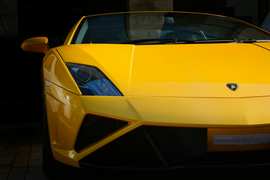 From the unadulterated brutality of the original Turbo to the laser-focused precision of modern track weapons, these are the Porsche 911s that have left the most indelible mark on my automotive journey.
The 1975 Porsche 911 Turbo (930): The Widowmaker Myth Debunked
The original Porsche 930 Turbo remains shrouded in myth and legend. Veterans of the road-test circuit in the 1970s spoke of it with a mixture of awe and trepidation, warning of a car that demanded surgical precision and a fearless spirit. They called it the “widowmaker,” a potent, brutal machine that punished mistakes with unforgiving violence. It took me over 35 years to finally experience one firsthand, and the reality was far more nuanced than the warnings suggested.
This particular specimen, one of the first 30 production models ever built, now resides in Porsche’s revered heritage fleet. Aware of its fearsome reputation, I approached it with extreme caution, easing onto the throttle and monitoring the tachometer, attempting to map the engine’s character. The 3.0-liter flat-six proved surprisingly docile at low revs, offering a smooth, languid gait that belied its 256 horsepower output. But once the engine crossed the 3,500 rpm threshold, the landscape shifted dramatically. A palpable surge of acceleration flooded the cabin as the turbocharger forcefully compressed 0.8 bar of air into the induction system.
What I expected was the sledgehammer blow described in folklore. Instead, I found a powerful but manageable experience. The secret to smooth, effective progress in the 930 lies in keeping the engine spinning above 4,000 rpm, ensuring the turbocharger remains fully spooled. While the turbo lag is undoubtedly noticeable by modern standards, it is entirely manageable. Even after half a century, this 911 is staggeringly quick on public roads. First gear reaches 50 mph, second stretches to 90 mph, and third crests nearly 130 mph. This means that two-lane roads are devoured using only second and third gears. Although it has a modest 256 horsepower, its low curb weight of 2,513 pounds allows it to transition into and out of corners with remarkable agility.
This original 930 Turbo is a masterclass in contrast. It possesses the primal, mechanical charm of an analog machine yet delivers the sheer velocity to humble contemporary sports cars. It doesn’t coddle the driver; it demands respect and engagement. The sheer physicality of the experience—the lack of electronic aids, the distinct mechanical feel, and the necessity of reading the road—is intoxicating. It represents a moment in time when performance was raw, untamed, and profoundly rewarding for those who dared to push its limits. For automotive enthusiasts seeking a pure, unfiltered connection to the history of performance, the 930 is an essential experience.
The 1996 Porsche 911 Carrera (993): The Last of the Air-Cooled Purist’s Dream
For Porsche purists, the 993-generation 911 represents the zenith of the air-cooled era. It’s the car that embodies the classic 911 experience: the visceral connection to the engine, the tactile feedback through the steering, and the iconic silhouette that has captivated generations. But when I first drove it in 1994, the 993 was the 911 of the future. It was the first generation to truly grapple with the complexities of modern physics, fundamentally transforming the 911’s dynamics while retaining its soul.
From the unadulterated brutality of the original Turbo to the laser-focused precision of modern track weapons, these are the Porsche 911s that have left the most indelible mark on my automotive journey.
The 1975 Porsche 911 Turbo (930): The Widowmaker Myth Debunked
The original Porsche 930 Turbo remains shrouded in myth and legend. Veterans of the road-test circuit in the 1970s spoke of it with a mixture of awe and trepidation, warning of a car that demanded surgical precision and a fearless spirit. They called it the “widowmaker,” a potent, brutal machine that punished mistakes with unforgiving violence. It took me over 35 years to finally experience one firsthand, and the reality was far more nuanced than the warnings suggested.
This particular specimen, one of the first 30 production models ever built, now resides in Porsche’s revered heritage fleet. Aware of its fearsome reputation, I approached it with extreme caution, easing onto the throttle and monitoring the tachometer, attempting to map the engine’s character. The 3.0-liter flat-six proved surprisingly docile at low revs, offering a smooth, languid gait that belied its 256 horsepower output. But once the engine crossed the 3,500 rpm threshold, the landscape shifted dramatically. A palpable surge of acceleration flooded the cabin as the turbocharger forcefully compressed 0.8 bar of air into the induction system.
What I expected was the sledgehammer blow described in folklore. Instead, I found a powerful but manageable experience. The secret to smooth, effective progress in the 930 lies in keeping the engine spinning above 4,000 rpm, ensuring the turbocharger remains fully spooled. While the turbo lag is undoubtedly noticeable by modern standards, it is entirely manageable. Even after half a century, this 911 is staggeringly quick on public roads. First gear reaches 50 mph, second stretches to 90 mph, and third crests nearly 130 mph. This means that two-lane roads are devoured using only second and third gears. Although it has a modest 256 horsepower, its low curb weight of 2,513 pounds allows it to transition into and out of corners with remarkable agility.
This original 930 Turbo is a masterclass in contrast. It possesses the primal, mechanical charm of an analog machine yet delivers the sheer velocity to humble contemporary sports cars. It doesn’t coddle the driver; it demands respect and engagement. The sheer physicality of the experience—the lack of electronic aids, the distinct mechanical feel, and the necessity of reading the road—is intoxicating. It represents a moment in time when performance was raw, untamed, and profoundly rewarding for those who dared to push its limits. For automotive enthusiasts seeking a pure, unfiltered connection to the history of performance, the 930 is an essential experience.
The 1996 Porsche 911 Carrera (993): The Last of the Air-Cooled Purist’s Dream
For Porsche purists, the 993-generation 911 represents the zenith of the air-cooled era. It’s the car that embodies the classic 911 experience: the visceral connection to the engine, the tactile feedback through the steering, and the iconic silhouette that has captivated generations. But when I first drove it in 1994, the 993 was the 911 of the future. It was the first generation to truly grapple with the complexities of modern physics, fundamentally transforming the 911’s dynamics while retaining its soul.
 The 993 still possessed the characteristic nose-light attitude of its predecessors, demanding confident load application at turn-in to ensure precision. The rear end still exhibited the familiar rhythmic stability through undulating corners, but there was a newfound synergy between the front and rear axles. The 993 still performed all the things that defined the 911, but within a vastly improved margin of error.
The engineering breakthroughs of the 993 were significant. At the rear, a new multilink suspension replaced the aging semi-trailing arms. This innovative design allowed for very slight initial toe-out on corner entry, which then progressed to toe-in as lateral loads increased. Crucially, it dramatically reduced the camber change that had been the Achilles’ heel of the 911 since its introduction in 1963. Combined with a new six-speed manual transmission, the 993’s steering was 16 percent quicker (2.5 turns lock-to-lock), making the front end feel remarkably decisive. The 3.6-liter flat-six benefited from lighter internals, Bosch Motronic 2.0 engine management, and a new dual exhaust system, all contributing to a higher 268-horsepower peak at 6,100 rpm.
The 993 was a revelation compared to the 964 model it replaced. The engineering refinements, led by Ulrich Bez (who would later helm Aston Martin), were impressive, but the aesthetic redesign under design chief Harm Lagaay was equally significant. Lagaay corrected the visual imbalance of the 964, which he considered too tall at the front and overly compressed at the rear. The interior was cleaner, too, with fewer scattered buttons and a more coherent layout.
More than just an engineering upgrade, the 993 was a more desirable car. It represented the pinnacle of air-cooled Porsche engineering, a blend of raw mechanical feel and sophisticated handling. While some might lament the loss of the raw edges of earlier 911s, the 993 proves that performance and refinement can coexist without compromising the purity of the driving experience. For enthusiasts who appreciate the legacy of air-cooled engines and crave a connection to automotive history, the 993 remains a highly sought-after treasure and a truly unforgettable drive.
The 1996 Porsche 911 Carrera (996): The Watershed Moment That Saved the Brand
The introduction of the 996-series 911 marked a seismic shift for Porsche. The decision to equip the tail of the legendary sports car with a water-cooled flat-six engine was, to aficionados, akin to a heresy. It was as if Bob Dylan had traded his acoustic guitar for an electric Stratocaster at the 1965 Newport Folk Festival. But the 996, the first clean-sheet redesign of Porsche’s indefatigable sports car in 34 years, was a hero car to me. It was the 911 that, quite frankly, saved Porsche.
Engineered and developed under the leadership of Porsche R&D chief Horst Marchart, the 996 was a masterstroke of efficiency and engineering. It shared a remarkable 38 percent of its components with an all-new, more affordable mid-engine roadster that the world would come to know as the Boxster. Porsche boss Wendelin Weideking astutely recognized the need for the Boxster to provide dealers with a volume seller as the aging 928 and 968 models faded from production. As design boss Harm Lagaay later noted with a smile, “We did two cars for the price of one and a half.”
However, while media attention focused on its relationship with the Boxster and the water-cooling innovation, the 996’s true significance ran much deeper. In 1994, it took Porsche 130 hours to build a 993-series 911. The 996, however, could be assembled in just 60 hours. This marked the arrival of the modern 911: roomier, equipped with the all the amenities expected of a late 20th-century sports car, but still recognizably Porsche’s icon.
The 993 still possessed the characteristic nose-light attitude of its predecessors, demanding confident load application at turn-in to ensure precision. The rear end still exhibited the familiar rhythmic stability through undulating corners, but there was a newfound synergy between the front and rear axles. The 993 still performed all the things that defined the 911, but within a vastly improved margin of error.
The engineering breakthroughs of the 993 were significant. At the rear, a new multilink suspension replaced the aging semi-trailing arms. This innovative design allowed for very slight initial toe-out on corner entry, which then progressed to toe-in as lateral loads increased. Crucially, it dramatically reduced the camber change that had been the Achilles’ heel of the 911 since its introduction in 1963. Combined with a new six-speed manual transmission, the 993’s steering was 16 percent quicker (2.5 turns lock-to-lock), making the front end feel remarkably decisive. The 3.6-liter flat-six benefited from lighter internals, Bosch Motronic 2.0 engine management, and a new dual exhaust system, all contributing to a higher 268-horsepower peak at 6,100 rpm.
The 993 was a revelation compared to the 964 model it replaced. The engineering refinements, led by Ulrich Bez (who would later helm Aston Martin), were impressive, but the aesthetic redesign under design chief Harm Lagaay was equally significant. Lagaay corrected the visual imbalance of the 964, which he considered too tall at the front and overly compressed at the rear. The interior was cleaner, too, with fewer scattered buttons and a more coherent layout.
More than just an engineering upgrade, the 993 was a more desirable car. It represented the pinnacle of air-cooled Porsche engineering, a blend of raw mechanical feel and sophisticated handling. While some might lament the loss of the raw edges of earlier 911s, the 993 proves that performance and refinement can coexist without compromising the purity of the driving experience. For enthusiasts who appreciate the legacy of air-cooled engines and crave a connection to automotive history, the 993 remains a highly sought-after treasure and a truly unforgettable drive.
The 1996 Porsche 911 Carrera (996): The Watershed Moment That Saved the Brand
The introduction of the 996-series 911 marked a seismic shift for Porsche. The decision to equip the tail of the legendary sports car with a water-cooled flat-six engine was, to aficionados, akin to a heresy. It was as if Bob Dylan had traded his acoustic guitar for an electric Stratocaster at the 1965 Newport Folk Festival. But the 996, the first clean-sheet redesign of Porsche’s indefatigable sports car in 34 years, was a hero car to me. It was the 911 that, quite frankly, saved Porsche.
Engineered and developed under the leadership of Porsche R&D chief Horst Marchart, the 996 was a masterstroke of efficiency and engineering. It shared a remarkable 38 percent of its components with an all-new, more affordable mid-engine roadster that the world would come to know as the Boxster. Porsche boss Wendelin Weideking astutely recognized the need for the Boxster to provide dealers with a volume seller as the aging 928 and 968 models faded from production. As design boss Harm Lagaay later noted with a smile, “We did two cars for the price of one and a half.”
However, while media attention focused on its relationship with the Boxster and the water-cooling innovation, the 996’s true significance ran much deeper. In 1994, it took Porsche 130 hours to build a 993-series 911. The 996, however, could be assembled in just 60 hours. This marked the arrival of the modern 911: roomier, equipped with the all the amenities expected of a late 20th-century sports car, but still recognizably Porsche’s icon.
 Most importantly, it still drove like a 911. Only better. Yes, there was a new veneer of sophistication to the way it conducted its business, but the 996 retained the delicious tactility and urgent response that had defined the 911. Along with the original Boxster, it was the car that pulled Porsche back from the brink of extinction. The 996 proved that the 911 could adapt to the demands of modern automotive engineering without sacrificing its core identity. It remains a testament to Porsche’s ability to innovate while respecting its legacy, and