



The Titans of the Road: A Definitive Look at the World’s Best Supercars and Hypercars
For decades, the terms “supercar” and “hypercar” have been bandied about, used interchangeably by enthusiasts, media, and marketers alike. The truth is, there isn’t a single, universally accepted metric that separates a high-end performance vehicle from a true apex predator of the road. However, for our purposes, we define these machines by their breathtaking performance, technological innovation, and head-turning aesthetics. They are the engineering marvels that push the boundaries of what we thought was possible, and they deserve a moment in the spotlight.
Today, we’re taking an in-depth look at the crème de la crème of automotive performance. These are the vehicles that make our hearts race just by looking at them, the ones that blur the lines between art and engineering. Join us as we explore the best supercars and hypercars gracing the asphalt in 2025.
Bugatti Chiron: The Apex Predator Perfected
The Bugatti Chiron isn’t just a car; it’s a statement. Building on the legacy of the legendary Veyron, the Chiron serves as the ultimate evolution of the performance paradigm. This is a machine born from an obsession with speed and luxury, meticulously engineered to achieve feats that once belonged in the realm of science fiction.
The Engineering Heartbeat
At the core of the Chiron lies its iconic 8.0-liter W16 quad-turbocharged engine. This behemoth produces a staggering 1,500 horsepower and 1,180 lb-ft of torque at 6,000 rpm. This raw power translates to explosive acceleration, with 0 to 60 mph clocked in a breathtaking 2.5 seconds. The Chiron’s top speed is electronically limited to 261 mph (420 km/h), a figure that still makes most other hypercars blush.
The car’s construction is a masterclass in material science. The carbon fiber monocoque chassis provides rigidity and safety while minimizing weight. Paired with an advanced all-wheel-drive system and active aerodynamics, the Chiron delivers a ride that is both visceral and surprisingly compliant for a car of its caliber.
Design and Craftsmanship
The Chiron’s design philosophy is a perfect marriage of form and function. Its silhouette is undeniably aerodynamic, featuring sweeping lines and aggressive intakes that channel air efficiently to cool the powerful engine and enhance downforce. The rear diffuser and active spoiler work in harmony to keep the car planted at high speeds.
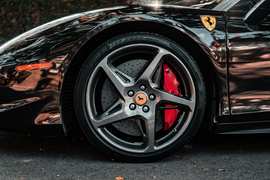 Inside, the cabin is a sanctuary of bespoke luxury. Hand-stitched leather, exposed carbon fiber, and polished aluminum accents create an environment that feels both opulent and purposeful. The driver is presented with a driver-focused cockpit where every control is within reach and every detail is designed to enhance the driving experience.
Exclusivity and Price
Bugatti understands that exclusivity is paramount. Only 500 units of the Chiron will ever be produced, making each one a rare commodity. The starting price for a new Chiron hovers around $2.5 million, but custom options, specialized trims, and the legendary Chiron Super Sport 300+ easily push the cost well into the $3 million to $4 million range. Owning a Chiron is not just about having a fast car; it’s about possessing a piece of automotive history.
Bugatti Bolide: The Track-Focused Specter
While the standard Chiron is a road-legal hypercar, the Bugatti Bolide takes things to an entirely different dimension. Designed exclusively for the track, the Bolide is the most extreme, lightweight, and powerful iteration Bugatti has ever produced. It’s a radical departure from the Chiron’s luxurious demeanor, offering a pure, untethered driving experience.
Uncompromising Performance
The Bolide utilizes a modified 8.0-liter W16 quad-turbocharged engine, tuned to produce an astonishing 1,850 horsepower when running on 110-octane racing fuel. This translates to an astronomical power-to-weight ratio. The car’s lightweight carbon fiber body and minimalist interior trim tip the scales at just 1,450 kg (3,196 lbs), allowing for acceleration figures that defy belief. While official testing is still being finalized, expectations are for a 0–60 mph time of under 2.2 seconds and a top speed potentially exceeding 300 mph (482 km/h).
The aerodynamic package is aggressively functional. The car features a massive rear wing, complex diffusers, and an aerodynamic body that channels airflow like a Formula 1 car. The cabin is stripped down, with only essential instrumentation and a single racing seat.
A Bold Design Statement
Visually, the Bolide is a stunner. It looks less like a road car and more like a spaceship that’s crash-landed on a racetrack. The design is characterized by sharp lines, intricate ducting, and a low-slung profile. The iconic Bugatti horseshoe grille is reinterpreted in a minimalistic way, and the rear lighting signature mimics a sci-fi engine exhaust.
Availability and Value
The Bugatti Bolide is a hypercar icon of the highest order, and production is extremely limited. Only 40 units are planned for production, commanding a price of approximately $4.7 million each. Due to the astronomical development costs and the sheer rarity, collectors are already fighting over allocation spots.
McLaren Speedtail: The Supersonic Supersonic
The McLaren Speedtail is a masterclass in aerodynamic engineering and high-speed luxury. As the spiritual successor to the legendary McLaren F1, the Speedtail represents McLaren’s commitment to pushing the boundaries of road-legal performance while maintaining the exclusivity that defines the brand.
A Fusion of Power and Efficiency
The Speedtail is a hybrid masterpiece, combining a 4.0-liter twin-turbo V8 engine with an electric motor system. This innovative powertrain produces a combined output of 1,050 horsepower. The car’s true superpower, however, lies in its ability to reach an astonishing top speed of 250 mph (402 km/h). It accelerates to 60 mph in a blistering 2.9 seconds, ensuring you’ll never be left wanting for power.
Inside, the cabin is a sanctuary of bespoke luxury. Hand-stitched leather, exposed carbon fiber, and polished aluminum accents create an environment that feels both opulent and purposeful. The driver is presented with a driver-focused cockpit where every control is within reach and every detail is designed to enhance the driving experience.
Exclusivity and Price
Bugatti understands that exclusivity is paramount. Only 500 units of the Chiron will ever be produced, making each one a rare commodity. The starting price for a new Chiron hovers around $2.5 million, but custom options, specialized trims, and the legendary Chiron Super Sport 300+ easily push the cost well into the $3 million to $4 million range. Owning a Chiron is not just about having a fast car; it’s about possessing a piece of automotive history.
Bugatti Bolide: The Track-Focused Specter
While the standard Chiron is a road-legal hypercar, the Bugatti Bolide takes things to an entirely different dimension. Designed exclusively for the track, the Bolide is the most extreme, lightweight, and powerful iteration Bugatti has ever produced. It’s a radical departure from the Chiron’s luxurious demeanor, offering a pure, untethered driving experience.
Uncompromising Performance
The Bolide utilizes a modified 8.0-liter W16 quad-turbocharged engine, tuned to produce an astonishing 1,850 horsepower when running on 110-octane racing fuel. This translates to an astronomical power-to-weight ratio. The car’s lightweight carbon fiber body and minimalist interior trim tip the scales at just 1,450 kg (3,196 lbs), allowing for acceleration figures that defy belief. While official testing is still being finalized, expectations are for a 0–60 mph time of under 2.2 seconds and a top speed potentially exceeding 300 mph (482 km/h).
The aerodynamic package is aggressively functional. The car features a massive rear wing, complex diffusers, and an aerodynamic body that channels airflow like a Formula 1 car. The cabin is stripped down, with only essential instrumentation and a single racing seat.
A Bold Design Statement
Visually, the Bolide is a stunner. It looks less like a road car and more like a spaceship that’s crash-landed on a racetrack. The design is characterized by sharp lines, intricate ducting, and a low-slung profile. The iconic Bugatti horseshoe grille is reinterpreted in a minimalistic way, and the rear lighting signature mimics a sci-fi engine exhaust.
Availability and Value
The Bugatti Bolide is a hypercar icon of the highest order, and production is extremely limited. Only 40 units are planned for production, commanding a price of approximately $4.7 million each. Due to the astronomical development costs and the sheer rarity, collectors are already fighting over allocation spots.
McLaren Speedtail: The Supersonic Supersonic
The McLaren Speedtail is a masterclass in aerodynamic engineering and high-speed luxury. As the spiritual successor to the legendary McLaren F1, the Speedtail represents McLaren’s commitment to pushing the boundaries of road-legal performance while maintaining the exclusivity that defines the brand.
A Fusion of Power and Efficiency
The Speedtail is a hybrid masterpiece, combining a 4.0-liter twin-turbo V8 engine with an electric motor system. This innovative powertrain produces a combined output of 1,050 horsepower. The car’s true superpower, however, lies in its ability to reach an astonishing top speed of 250 mph (402 km/h). It accelerates to 60 mph in a blistering 2.9 seconds, ensuring you’ll never be left wanting for power.
 McLaren’s Adaptive Aerodynamics technology allows the car to change its shape to optimize performance. The active rear wing can tilt and deploy to increase drag for braking or reduce drag for high-speed runs, providing a truly adaptive driving experience.
The Unique Cabin Layout
One of the Speedtail’s most distinctive features is its central driving position, inherited from the McLaren F1. The driver sits in the middle, flanked by two passenger seats that are slightly set back. This design enhances the driver’s immersion in the driving experience while maintaining a level of comfort that’s rarely found in hypercars.
The interior is a symphony of technology and luxury. The cockpit features a combination of touchscreens, digital displays, and high-end materials. The exterior is characterized by its long, flowing lines and smooth silhouette, which gives the car its nickname – a flying teardrop at supersonic speeds.
Rarity and Investment
Production of the McLaren Speedtail is strictly limited to 106 units, a nod to the original McLaren F1’s production run. This exclusivity has made the Speedtail a highly desirable collector’s item. The starting price is around $2 million, but with high demand and customization options, many models trade for significantly more on the secondary market.
Aston Martin Valkyrie: The Hybrid Hypercar Revolution
The Aston Martin Valkyrie is arguably one of the most significant hypercars of the decade. Developed in close collaboration with Red Bull Racing’s engineering team, the Valkyrie is a road-legal race car designed to deliver extreme performance without sacrificing the prestige of the Aston Martin badge.
Lightweight Engineering and Extreme Power
What sets the Valkyrie apart is its featherlight construction. Weighing in at only 1,030 kg (2,270 lbs), it is one of the lightest hypercars in existence. This incredible feat is achieved through the use of an advanced carbon fiber body and a carbon fiber chassis.
Powering this lightweight marvel is a 6.5-liter V12 engine, jointly developed by Aston Martin and Cosworth. This high-revving naturally aspirated engine produces a jaw-dropping 1,160 horsepower. Combined with the aerodynamic downforce, the Valkyrie is capable of reaching speeds exceeding 220 mph (354 km/h). It accelerates to 60 mph in a mere 2.5 seconds, rivaling the fastest hypercars on the planet.
Aerodynamic Masterpiece
The Valkyrie’s exterior is a breathtaking display of aerodynamic efficiency. It features a radical design with large intakes, diffusers, and underbody aero tunnels that channel air to create immense downforce. The doors are engineered to hinge forward and upward in a unique dihedral synchro-helix configuration, adding to its dramatic presence.
Inside, the Valkyrie offers a two-seat configuration with a driver-centric cockpit. The cabin is minimalist but extremely luxurious, blending modern technology with the refinement expected of an Aston Martin.
Limited Production and Exclusivity
McLaren’s Adaptive Aerodynamics technology allows the car to change its shape to optimize performance. The active rear wing can tilt and deploy to increase drag for braking or reduce drag for high-speed runs, providing a truly adaptive driving experience.
The Unique Cabin Layout
One of the Speedtail’s most distinctive features is its central driving position, inherited from the McLaren F1. The driver sits in the middle, flanked by two passenger seats that are slightly set back. This design enhances the driver’s immersion in the driving experience while maintaining a level of comfort that’s rarely found in hypercars.
The interior is a symphony of technology and luxury. The cockpit features a combination of touchscreens, digital displays, and high-end materials. The exterior is characterized by its long, flowing lines and smooth silhouette, which gives the car its nickname – a flying teardrop at supersonic speeds.
Rarity and Investment
Production of the McLaren Speedtail is strictly limited to 106 units, a nod to the original McLaren F1’s production run. This exclusivity has made the Speedtail a highly desirable collector’s item. The starting price is around $2 million, but with high demand and customization options, many models trade for significantly more on the secondary market.
Aston Martin Valkyrie: The Hybrid Hypercar Revolution
The Aston Martin Valkyrie is arguably one of the most significant hypercars of the decade. Developed in close collaboration with Red Bull Racing’s engineering team, the Valkyrie is a road-legal race car designed to deliver extreme performance without sacrificing the prestige of the Aston Martin badge.
Lightweight Engineering and Extreme Power
What sets the Valkyrie apart is its featherlight construction. Weighing in at only 1,030 kg (2,270 lbs), it is one of the lightest hypercars in existence. This incredible feat is achieved through the use of an advanced carbon fiber body and a carbon fiber chassis.
Powering this lightweight marvel is a 6.5-liter V12 engine, jointly developed by Aston Martin and Cosworth. This high-revving naturally aspirated engine produces a jaw-dropping 1,160 horsepower. Combined with the aerodynamic downforce, the Valkyrie is capable of reaching speeds exceeding 220 mph (354 km/h). It accelerates to 60 mph in a mere 2.5 seconds, rivaling the fastest hypercars on the planet.
Aerodynamic Masterpiece
The Valkyrie’s exterior is a breathtaking display of aerodynamic efficiency. It features a radical design with large intakes, diffusers, and underbody aero tunnels that channel air to create immense downforce. The doors are engineered to hinge forward and upward in a unique dihedral synchro-helix configuration, adding to its dramatic presence.
Inside, the Valkyrie offers a two-seat configuration with a driver-centric cockpit. The cabin is minimalist but extremely luxurious, blending modern technology with the refinement expected of an Aston Martin.
Limited Production and Exclusivity
 Aston Martin has set a production limit of 175