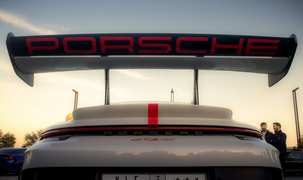
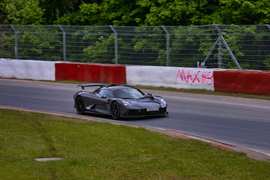
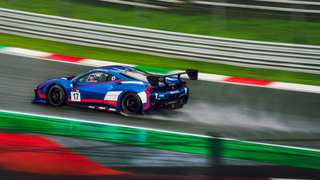
The Ultimate Track Beasts: 10 Production Cars with Genuine Motorsport Engines
For over a century, the thunderous symphony of high-performance engines has resonated far beyond the polished asphalt of race circuits. From the roaring V8s of endurance legends to the piercing shriek of Formula 1 powerhouses, the world of production cars driven by motorsport engines has captivated enthusiasts with an almost primal allure. This isn’t merely about aesthetics or superficial horsepower upgrades; we are talking about vehicles that are born from the crucible of elite competition, bearing the very DNA of their track-bred ancestors.
These powerhouses, sculpted by the relentless pursuit of victory, offer a visceral, adrenaline-fueled experience that transcends ordinary driving. They forge a direct, potent link between the mundane commute and the electrifying world of professional motorsport. The intangible mystique that surrounds these race-bred cars isn’t just about bragging rights; it’s about the feeling of piloting a machine that has been forged in the fires of extreme competition, a machine that has proven itself capable of conquering the world’s toughest circuits.
In this exhaustive exploration, we dive deep into ten production vehicles with racing origins, machines that artfully blur the lines between the racetrack and the public highway. From the operatic crescendo of naturally aspirated V12s to the guttural bellow of turbocharged titans, these vehicles offer a tangible taste of racing pedigree. But before we immerse ourselves in the specifics of these exceptional machines, it’s crucial to understand the fundamental rationale behind why automotive manufacturers invest astronomical sums into the costly and demanding world of motorsport and performance cars, and how those hard-won lessons translate into the vehicles that grace our driveways.
The Symbiotic Relationship: Motorsport DNA in Road-Going Vehicles
The intertwined destiny of motorsport and road car development is a narrative as old as the automobile itself. Racing serves as the ultimate proving ground, pushing the very boundaries of engineering ingenuity and subjecting vehicles and their components to unparalleled stress. The unforgiving environment of competition demands absolute reliability and peak performance; there is simply no room for failure when victory hangs in the balance. The invaluable knowledge gleaned from these high-stakes endeavors inevitably finds its way back to the design and production of the cars we rely on daily.
Whether it’s the implementation of sophisticated aerodynamic principles, the strategic use of advanced lightweight materials, or the direct trickle-down of cutting-edge engine technology, innovation forged in the heat of racing pioneers the creation of superior road cars. Consider, for instance, the widespread adoption of disc brakes and the ubiquity of paddle shifters; both technologies began their journey on the racetrack before becoming standard features in contemporary production vehicles.
Furthermore, the prestige and brand enhancement derived from motorsport success are immeasurable. When a manufacturer’s racing machine consistently dominates the competition, its road-going counterparts are perceived as inherently more desirable and capable. While the vast majority of enthusiasts will never have the opportunity to pilot a Formula 1 car or a Le Mans prototype, the presence of a race-bred engine thrumming beneath the hood offers a profound sense of connection to the action, allowing us to experience a sliver of that exhilarating world.
The investment in performance engineering is substantial, often amounting to hundreds of millions of dollars annually. This financial commitment is not simply a matter of national pride or brand legacy; it’s a strategic imperative. The high-risk environment of racing forces manufacturers to innovate at a pace that traditional development cycles cannot match. Innovations in fuel efficiency, safety, and performance that emerge from motorsport often become industry standards, driving progress across the entire automotive sector. The development of lightweight materials such as carbon fiber, advanced suspension systems, and more efficient turbocharged engines are all direct byproducts of competitive racing environments. These technological advancements provide a unique selling proposition for street-legal race cars and often filter down into more affordable, mainstream vehicles, benefiting the average consumer.
The concept of “race on Sunday, sell on Monday” holds true even today, albeit in more sophisticated ways than in the early days of motorsport. The public’s fascination with speed, power, and cutting-edge technology continues to fuel the demand for supercars with racing engines and exotic cars with track-derived powertrains. For automotive manufacturers, motorsport and performance car development represents a way to push the envelope of what is technologically possible and create vehicles that stand out in a crowded market. The research and development that goes into these racing-inspired road cars often leads to breakthroughs that eventually benefit the broader market, making cars safer, more efficient, and more enjoyable to drive.
The pursuit of performance on the racetrack inevitably trickles down, benefiting consumers in ways that extend far beyond bragging rights. These race-bred engines, meticulously engineered and relentlessly tested, offer a tangible link to the world of professional racing, providing an exhilarating driving experience that is both refined and raw. The ongoing investment in motorsport engineering and high-performance automotive development ensures that the lessons learned on the track continue to inform and shape the cars that we drive every day. This commitment to innovation ensures that the pursuit of speed and performance remains at the forefront of automotive engineering, benefiting both the industry and the consumers who love these performance cars with racing heritage.
A Legacy of Speed: 10 Production Cars Fuelled by Racing Engines
Our journey begins with vehicles that represent the pinnacle of this motorsport-to-road philosophy. These are not simply cars with racing stripes; they are machines carrying the very heart and soul of their track-honed ancestors.
Alfa Romeo Montreal: The V8 Heartbeat of a Legend
The Alfa Romeo Montreal, a gem from the late 1960s and early 1970s, houses a remarkable 2.6-liter Tipo 33 naturally aspirated V8 engine. This power unit was directly derived from Alfa Romeo’s highly successful Tipo 33 sports prototype racer, a formidable competitor in grueling endurance events such as the Targa Florio and the 24 Hours of Daytona. While meticulously retuned for civilian duty, the engine in the Montreal remarkably preserves its motorsport character. It willingly spins to an impressive 7,000 RPM, delivering a spirited 200 horsepower. The intoxicating symphony of its V8, coupled with its strikingly avant-garde styling, cemented the Montreal’s status as one of the most captivating, albeit frequently overlooked, Alfa Romeo creations. This Italian performance car exemplifies the charm of vintage racing-derived engines.
The Alfa Romeo Montreal is a testament to the performance engineering of its era. The V8 engine, though slightly detuned for road use, retains the soul of its motorsport counterpart. The distinctive cross-plane crankshaft design of the 2.6L Tipo 33 V8 produces a symphony of exhaust notes that are both unique and captivating. The 200 horsepower output might seem modest by today’s standards, but in the late 1960s, it was more than enough to make the Montreal a serious contender in the sports car market. The race-bred car was designed to compete with the likes of Ferrari and Maserati, and it did so with style and grace. The Italian sports car represents a unique chapter in Ferrari’s history, offering a glimpse into the motorsport and performance car lineage that has defined the brand for decades.
The striking design of the Alfa Romeo Montreal, penned by Marcello Gandini at Bertone, further enhances its motorsport and performance car appeal. The fixed headlight covers, often referred to as “eyebrows,” and the distinctive louvers behind the rear side windows give the car a futuristic and aggressive look. These design elements were not merely for aesthetics; they were functional, improving the aerodynamics of the vehicle. The street-legal race car was designed to perform, and its design reflected that intent. The racing-inspired road car was a bold statement by Alfa Romeo, a company known for its commitment to motorsport engineering and high-performance automotive development. The Montreal remains one of the most exotic cars with track-derived powertrains ever produced.
BMW M1, M3 (E30), M5 (E28), M6 (E24): The M Division’s Motorsport Foundation
BMW’s profound motorsport lineage is indelibly etched into the DNA of its most iconic models. The legendary BMW M1, a mid-engine marvel, was propelled by the potent 3.5-liter M88 inline-six engine. This powerplant was a direct descendant of the brand’s highly successful racing programs, most notably finding its application in the BMW M1 ProCar series. Remarkably, this same formidable engine later found its way into the E24 M6 and the E28 M5, bestowing them with exceptional performance credentials. Concurrently, the four-cylinder S14 engine powering the E30 M3 was also deeply rooted in the M88 and the turbocharged M12 Formula 1 engines. This engine drew significant inspiration from BMW’s dominance in touring car racing, sharing critical components and engineering principles with the cars that consistently conquered the Deutsche Tourenwagen Masters (DTM) series. These BMW performance cars are testaments to the brand’s racing heritage.
The development of the BMW M1 was a direct consequence of the brand’s motorsport and performance car ambitions. The German performance car was designed to compete in the Group 4 GT racing category, and it was built to the highest standards of motorsport engineering. The M88 inline-six engine was a masterpiece of engineering, capable of producing over 450 horsepower in race trim. For the street, the engine was detuned to a more manageable 277 horsepower, but it still retained the spirit of its