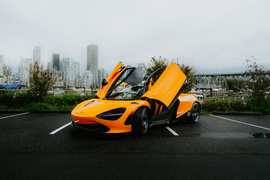
10 Road Cars Powered by Elite Motorsport Engines
For generations, the thunderous song of a finely tuned engine has resonated not just on legendary race circuits, but throughout the arteries of our cities. The allure, the raw visceral thrill, that comes with commanding a machine infused with true motorsport DNA is undeniable. This isn’t about superficial visual enhancements or the promise of future performance; we are discussing production cars that carry the heart and soul of engines conceived and perfected in the crucible of elite competition. Forged in the relentless pursuit of speed and victory, these powerhouses deliver a high-revving, adrenaline-fueled experience to everyday drivers, forging a direct and potent link to their racing counterparts.
In this comprehensive exploration, we journey through ten production vehicles that masterfully blur the lines separating the racetrack from the public highway. From the operatic crescendos of naturally aspirated V12 engines to the guttural bellows of turbocharged titans, these machines offer a tangible taste of racing heritage. But before we immerse ourselves in the specifics of these exceptional vehicles, it is crucial to understand the fundamental reasons why automotive manufacturers invest astronomical sums into the demanding and costly world of motorsport, and how those hard-won lessons translate into the cars that grace our driveways. Understanding cars powered by real racing engines illuminates the transfer of innovation from the track to the road, showcasing engineering excellence and heritage.
The Symbiotic Relationship: Motorsport DNA in Road-Going Vehicles
The intertwined destiny of motorsport and road car development is a narrative as old as the automobile itself. Racing serves as the ultimate extreme proving ground, pushing the boundaries of engineering ingenuity and subjecting vehicles and their components to unparalleled stress. The unforgiving environment of competition demands absolute reliability and peak performance; there is simply no room for failure when victory hangs in the balance. The invaluable knowledge gleaned from these high-stakes endeavors inevitably filters back into the design and production of the cars we rely on every day. Whether it is the implementation of sophisticated aerodynamic principles, the strategic application of advanced lightweight materials, or the direct trickle-down of cutting-edge engine technology, innovation forged in the heat of racing pioneers the creation of superior road cars. For enthusiasts researching motorsport inspired cars, this connection is fundamental.
Consider, for instance, the widespread adoption of disc brakes and the ubiquity of paddle shifters; both technologies began their journey on the racetrack before becoming standard features in contemporary production vehicles. Furthermore, the prestige and brand enhancement derived from motorsport success are immeasurable. When a manufacturer’s racing machine consistently dominates the competition, its road-going counterparts are perceived as inherently more desirable and capable. While the vast majority of enthusiasts will never have the opportunity to pilot a Formula 1 car or a Le Mans prototype, the presence of a race-bred engine thrumming beneath the hood offers a profound sense of connection to the action, allowing us to experience a sliver of that exhilarating world. High-end supercars with race engines embody this philosophy, offering street-legal racing performance.
The ROI of Racing: Why Manufacturers Fund Competition
The investment automotive giants make in racing is a calculated strategic maneuver, often shrouded in technical jargon, but grounded in clear business objectives. This financial commitment goes far beyond mere brand image; it serves as a live-fire testing ground that drives innovation, pushes technological boundaries, and validates performance under the most extreme conditions imaginable.
The most significant return on this investment is technological transfer. Competition acts as a pressure cooker, forcing engineers to invent solutions to challenges that would remain untested in the controlled environment of a design studio. For example, the need for lighter weight in Formula 1 led to advancements in carbon fiber chassis construction and magnesium alloy components, technologies that have since trickled down to high-end production sports cars. Similarly, the relentless quest for grip and downforce in endurance racing has pushed the evolution of aerodynamic wings, splitters, and diffusers—features now commonplace on performance cars that improve stability and handling. The development of ABS (Anti-lock Braking System) and electronic stability control (ESC) were heavily influenced by the need to improve vehicle control in racing scenarios, ultimately making road cars safer.
Another critical advantage is performance validation and endurance. The world of racing pushes engines, transmissions, and brakes to their absolute breaking points. A component that can withstand the rigors of a 24-hour endurance race, such as Le Mans or the Nürburgring 24 Hours, is proven to be robust, reliable, and capable of handling extreme thermal and mechanical stress. This validation provides manufacturers with the confidence to install these high-performance components in production vehicles, knowing they have been rigorously tested in a real-world motorsport scenario. For consumers seeking production cars with race engines, this validation translates directly to perceived quality and performance potential.
Furthermore, brand prestige and market differentiation play a vital role. Success on the track attracts attention and builds credibility. A company that can claim to have a Formula 1 world championship or multiple Daytona wins inherently gains a halo effect around its road-going vehicles. These motorsport achievements position a brand as a leader in engineering and performance, setting its products apart from competitors. This prestige allows manufacturers to command higher prices for their vehicles, justify higher margins, and attract a devoted fan base. The connection to motorsport fosters brand loyalty, as customers associate the car they purchase with the success and engineering prowess witnessed on the track. For luxury and performance brands, this is a strategic imperative.
Finally, marketing and talent development are crucial benefits. Motorsport events provide a global platform for brand visibility. Racing teams become rolling advertisements, and drivers become brand ambassadors, connecting with audiences in ways traditional advertising cannot match. Additionally, the intensive environment of motorsport cultivates top-tier engineering talent. Professionals trained to solve complex problems at the highest level often transition into the research and development divisions of automotive manufacturers, bringing their advanced skills and experience to bear on production vehicles. This continuous cycle of innovation, testing, and application ensures that motorsport remains a vital engine of progress in the automotive industry.
A Legacy of Speed: 10 Production Cars Fuelled by Racing Engines
Our journey begins with vehicles that represent the pinnacle of this motorsport-to-road philosophy. These are not simply cars with racing stripes; they are machines carrying the very heart and soul of their track-honed ancestors. For enthusiasts searching for motorsport inspired cars, these examples offer a glimpse into the fusion of competition and consumer performance.
Alfa Romeo Montreal: The V8 Heartbeat of a Legend
The Alfa Romeo Montreal, a gem from the late 1960s and early 1970s, houses a remarkable 2.6-liter Tipo 33 naturally aspirated V8 engine. This power unit was directly derived from Alfa Romeo’s highly successful Tipo 33 sports prototype racer, a formidable competitor in grueling endurance events such as the Targa Florio and the 24 Hours of Daytona. While meticulously retuned for civilian duty, the engine in the Montreal remarkably preserves its motorsport character. It willingly spins to an impressive 7,000 RPM, delivering a spirited 200 horsepower. The intoxicating symphony of its V8, coupled with its strikingly avant-garde styling, cemented the Montreal’s status as one of the most captivating, albeit frequently overlooked, Alfa Romeo creations. This Italian performance car exemplifies the charm of vintage racing-derived engines. When exploring classic Italian cars with racing engines, the Montreal stands out as a unique example of the era’s design and engineering philosophy.
The engine in the Montreal, the Tipo 33 V8, was a marvel of its time, featuring a light alloy block and cylinder heads, and four overhead camshafts. Unlike many mass-produced road cars, this engine was designed to be revved hard, producing its power at higher engine speeds, characteristic of racing units. This provided a visceral driving experience where the driver had to work the engine to extract its full performance, further reinforcing the connection to its racing pedigree. The transition from a pure race engine to a consumer model was significant; Alfa Romeo had to detune the engine for reliability, emissions, and noise regulations, but it retained enough of its motorsport DNA to give the car its unique character. For collectors interested in Alfa Romeo cars with racing engines, the Montreal is a significant milestone.
BMW M1, M3 (E30), M5 (E28), M6 (E24): The M Division’s Motorsport Foundation
BMW’s profound motorsport lineage is indelibly etched into the DNA of its most iconic models. The legendary BMW M1, a mid-engine marvel, was propelled by the potent 3.5-liter M88 inline-six engine. This powerplant was a direct descendant of the brand’s highly successful racing programs, most notably finding its application in the BMW M1 ProCar series. Remarkably, this same formidable engine later found its way into the E24 M6 and the E28 M5, bestowing them with exceptional performance credentials. Concurrently, the four-cylinder S14 engine powering the E30 M3 was also deeply rooted in the M88 and the turbocharged M12 Formula 1 engines. This engine drew significant inspiration from BMW’s dominance in touring car racing, sharing critical components and engineering principles with the cars that consistently conquered the Deutsche Tourenwagen Masters (DTM) series. These BMW performance cars are testaments to the brand’s racing heritage. For collectors seeking BMW cars with racing engines, these models are essential.
The M88 engine is a legend in its own right, developed by BMW Motorsport GmbH to power the M1 homologation car. It was a high-revving, fuel-injected powerhouse with a distinctive sound that distinguished it from other BMW inline-six engines of the era. The fact that BMW was willing to install this engine in a mass-produced sedan like the E28 M5 in the