🔻 𝑭𝒖𝒍𝒍 𝒊𝒏𝒇𝒐𝒓𝒎𝒂𝒕𝒊𝒐𝒏 𝒊𝒏 𝒃𝒆𝒍𝒐𝒘 👇👇👇🔻

Ten Road-Legal Machines That Carry the Soul of the Racetrack
For generations, the thunderous roar of a meticulously tuned engine has resonated not just across the hallowed grounds of legendary speedways, but also through the arteries of our cities. There exists an undeniable allure, a visceral, heart-pounding thrill, inherent in piloting a machine imbued with authentic motorsport DNA. This isn’t merely about captivating aesthetics or superficial performance enhancements; we are discussing production automobiles that proudly bear powerplants conceived and perfected within the crucible of elite competition. These titans of speed, born from the relentless pursuit of victory, deliver a high-revving, adrenaline-fueled experience to the everyday driver, forging a direct and potent link to their racing brethren.
In this in-depth examination, we delve into ten production vehicles that artfully blur the demarcation lines between the circuit and the public roadway. From the operatic crescendos of naturally aspirated V12s to the guttural bellow of turbocharged titans, these creations offer a tangible taste of racing pedigree. However, before we immerse ourselves in the specific details of these exceptional machines, it is crucial to grasp the fundamental rationale behind why automotive manufacturers invest astronomical sums into the costly and demanding realm of motorsport, and how those hard-won lessons translate into the vehicles that grace our driveways.
The Intricate Partnership: The Infusion of Motorsport DNA into Consumer Vehicles
The intertwined destiny of racing and road car development is a narrative as old as the automobile itself. Competition serves as an extreme proving ground, pushing the very limits of engineering ingenuity and subjecting vehicles and their constituent components to unparalleled physical stress. The unforgiving environment of elite competition demands absolute reliability and peak performance; there is simply no room for failure when victory hangs in the balance. The invaluable knowledge gleaned from these high-stakes endeavors inevitably finds its way back to the design and production of the cars we rely on daily. Whether it is the implementation of sophisticated aerodynamic principles, the strategic application of advanced lightweight materials, or the direct trickle-down of cutting-edge engine technology, innovation forged in the heat of racing pioneers the creation of superior road cars.
Consider, for example, the widespread adoption of disc brakes and the ubiquity of paddle shifters; both technologies began their journey on the racetrack before becoming standard features in contemporary production vehicles. Furthermore, the prestige and brand enhancement derived from motorsport success are immeasurable. When a manufacturer’s racing machine consistently dominates the competition, its road-going counterparts are perceived as inherently more desirable and capable. While the vast majority of enthusiasts will never have the opportunity to pilot a Formula 1 car or a Le Mans prototype, the presence of a race-bred engine thrumming beneath the hood offers a profound sense of connection to the action, allowing us to experience a sliver of that exhilarating world. This symbiotic relationship has sculpted the automotive landscape, transforming vehicles from mere transportation into extensions of the racing legacy. Understanding this fusion is key to appreciating the raw power and engineering heritage present in these exceptional machines.
A Legacy of Speed: Ten Production Vehicles Powered by Racing Engines
Our exploration begins with vehicles that represent the pinnacle of this motorsport-to-road philosophy. These are not simply cars adorned with racing stripes; they are machines carrying the very soul and essence of their track-honed predecessors. Each model tells a unique story of engineering ambition, competitive spirit, and the relentless pursuit of automotive perfection. These engines, tested under the most extreme conditions, offer a driving experience that is both raw and refined, embodying the very essence of production cars driven by motorsport engines.

Alfa Romeo Montreal: The V8 Heartbeat of a Legend
The Alfa Romeo Montreal, a gem from the late 1960s and early 1970s, houses a remarkable 2.6-liter Tipo 33 naturally aspirated V8 engine. This power unit was directly derived from Alfa Romeo’s highly successful Tipo 33 sports prototype racer, a formidable competitor in grueling endurance events such as the Targa Florio and the 24 Hours of Daytona. While meticulously retuned for civilian duty, the engine in the Montreal remarkably preserves its motorsport character. It willingly spins to an impressive 7,000 RPM, delivering a spirited 200 horsepower. The intoxicating symphony of its V8, coupled with its strikingly avant-garde styling, cemented the Montreal’s status as one of the most captivating, albeit frequently overlooked, Alfa Romeo creations. This Italian performance car exemplifies the charm of vintage racing-derived engines.
BMW M1, M3 (E30), M5 (E28), M6 (E24): The M Division’s Motorsport Foundation
BMW’s profound motorsport lineage is indelibly etched into the DNA of its most iconic models. The legendary BMW M1, a mid-engine marvel, was propelled by the potent 3.5-liter M88 inline-six engine. This powerplant was a direct descendant of the brand’s highly successful racing programs, most notably finding its application in the BMW M1 ProCar series. Remarkably, this same formidable engine later found its way into the E24 M6 and the E28 M5, bestowing them with exceptional performance credentials. Concurrently, the four-cylinder S14 engine powering the E30 M3 was also deeply rooted in the M88 and the turbocharged M12 Formula 1 engines. This engine drew significant inspiration from BMW’s dominance in touring car racing, sharing critical components and engineering principles with the cars that consistently conquered the Deutsche Tourenwagen Masters (DTM) series. These BMW performance cars are testaments to the brand’s racing heritage, offering a glimpse into the heart of motorsport engineering.
Chevrolet Camaro ZL1 (1969): A Can-Am Monster Unleashed
The 1969 Chevrolet Camaro ZL1 was a different breed entirely, equipped with a colossal 427 cubic-inch (7.0-liter) V8 engine originally conceived for the demanding world of Can-Am racing. Featuring an all-aluminum construction, this engine was remarkably lightweight for its imposing displacement, delivering a mind-boggling amount of power. While officially rated at 430 horsepower for its road-going iteration, its true output was closer to a staggering 500 hp. The ZL1 package transformed the already potent Camaro into a street-legal drag strip annihilator. Its formidable engine also found its way into numerous race cars competing in the SCCA Trans-Am series. With a production run of a mere 69 units, the Camaro ZL1 stands today as an exceptionally rare and highly coveted automotive artifact, representing the pinnacle of American muscle cars with racing roots.
Ferrari Dino 206 GT: A Gracious Nod to Formula 2 Prowess
The elegant Ferrari Dino 206 GT, though often considered a marque apart, harbored a sophisticated 2.0-liter Dino naturally aspirated V6 engine. This powerplant was meticulously developed for Ferrari’s Formula 2 racing endeavors during the 1960s. While carefully calibrated for road use, the engine retained its characteristic high-revving nature, imbuing the Dino with a palpable racing spirit that made it an absolute delight to navigate on winding country roads. Producing a respectable 180 horsepower, this output was more than adequate for a car weighing just over 2,000 pounds. The Dino represented a rare instance of a Ferrari-branded vehicle not bearing the iconic Prancing Horse emblem on its exterior and marked the esteemed Italian marque’s pioneering foray into mid-engine V6 sports cars, setting a vital precedent for future models. This Italian sports car showcases a unique chapter in Ferrari’s history, bridging the gap between racing innovation and road-going elegance.
Diving Deeper: The Science of Performance
Beyond the allure of motorsports, the technological advancements derived from racing have profoundly shaped the modern automobile. Manufacturers continually push the boundaries of engineering, driven by the unforgiving demands of competition. This relentless pursuit of speed and efficiency has yielded a cascade of innovations that benefit the everyday driver, from improved aerodynamics to advanced materials science. The knowledge gained from thousands of hours on the track is directly translated into the vehicles that fill our showrooms, making production cars driven by motorsport engines not just aspirational objects, but functional marvels of engineering.
Aerodynamics and Lightweight Construction: The Physics of Speed
The science of aerodynamics plays a critical role in the development of high-performance vehicles. Race cars are designed to minimize drag and maximize downforce, enabling higher speeds and greater stability. These principles are increasingly being integrated into road-going cars, improving fuel efficiency and handling. Lightweight materials, such as carbon fiber and aluminum, are also being adopted to reduce weight and improve performance. These advancements, forged in the crucible of racing, are paving the way for more efficient and sustainable transportation.
Materials Science: From Racetrack to Driveway
The pursuit of lightweight materials has revolutionized modern automotive engineering. Race cars utilize exotic materials like carbon fiber, titanium, and ceramic composites to reduce weight and improve performance. These materials are now being adopted in road-going cars, resulting in lighter, more efficient, and better-handling vehicles. The development of advanced materials science, driven by the demands of motorsport, is transforming the way cars are built and experienced.
A Legacy of Speed: Ten Production Vehicles Powered by Racing Engines (Continued)
Ferrari F50: Formula 1 Unleashed on the Road
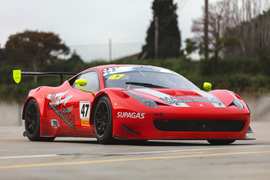
The Ferrari F50, conceived to commemorate the Italian marque’s golden jubilee, propels the concept of a track-derived engine to an entirely new stratospheric level. Its heart is a breathtaking 4.7-liter Tipo F130B naturally aspirated V12 engine, a direct transplant from Ferrari