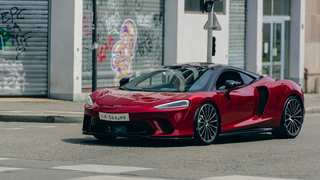
Toyota’s Electrifying Sports Car Offensive: What We Know About the GR GT, GT3, and the Next-Gen Lexus LFA
When Toyota unveiled its trio of future sports cars—the Lexus LFA Concept, the GR GT road car, and the GR GT3 racer—at their Woven City headquarters, the automotive world paused to catch its breath. It was a revelation that spoke volumes about the company’s vision, its commitment to preserving traditional car-making skills, and its aggressive pivot toward a hybrid-heavy, performance-focused future.
Over two intensive hours, we had the privilege of inspecting these machines up close and engaging in technical briefings with chief program manager Takashi Doi and the engineering teams behind chassis, powertrain, design, and aerodynamics. As you might expect from a company of Toyota’s caliber, answers weren’t always handed out freely. We received polite deflection and well-guarded secrets, but one thing became abundantly clear: Toyota intends to stretch every milestone of this journey, from concept to customer hands, into a story worth telling.
This isn’t just about launching a few sports cars; it’s about celebrating the fusion of heritage and innovation, the power of performance, and the unwavering spirit of motorsport.
Toyota GR GT: The New King of the GT Market?
The heart of Toyota’s current offensive is the GR GT, the road-legal version of the GR GT3 race car, slated to hit dealerships around 2027, likely as a 2028 model. The relationship between these two vehicles is crucial: the production GT will serve as the homologation platform for the race-ready version. We’ve seen this playbook before, most notably with the Ford GT, where the race car often appears years ahead of its roadgoing counterpart.
After repeated inquiries about pricing, Mr. Doi suggested we look at the benchmarks set by the Porsche 911 and Mercedes-AMG GT. Using the GR GT’s claimed specifications—641 horsepower and a curb weight of 3,858 pounds—we get a weight-to-power ratio of 6.0 lb/hp. This places it directly in the territory of these premium competitors.
| Vehicle | Curb Weight | Horsepower | Weight/Power | Base Price |
| :— | :— | :— | :— | :— |
| 2028 Toyota GR GT | 3858 lb | 641 hp | 6.0 lb/hp | N/A |
| 2026 Porsche 911 GT3 | 3278 lb | 502 hp | 6.2 lb/hp | $235,500 |
| 2026 Porsche 911 Turbo S | 3859 lb | 701 hp | 5.5 lb/hp | $275,650 |
| 2026 AMG GT Pro 4Matic | 4299 lb | 603 hp | 7.1 lb/hp | $202,200 |
| 2026 Aston Martin Vantage S | 3847 lb | 671 hp | 5.7 lb/hp | $235,000 |
Note: : AWD models; Other models are RWD only.
Based on this competitive set, it’s almost certain the GR GT will be priced north of $200,000. This signals Toyota’s intent to play in the premium GT segment, not just slotting between the Supra and the Supra GT4.
Performance, Handling, and the Question of the Drift Mode
The GR GT boasts a fiendishly complex hybrid powertrain that includes a mechanical limited-slip differential (LSD). This isn’t just a nod to electric vehicle technology; it’s a precision engineering statement designed to deliver maximum driver engagement and serious tire-scorching potential. We’re talking about thick black burnouts, delicious smoky donuts, and eye-watering drifts.
But will it drift? As in, will there be a dedicated drift mode?
Mr. Doi confirmed that his team is developing various driving modes, but he remained tight-lipped about their specific names. However, a look at the GR GT’s steering wheel provides strong clues. A knob on the right side reads ‘Sport Boost,’ indicating a performance-oriented setting. Mirroring this on the lower left is a button labeled ‘TRC/VSC’ and the word “Off.” When pressed, Doi-san eventually confirmed that drivers will indeed be allowed to turn traction and stability completely off, a critical feature for hardcore enthusiasts.
Looking ahead, we asked about potential future variants—such as a Nürburgring Edition (following the Lexus LFA’s final run), a GRMN (Meister of Nürburgring), a GT R, or a GT3 RS version. Doi’s response was measured: “Obviously we can’t talk about future product, but variations and improvements is something we’re always looking for. And that’s crucial, very important for a sports car.” While this is classic corporate non-answer, it implicitly confirms that Toyota isn’t planning to release just one flavor of GR GT. The potential for automotive evolution and specialization is clearly on the table.
Nürburgring: A Symbol of Humiliation and Redemption
The Nürburgring Nordschleife has a special place in the Toyota story, and it wasn’t lost on the audience when Akio Toyoda, father of Gazoo Racing and grandson of the founder, introduced the GR GT and GR GT3. He stood before a massive screen displaying the word “humiliation” with a capital ‘H’.
Akio spoke at length about a humbling experience from a few years ago: testing Toyota sports cars, including a fourth-generation Supra, at the Nürburgring only to be passed by faster, better-handling vehicles, predominantly from German manufacturers. It was this powerful Japanese concept of using humiliation as a force for improvement that drove the development of the GR GT and GR GT3.
When asked about the importance of the Nürburgring and whether the team is targeting a specific lap time—say, under 7 minutes, as recently set by the Mustang GTD (6:52), Corvette ZR1 (6:50), and Corvette ZR1X (6:49)—Mr. Doi didn’t take the bait. But he did affirm the ’Ring’s significance to Toyota, the GR brand, and the company’s motorsport programs. He reiterated Akio’s position: the GR GT will not be the one getting passed on the Green Hell.
Given the characteristic modesty and humility of Japanese automotive engineers, we consider this essentially a declaration that the GR GT will achieve a sub-7-minute lap, especially since various 911 GT3 and AMG GT models have all dipped well below that barrier. High performance automotive engineering is always about chasing the records, and Toyota just declared its intentions on the world’s most demanding circuit.
Lexus LFA: The EV Flagship Dream
If you love the look of the LFA and are hoping for a quick return, you might need to be patient. The official answer from Toyota representatives was a vague “several years,” including Mr. Doi himself.
Regarding the price, we believe the new LFA will have to be considerably less than the old one. The original Lexus LFA, which debuted in 2010 at a shocking $375,000 and exited the market a few years later at $445,000 for the LFA Nürburgring Edition, set an incredibly high bar.
Lexus LFA Pricing and Availability (Concept)
Mr. Doi conceded that the world has changed since the Lexus V-10 supercar departed the scene. Coming back as an EV complicates matters. This appears to be a subtle implication that the next-generation LFA needs to be less than $350,000.
But will it be even less? We think so, for a couple of reasons. The market for luxury sports coupes is already minuscule, and there are currently no electric sports coupes priced north of $200,000. There are a small handful of electric luxury and performance cars over $200,000—including the Lucid Air Sapphire, Rolls-Royce Spectre, and Cadillac Celestiq—but none fit the competitive profile of the LFA. Get into the electric hypercar realm of the Rimac Nevera and Lotus Evija, and you’re talking $2.3 to $2.4 million, which is decidedly not Lexus territory. The only model that comes close to the mission Lexus is attempting to execute is the second-gen Tesla Roadster, rumored to be in the $200,000 to $250,000 range—if Elon’s vaporware ever materializes.
The Solid-State Battery Edge?
But there is one complicating factor that could render the LFA a very pricey, and exotic, luxury sports flagship for Lexus: the potential arrival of solid-state battery (SSB) technology. No one at the event would confirm this under direct