Toyota’s All-Out Assault on Performance: Inside the GR GT, GT3, and the New Lexus LFA
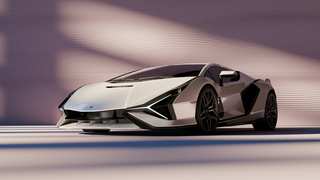
Toyota has finally pulled the curtain back on what automotive enthusiasts are calling the “Holy Trinity” of Japanese performance: the Lexus LFA Concept, the GR GT road car, and the GR GT3 race car. This reveal isn’t just about showcasing beautiful machines; it’s about a deep-seated cultural philosophy that underpins Toyota’s entire existence. After years of whispers and speculation, we finally have a chance to peek behind the curtain, to dissect the engineering, and to understand what these vehicles—and the philosophy driving them—mean for the future of Toyota and the entire performance car landscape.
What follows is an exploration of these groundbreaking vehicles, informed by the technical briefings we attended and the candid questions we posed to the engineers and program managers guiding these ambitious projects. While not every detail was disclosed, the intent behind them is crystal clear: Toyota is not just building fast cars; they are rebuilding a legacy of automotive craft and asserting their position as a global powerhouse in a world increasingly dominated by electric vehicles and a rapidly evolving competitive landscape.
The GR GT: A Performance Benchmark for 2027
The GR GT stands as the most tangible bridge between Toyota’s racing heritage and its road-going aspirations. Claimed to arrive “in 2027,” likely as a 2028 model, this vehicle serves as the homologation base for the GR GT3 race car. This suggests a near-simultaneous launch, though history tells us, as seen with the latest Ford GT, that race car homologation can sometimes outpace showroom arrivals.
Pricing and Positioning in the Premium Market
Pricing has been a hot topic, and while Toyota was tight-lipped, the conversation naturally turned to competitors. Chief Program Manager Takashi Doi directed inquiries toward existing models like the Porsche 911 GT3 and Mercedes-AMG GT Pro to establish a baseline. Considering the GR GT’s claimed output of 641 hp and a curb weight of 3,858 pounds (a weight-to-power ratio of 6.0 lb/hp), the target market is squarely in the upper echelon of sports cars.
Let’s compare this with its contemporaries. The 2026 Porsche 911 GT3 weighs 3,278 pounds and produces 502 hp, offering a 6.2 lb/hp ratio at a base price of $235,500. The 2026 Porsche 911 Turbo S, tipping the scales at 3,859 pounds and delivering 701 hp, sits at a 5.5 lb/hp ratio, costing $275,650. Meanwhile, the 2026 AMG GT Pro 4Matic weighs 4,299 pounds with 603 hp, a 7.1 lb/hp ratio valued at $202,200. On the luxury end, the 2026 Aston Martin Vantage S (3,847 pounds, 671 hp, 5.7 lb/hp) commands around $235,000.
Given this competitive set, it’s highly probable that the 2028 Toyota GR GT will launch with a sticker price exceeding $200,000. This strategic pricing places it directly against established German and British performance giants, signaling Toyota’s intent to compete at the highest level of performance and refinement.
Powertrain Architecture and Driving Dynamics
At the heart of the GR GT lies a complex electromechanical hybrid powertrain. The engineers confirmed the integration of a mechanical limited-slip differential (LSD), which is a critical enabler for highly engaging driving dynamics. This is not just about straight-line speed; it’s about controlled mayhem. Enthusiasts have long wondered if the GR GT will allow for “tire-scorching shenanigans,” and the answer is a resounding yes.
The question of a “drift mode” was met with reserved confidence. While Doi-san acknowledged the team is developing various driving modes, the specific labels remain unconfirmed. A glance at the GR GT’s steering wheel provides strong clues. A knob on the right, labeled “Sport Boost,” hints at immediate power delivery, while a complementary button on the left, marked “TRC/VSC Off,” suggests that drivers will have full manual control over traction and stability. The ability to turn these systems completely off is vital for drivers who prioritize pure mechanical control and the raw feel of the chassis.
Looking ahead, we inquired about potential future variants, such as a Nürburgring Edition or a GRMN (Master of Nürburgring) model. Doi’s response was typical of Toyota’s measured approach: “Obviously we can’t talk about future product, but variations and improvements is something we’re always looking for. And that’s crucial, very important for a sports car.” This statement serves as a clear indicator that while the initial offering is impressive, Toyota is already strategizing for long-term engagement and refinement of the GR platform.
The Nürburgring Challenge: A Battle for Redemption
The Nürburgring Nordschleife played a central role in the unveiling ceremony. Akio “Master Driver Morizo” Toyoda, the visionary behind Gazoo Racing, stood before a massive screen displaying the word “HUMILIATION.” He spoke at length about the humbling experience his development teams faced just a few years ago, enduring being passed by faster, better-handling sports cars, primarily from Germany, on the treacherous Green Hell.
This concept of using humiliation as a driving force for improvement is the core philosophy behind the GR GT and GR GT3. When asked about the importance of the Nürburgring and whether the team is targeting a specific lap time—say, under 7 minutes, as recently achieved by the Mustang GTD (6:52), Corvette ZR1 (6:50), and Corvette ZR1X (6:49)—Doi-san deflected the direct question. However, he emphatically reaffirmed the importance of the ’Ring to Toyota, the GR brand, and their motorsport programs. He reiterated Akio’s commitment: the GR GT will not be the car getting passed on the Green Hell.
Given the inherent modesty and precision of Japanese automotive engineers, this is essentially a declaration that the GR GT will achieve a sub-7-minute lap. The barrier has been broken by multiple 911 GT3 and AMG GT models, and Toyota is not just aiming to compete; they are aiming to dominate. This sets a high bar and signals a serious commitment to proving the GR GT’s mettle on the world’s most demanding proving ground.
The Lexus LFA: Reimagining the Supercar for the Electric Era
The return of the Lexus LFA has been a topic of fervent debate. Fans of the original V-10 masterpiece have been eager to know if the “baby Supra” would return, and what form it would take. Unfortunately for those hoping for a quick reveal, the answer from Toyota representatives, including Doi-san, was a measured “several years.”
Price and Market Reality
For those hoping to buy the new LFA, the waiting period is lengthy. As for the price, it’s likely the new LFA will be considerably less expensive than its predecessor. The original LFA debuted in 2010 at a jaw-dropping $375,000 and exited the market in 2012 at $445,000 for the LFA Nürburgring Edition.
Doi-san conceded that the world has changed significantly since the V-10 supercar departed the market. The complications introduced by returning as an EV are a critical factor in the timeline. It appears this is a subtle implication that the next-generation LFA must be priced below $350,000 to remain viable.
A further analysis suggests it must be substantially less. The luxury sports coupe market is already niche, and the premium EV space remains largely unexplored. While there are a handful of electric luxury cars above $200,000—such as the Lucid Air Sapphire, Rolls-Royce Spectre, and Cadillac Celestiq—none fit the precise competitive profile of the LFA. In the electric hypercar realm, vehicles like the Rimac Nevera and Lotus Evija command $2.3 to $2.4 million, which is decidedly outside Lexus’s traditional territory. The closest competitor is the rumored second-generation Tesla Roadster, which is expected to fall in the $200,000 to $250,000 range—if it ever materializes.
The Solid-State Battery Revolution
One factor that could significantly alter the LFA’s positioning and price point is the rumored integration of solid-state battery (SSB) technology. While no one at the event would confirm this under direct questioning, the rumor persists.
We do know that Toyota has been aggressively pursuing solid-state batteries since 2020, primarily through its joint venture with Panasonic, Prime Planet Energy & Solutions, Inc. In 2024, Toyota provided an update on its battery roadmaps, projecting the arrival of SSBs in 2027 to 2028. These batteries promise a range of 621 miles (1,000 km) and recharging times of approximately 10 minutes.
This level of performance would represent a colossal technological leap, which is precisely what Lexus appears to be seeking for its flagship sports car. Moreover, it offers a potential solution to a major packaging challenge inherent in electric sports coupes.