Electrified Dreams: Exploring the Evolution of High-Octane Hybrids
For decades, the word “hybrid” conjured images of fuel-efficient commuter cars, the Toyota Prius archetype dominating the narrative. Enthusiasts often dismissed them as the antithesis of performance, but the automotive landscape has undergone a seismic shift. Today, the lines between eco-conscious engineering and raw power have blurred, ushering in an era of hybrid supercars that deliver breathtaking speed, cutting-edge technology, and jaw-dropping design.
With the market witnessing a dip in pure EV demand, many automakers are pivoting toward hybrid solutions, ensuring that high-performance electrification continues to thrive. Forget the stigma of efficiency-focused motoring; modern electrified supercars are engineered to thrill, proving that sustainability doesn’t mean sacrificing soul or speed.
The Vanguard of Hybrid Supercar Excellence
The current crop of electrified exotics represents the pinnacle of automotive innovation, blending internal combustion with electric propulsion to achieve performance benchmarks that were once the exclusive domain of fossil-fuel-only hypercars. From track-dominating beasts to luxurious grand tourers, these machines redefine what’s possible on four wheels.
The Benchmark: Chevrolet Corvette ZR1X
The Chevrolet Corvette has always been a performance bargain, renowned for punching well above its weight class. The latest iteration, the ZR1X, takes this philosophy to an entirely new stratum. Built around the ferocious 5.5-liter twin-turbo flat-plane crank V-8 found in the ZR1, this monster is amplified by an advanced hybrid system derived from the Corvette E-Ray.
The result is a brutal output of 1,250 horsepower and 973 lb-ft of torque, catapulting the all-wheel-drive ZR1X to 60 mph in less than 1.7 seconds. In July 2025, the ZR1X etched its name in the annals of speed by completing the daunting Nürburgring lap in a jaw-dropping 6:49.275, cementing its status as the fastest American production car ever to tackle the Green Hell.
While its $207,305 MSRP makes it the most expensive production Corvette in history, its performance relative to price remains staggering. The ZR1X effortlessly embarrasses hypercars costing multiples of its own price, proving that American engineering has arrived at the forefront of hybrid performance.
The Classic Redefined: 2025 Porsche 911 GTS T-Hybrid
Long before its arrival, Porsche purists expressed anxieties about a hybridized 911. However, the 911 GTS T-Hybrid has silenced skeptics, integrating electrification so seamlessly that it transforms the driving experience rather than complicating it. Unlike many hybrid counterparts, the 911 GTS T-Hybrid offers no all-electric range, utilizing a minimal 1.9-kWh battery pack that ensures the weight penalty is virtually imperceptible behind the wheel.
The game-changing element is the integration of an electric motor into the turbocharger’s core. This system, known as the eTurbo, can spin the turbo independently of exhaust gas flow, virtually eliminating turbo lag and delivering boost pressure almost instantaneously. Energy recovered during deceleration recharges the battery, providing electric assist through the gearbox motor.
The complexity of the T-Hybrid system fades into the background when experiencing the results. The instant torque and improved drivability are remarkable, but it’s the subtle nature of the integration that truly stands out. This is a 911 that feels familiar, rewarding, and supremely capable, with the electrified enhancements serving only to elevate the legendary driving dynamics.
The Italian Maverick: Lamborghini Revuelto
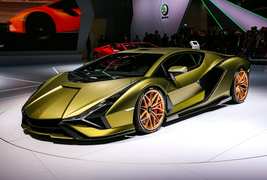
Lamborghini’s successor to the legendary Aventador has achieved a monumental feat: joining the 1,000-horsepower club without sacrificing its iconic naturally aspirated V-12. The Revuelto’s success is largely attributed to its plug-in hybrid system.
Two electric motors drive the front wheels, while a third is integrated into the flagship’s eight-speed dual-clutch transmission, assisting the 6.5-liter V-12 that revs to nearly 10,000 rpm. This setup helps maintain optimal battery charge while ensuring electrifying power delivery.
Beyond its aggressive styling and staggering performance, the Revuelto is a significant leap forward in usability. Lamborghini’s previous Aventador relied on an automated single-clutch gearbox that was notoriously unrefined during everyday driving. The Revuelto replaces this with a sophisticated dual-clutch transmission and a hybrid system that provides seamless power delivery, far superior to its predecessor. Combined with vastly improved ergonomics and the unmistakable flair of a Lamborghini, the Revuelto is a compelling Italian hybrid that requires few compromises—provided your budget can accommodate the extraordinary price tag.
The Track-Bred Masterpiece: Aston Martin Valkyrie
Looking more like a Le Mans prototype than a street-legal car, the Aston Martin Valkyrie is a hypercar that transcends traditional automotive boundaries. It features a 6.5-liter naturally aspirated V-12 engine that produces 1,001 horsepower on its own and screams to 11,000 rpm. Supplementing this monster is a KERS-style hybrid system adding another 141 hp and 207 lb-ft of torque for a total of 1,139 horsepower and 682 lb-ft. All this power is sent to the rear wheels in a car weighing less than 3,000 pounds.
The Valkyrie’s aerodynamic credentials are equally mind-bending. It generates 2,425 pounds of downforce between 137 and 220 mph, nearly matching the downforce of a Formula 1 car. This is an extreme machine in every conceivable way, and its raw capability is mesmerizing. The Valkyrie remains one of the most radical and astonishing hypercars ever conceived, pushing the boundaries of what’s possible on the road.
The Posh Rocket: Mercedes-AMG S63 E Performance
The Mercedes S-Class is traditionally associated with luxury, comfort, and cutting-edge technology. However, when the AMG division gets involved, the S-Class transforms into a performance powerhouse. While its handsome exterior and opulent interior suggest a comfortable experience, the S63 E Performance delivers devastating thrust that catches the unwary completely off guard.
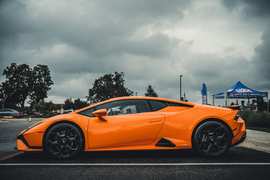
Powered by a 4.0-liter twin-turbo V-8, the S63 E Performance’s hybrid system produces 201 hp and 236 lb-ft of torque on its own, resulting in staggering total output figures of 791 hp and 1,025 lb-ft. This incredible torque is routed to all four wheels, enabling this massive luxury sedan to challenge high-performance sports cars like the Lamborghini Huracán LP 640-2 Tecnica in the sprint from 0 to 60 mph.
Despite a curb weight of nearly 6,000 pounds, the big Benz handles the corners with composure and confidence. Remarkably, it achieves this level of performance without relying on an overly abusive suspension tune, making it a rare example of a car that offers both brutal acceleration and sublime ride quality.
The Unsung Hero: Audi RS6 Avant
The fourth-generation Audi RS6 Avant may not be a hybrid in the traditional sense, but its mild-hybrid 48-volt belt alternator starter system represents a significant advancement in efficiency and performance. This system harvests and stores up to 12 kW of electrical energy, enabling the stop/start system to function at speeds as low as 14 mph.
More impressively, the RS6 can coast for up to 40 seconds with the engine off at speeds between 35 and 100 mph when the driver lifts off the throttle. And let’s be honest, any opportunity to celebrate a 600-horsepower, track-tuned wagon deserves attention.
For those craving more electrification, the next-generation RS6 Avant is expected to debut in 2027 with a full-fledged plug-in hybrid system, promising even greater efficiency and performance without compromising the beloved wagon’s character.
The Formula 1 Derivative: Mercedes-AMG One
Mercedes-AMG’s ambition to build a road-legal Formula 1 car was an odyssey fraught with development challenges. However, the $2.7 million hybrid hypercar eventually set a new standard for road-legal track performance that may not be surpassed for years to come. Its powertrain combines a 1.6-liter turbo V-6 derived directly from the team’s F1 W06 Hybrid race car with four electric motors, two of which power the front wheels.
The total system output stands at 1,049 horsepower. An 8.4-kWh lithium-ion battery pack provides up to 11 miles of all-electric range, managed by a seven-speed single-clutch automated manual transmission.
A carbon monocoque chassis and carbon-fiber bodywork keep the One lightweight, while five-link suspension setups at the front and rear are paired with pushrod-activated Multimatic dampers. These features ensure the car handles as sharply as it accelerates. Priced at roughly $2.5 million, the Mercedes-AMG One was a rare machine, with 275 units produced. Despite the astronomical price tag, Aston Martin reportedly received interest from four times that many potential buyers, underscoring the immense desire for a road-legal F1 experience.
The Holy Trinity of the 2010s
The early 2010s witnessed the arrival of three hybrid hypercars that fundamentally altered public perception, proving that electrification could enhance performance rather than dilute it.