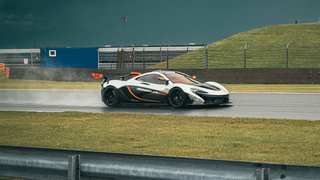
The All-New Hybrid Supercars of 2025: Performance Meets Electrification
The perception of hybrid cars has undergone a radical transformation. What was once considered a niche category for environmentally conscious consumers has now become the epicenter of automotive innovation. In 2025, the hybrid supercar landscape is dominated by groundbreaking engineering, extreme performance, and cutting-edge technology.
The evolution from the early 2000s, marked by the ubiquity of the Toyota Prius, has paved the way for a new generation of electrified machines that challenge the definition of performance. From ultra-luxury sedans to track-focused hypercars, these vehicles combine the raw power of internal combustion with the instant torque of electric motors, offering a driving experience that is both exhilarating and sophisticated.
The New Benchmark: Chevrolet Corvette ZR1X
Chevrolet has long held a reputation for creating cars that punch above their weight class, and the ZR1X is no exception. This high-performance hybrid is designed to redefine American supercar performance. It features the ZR1’s 5.5-liter twin-turbo flat-plane crank V-8 engine, enhanced by a next-generation hybrid system derived from the Corvette E-Ray. The all-wheel-drive ZR1X produces a staggering 1,250 horsepower and 973 lb-ft of torque, propelling the car from 0 to 60 mph in less than 1.7 seconds.
In July 2025, the ZR1X set a new record for American production cars at the Nürburgring with a blistering lap time of 6:49.275. While its base MSRP is around $207,305, making it the most expensive production Corvette in history, it remains a performance bargain, capable of humbling exotics costing multiple times more. The ZR1X represents the pinnacle of American engineering, proving that electrification can enhance performance without sacrificing raw power.
Porsche’s Electrified Evolution: The 911 GTS T-Hybrid
For years, Porsche enthusiasts feared the introduction of a hybridized 911, but the 911 GTS T-Hybrid has proven that these fears were unwarranted. Unlike other hybrid models, the 911 GTS T-Hybrid offers no all-electric driving range, and with a small 1.9-kWh battery pack, the weight penalty is negligible. The standout feature is the elimination of turbo lag thanks to an electric motor integrated into the turbocharger. This motor can spin the turbo independently of exhaust gas flow, generating boost pressure almost instantly.
The T-Hybrid system uses the electric motor to recharge the battery, while stored energy assists the engine through the gearbox. This complex integration results in a seamless power delivery that enhances performance without compromising the driving experience. With Porsche’s legacy of engineering excellence, the 911 GTS T-Hybrid is a testament to how hybrid technology can elevate a classic icon to new heights.
Lamborghini’s V-12 Hybrid: The Revuelto
Lamborghini has successfully joined the 1,000-horsepower club with the Revuelto, its successor to the Aventador. This supercar maintains its naturally aspirated V-12 engine while incorporating a sophisticated plug-in hybrid system. Two electric motors drive the front wheels, while another is integrated into the eight-speed dual-clutch transmission to assist the 6.5-liter V-12. The engine revs to nearly 10,000 rpm and helps keep the 3.8-kWh lithium-ion battery pack charged.
Beyond its extreme styling and stunning performance, the Revuelto is significantly easier to live with than its predecessor. The Aventador’s automated single-clutch transmission was notorious for its harshness during everyday driving, but the Revuelto’s dual-clutch gearbox delivers a smooth, seamless power delivery. Combined with vastly improved ergonomics and Lamborghini’s signature flair, the Revuelto is a compelling Italian hybrid that requires very few compromises—provided you can afford the premium price tag.
Aston Martin’s Le Mans Heritage: The Valkyrie
The Aston Martin Valkyrie appears to be a race car designed for the street, but it is a legal production hypercar. It features a 6.5-liter naturally aspirated V-12 engine producing 1,001 horsepower on its own and revving to 11,000 rpm. A KERS-style hybrid system adds another 141 hp and 207 lb-ft of torque, resulting in a total system output of 1,139 horsepower and 682 lb-ft of torque. All of this power is sent to the rear wheels in a car that weighs less than 3,000 pounds.
The aero figures of this track-focused machine are equally impressive, generating 2,425 pounds of downforce between 137 and 220 mph, which is nearly half a ton more than a Formula 1 car. The Valkyrie is an extreme machine by any measure, and it has quickly become one of the most sought-after hypercars on the market. It represents the pinnacle of Aston Martin’s engineering capabilities and sets a new standard for road-legal track performance.
Mercedes-AMG’s Powerhouse: The S63 E Performance
We typically associate the Mercedes S-Class with luxury and advanced technology, but the Mercedes-AMG S63 E Performance offers a completely different experience. While its handsome exterior and opulent cabin suggest adequate performance, the devastating thrust delivered by the S63 E Performance is guaranteed to catch even experienced drivers off guard.
Outfitted with a 4.0-liter twin-turbo V-8 and a hybrid system producing 201 hp and 236 lb-ft of torque on its own, the S63 E Performance delivers staggering output figures of 791 hp and 1,025 lb-ft of torque. This prodigious power is sent to all four wheels, enabling this large luxury sedan to compete with performance-focused exotics in the 0–60 mph sprint. Despite a curb weight of nearly 6,000 pounds, the S63 E Performance maintains its composure during cornering, all without resorting to an overly stiff suspension tune. It is a perfect blend of performance, luxury, and technology.
Audi’s Electrified Wagon: The RS6 Avant
The fourth-generation Audi RS6 Avant is not a traditional hybrid, but its mild hybrid 48-volt system plays a significant role in its performance. It can harvest and store up to 12 kW of electrical energy, which enables the stop/start system to operate at speeds up to 14 mph. Additionally, the RS6 can coast for up to 40 seconds with the engine off at speeds between 35 and 100 mph when the driver lifts off the throttle. And frankly, any opportunity to celebrate a 600-horsepower track-tuned wagon is welcome.
For those seeking more electrification, the next-generation RS6 Avant, expected in 2027, will feature a full plug-in hybrid system. This continues Audi’s commitment to innovation and performance, while also embracing the shift towards electrified mobility.
The Ultimate Track Machine: Mercedes-AMG One
Although Mercedes-AMG’s endeavor to create a roadgoing Formula 1 car was fraught with development challenges, the $2.7 million hybrid hypercar eventually set a new benchmark for road-legal track performance that will likely remain unchallenged for some time. Its powertrain combines a 1.6-liter turbo V-6 derived from the team’s F1 W06 Hybrid race car with four electric motors, two of which drive the front wheels. Total system output stands at 1,049 horsepower. An 8.4-kWh lithium-ion battery pack offers up to 11 miles of all-electric range, while a seven-speed single-clutch automated manual transmission handles gear changes.
The car’s lightweight construction, featuring a carbon monocoque and carbon-fiber bodywork, is paired with a five-link suspension setup and pushrod-activated Multimatic dampers to ensure that the car handles as well as it accelerates. The Mercedes-AMG One carried a price tag of roughly $2.5 million, with 275 examples produced in total. Despite the hefty MSRP, the automaker reportedly received interest from approximately four times the number of potential buyers.
Porsche’s Hybrid Legend: The 918 Spyder
When Porsche introduced the 918 Spyder in 2013, it marked a new era of hypercar performance, alongside the McLaren P1. Powered by a 4.6-liter naturally aspirated V-8 derived from the engine in Porsche’s RS Spyder LMP2 race car, the 918 Spyder also featured two electric motors at the front and rear that contributed to a total output of 887 hp and 944 lb-ft. A 6.8-kWh liquid-cooled lithium-ion battery offered about 12 miles of all-electric range, but similar to the P1, the hybrid system’s primary focus was performance enhancement.
With power sent to all four wheels, the 918 hit 60 mph from rest in 2.4 seconds and reached a top speed of 211 mph. However, the car was far from a one-trick pony. The 918 Spyder topped MotorTrend’s figure-eight testing in 2015 and proved to be a comfortable cruiser despite its track-focused tuning.
The Sci-Fi Icon: BMW i8