Electrified Performance: Redefining Speed with High-Tech Hybrid Supercars
The perception of hybrid vehicles shifted profoundly from the early 2000s, when the Toyota Prius defined efficiency-first commuting. Today, the automotive landscape has undergone a revolution. Hybrid technology has transitioned from a symbol of ecological responsibility to a core component of cutting-edge performance. With electric vehicle (EV) demand fluctuating, manufacturers are increasingly integrating electrification into the world’s fastest and most luxurious cars.
This evolution has birthed a new generation of hypercars, supercars, and high-performance sports cars where electric power is used not just for efficiency, but to create astonishing speed, advanced technology, and head-turning style. These vehicles prove that hybridization doesn’t diminish raw performance—it elevates it.
The All-Electric Future Meets the Analog Heart
The automotive industry stands at a crossroads. The transition to fully electric powertrains continues, but the infrastructure, consumer acceptance, and range anxiety remain significant challenges. In this evolving market, high-performance hybrids are positioning themselves as the best of both worlds. They offer the visceral connection of a traditional engine with the instant torque and efficiency of electric motors.
From daily drivers to track-focused weapons, automakers are deploying sophisticated electrification systems to achieve levels of performance previously unimaginable. These advancements are not just incremental improvements; they represent paradigm shifts in how internal combustion engines (ICE) can work in harmony with electric power to deliver electrifying driving experiences.
Trailblazers of the Hybrid Performance Revolution
The modern era of electrified performance is built on a foundation of boundary-pushing vehicles that dared to mix electric power with sheer brute force. These cars captured the imagination of enthusiasts and set new benchmarks for what hybrid vehicles could achieve.
The Holy Trinity: A New Definition of Supercar
In the early 2010s, three cars emerged that fundamentally changed the perception of hybrid technology.
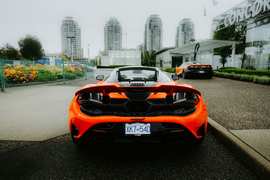
McLaren P1: Often credited with igniting the modern hybrid performance revolution, the P1 combined a twin-turbo V-8 with a rear-mounted electric motor, producing 903 horsepower. It was an engineering marvel that showcased how hybrid systems could enhance acceleration without compromising the driver’s connection to the road. Its lightweight chassis and active aerodynamics made it a track-focused weapon that blurred the line between road car and race car.
Ferrari LaFerrari: Inspired by Formula 1’s Kinetic Energy Recovery System (KERS), the LaFerrari utilized a naturally aspirated V-12 paired with an electric motor to generate 950 horsepower. This setup not only boosted performance but also provided a smoother, more responsive power delivery. The LaFerrari became a benchmark for hybrid hypercars, proving that electrification could enhance, rather than detract from, the visceral experience of driving a Ferrari.
Porsche 918 Spyder: Utilizing a naturally aspirated V-8 derived from Porsche’s LMP2 race car, the 918 Spyder featured a plug-in hybrid system with electric motors on both the front and rear axles, delivering a total system output of 887 horsepower. With impressive performance figures and sophisticated handling, the 918 Spyder demonstrated that hybrids could be both incredibly fast and rewarding to drive.
Koenigsegg Regera: The Tech-Forward Alternative
Koenigsegg introduced a unique approach to hybrid performance with the Regera. Inspired by the instant torque of Tesla EVs, the Swedish manufacturer opted for a single-gear, direct-drive transmission. This setup removed the need for traditional gear changes, providing a seamless wave of acceleration.
Powered by a mid-mounted 5.0-liter twin-turbo V-8 and three electric motors, the Regera produced a combined 1,500 horsepower. It became a benchmark for electric performance, proving that hybridization could be utilized in innovative ways to create mind-bending speed.
Modern Masters of Hybrid Speed
Today, the pursuit of electrified performance has reached new heights. Manufacturers are integrating hybrid technology into their most prestigious models, blurring the lines between luxury, technology, and raw power.
Aston Martin Valkyrie: Le Mans on the Street
The Aston Martin Valkyrie is one of the most extreme road-legal hypercars ever built. Designed in collaboration with Formula 1 legend Adrian Newey, the Valkyrie draws heavy inspiration from prototype race cars.
It features a naturally aspirated 6.5-liter V-12 that generates 1,001 horsepower on its own, supplemented by a KERS-style hybrid system adding another 141 horsepower. The total system output is 1,139 horsepower, sent to the rear wheels in a carbon-fiber monocoque chassis weighing less than 3,000 pounds.
The Valkyrie’s aerodynamics are equally astounding, generating over 2,400 pounds of downforce at high speeds. It represents the apex of hybrid performance, merging cutting-edge race technology with road-legal capability.
Mercedes-AMG One: A Formula 1 Car for the Road
Mercedes-AMG’s ambition to create a Formula 1 car that could be driven on the street resulted in the AMG One. This hypercar utilizes a 1.6-liter turbocharged V-6 derived from the championship-winning Mercedes F1 W06 Hybrid.
The powertrain also features four electric motors, including two driving the front wheels. The total system output stands at an astonishing 1,049 horsepower. A 8.4-kWh battery offers limited all-electric range, and a seven-speed single-clutch automated transmission handles gear changes.
Despite development challenges, the AMG One set a new benchmark for road-legal performance, showcasing the potential of integrating F1-derived technology into a road car.
Lamborghini Revuelto: V-12 Power Redefined
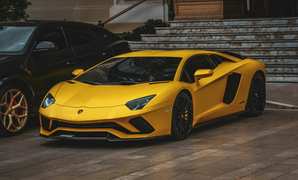
Lamborghini’s successor to the Aventador, the Revuelto, reached the 1,000-horsepower milestone without abandoning its naturally aspirated V-12 engine. The Revuelto uses a plug-in hybrid system with two electric motors driving the front wheels and a third integrated into the transmission.
The 6.5-liter V-12 revs to nearly 10,000 rpm, while the electric motors assist in acceleration and keep the hybrid battery charged. Beyond its performance credentials, the Revuelto represents a significant leap in refinement, offering a far more seamless and usable driving experience than its predecessors.
Chevrolet Corvette ZR1X: American Hypercar Power
The Chevrolet Corvette has a long-standing reputation for punching above its weight class, and the ZR1X takes this to an entirely new level. Equipped with the ZR1’s 5.5-liter twin-turbo V-8 and a hybrid system derived from the E-Ray, the all-wheel-drive ZR1X produces a staggering 1,250 horsepower and 973 lb-ft of torque.
This power enables the ZR1X to sprint from 0 to 60 mph in under 1.7 seconds, setting a new benchmark for American production cars. Its lap time at the Nürburgring further solidified its status as a world-class performance machine. While its price tag reflects its exclusivity, the ZR1X offers performance that challenges exotics costing several times more.
Porsche 911 GTS T-Hybrid: The Evolution of an Icon
For years, Porsche purists feared the arrival of a hybrid 911. However, the introduction of the 911 GTS T-Hybrid proved that electrification could enhance the icon without diluting its character.
Unlike many hybrids, the GTS T-Hybrid has no all-electric driving range, and its small battery pack keeps the weight penalty imperceptible. The innovation lies in the “eTurbo,” an electric motor integrated into the turbocharger. This allows for near-instant boost response, eliminating turbo lag and providing smoother power delivery through the gearbox. The stored energy from the eTurbo assists the engine, creating a more responsive and engaging driving experience.
Hybrid Performance Without Compromise
These vehicles represent the vanguard of automotive innovation, proving that electrification can be a powerful force for performance. The technology has matured to the point where hybrid systems can be seamlessly integrated into high-performance platforms, delivering raw power, breathtaking acceleration, and advanced technology.
Mercedes-AMG S63 E Performance: Posh Luxury Meets Devastating Thrust
The Mercedes-AMG S63 E Performance redefines the luxury sedan category. While its elegant exterior and opulent cabin suggest comfort and refinement, the S63 E Performance delivers devastating thrust when provoked.
Powered by a 4.0-liter twin-turbo V-8 and a hybrid system that generates 201 horsepower and 236 lb-ft of torque on its own, the S63 E Performance offers staggering output figures of 791 horsepower and 1,025 lb-ft of torque. This prodigious power allows this luxury sedan to compete with high-performance sports cars, while its advanced suspension ensures composed handling despite its significant weight.
Audi RS 6 Avant: The Hybrid Performance Wagon
The fourth-generation Audi RS 6 Avant utilizes a mild hybrid system that enhances both performance and efficiency. The 48-volt belt alternator starter system can harvest and store up to 12 kW of electrical energy, enabling smooth stop/start operation and coasting with the engine off at highway speeds.
While this mild hybrid system may not offer the massive power boosts of other vehicles on this list, it represents a significant step towards electrification in the performance wagon category. And with rumors of a full plug-in hybrid system in the next-generation RS 6 Avant, the future of electrified performance wagons looks even brighter.