Electrifying Velocity: A Showcase of 2025’s Most Potent Hybrid Supercars
For decades, the word “hybrid” conjured images of eco-conscious commuters—think Toyota Prius efficiency and Honda Insight frugality. In the early 2000s, these vehicles dominated the electrified landscape, becoming synonymous with low emissions and high fuel economy. However, the automotive world has undergone a seismic shift. Today, electrification isn’t just for the economically minded; it has infiltrated the realm of extreme performance, with manufacturers like Ferrari, Lamborghini, and Mercedes-AMG integrating electric assistance into their most powerful and prestigious machines. As consumer interest in traditional EVs fluctuates, we anticipate an increasing prevalence of hybridized supercars—vehicles that masterfully blend cutting-edge technology with raw power and exhilarating style, proving that electrification and swagger are far from mutually exclusive.
The New Pinnacle of American Performance
Chevrolet Corvette ZR1X
Corvettes have long enjoyed a reputation for punching above their weight class, but the ZR1X elevates this legacy to an entirely new stratum of performance. This American beast leverages the muscular 5.5-liter twin-turbo flat-plane crank V-8 engine found in the standard ZR1, augmented by an enhanced version of the E-Ray’s hybrid system. The result is a staggering 1,250 horsepower and 973 lb-ft of torque, rocketing the car from 0 to 60 mph in under 1.7 seconds.
Adding to its performance prowess, the ZR1X cemented its legend in July 2025, laying down a 6:49.275 lap time at the Nürburgring, currently holding the record for the fastest American production car on the famed German circuit. While its price tag of $207,305 makes it the most expensive production Corvette ever built, it remains a formidable performance bargain, capable of embarrassing exotic cars that cost several times more.
The Reimagined Icon: A New Era of 911
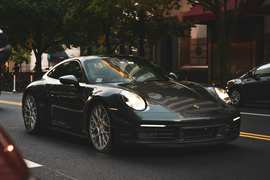
Porsche 911 GTS T-Hybrid
For years, Porsche purists dreaded the introduction of a hybridized 911, fearing a dilution of the iconic driving experience. However, the 992.2 generation has silenced critics with the 911 GTS T-Hybrid. Unlike traditional hybrids, this model offers no all-electric range; its compact 1.9-kWh battery pack contributes negligible weight, leaving the driving dynamics untouched.
The magic lies in the eTurbo integration. A small electric motor is built into the turbocharger housing, capable of spinning the turbine independently of exhaust gas flow. This eliminates turbo lag, providing near-instantaneous boost pressure. Power recovered during deceleration is stored in the battery and deployed through the gearbox motor during hard acceleration, delivering a surge of electric torque exactly when needed. The T-Hybrid system not only enhances performance and efficiency but does so subtly—you might not even know this 911 is hybridized without examining the badges.
The Italian Masterpiece: V-12 Power Meets Hybrid Ingenuity
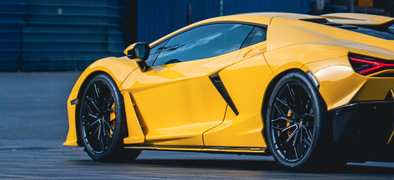
Lamborghini Revuelto
Lamborghini’s successor to the legendary Aventador manages to join the 1,000-horsepower club without sacrificing its beloved naturally aspirated V-12. The Revuelto achieves this feat through a sophisticated plug-in hybrid system. Two electric motors drive the front wheels, while a third is integrated into the flagship’s eight-speed dual-clutch transmission. The latter assists the 6.5-liter V-12, which revs to nearly 10,000 rpm, while also topping off the 3.8-kWh lithium-ion battery pack.
Beyond its stunning performance and jaw-dropping aesthetics, the Revuelto is remarkably refined for everyday driving. Lamborghini significantly improved upon the Aventador’s clunky automated single-clutch gearbox, replacing it with a seamless dual-clutch system that synergizes perfectly with the hybrid powertrain. Combined with vastly improved ergonomics and classic Lamborghini flair, the Revuelto offers a compelling Italian hypercar experience that requires minimal compromise—provided you possess the substantial budget required to acquire one.
The Track-Bred Extreme
Aston Martin Valkyrie
Resembling something torn from a Le Mans paddock rather than a public road, the Aston Martin Valkyrie is a legitimate, street-legal hypercar that pushes the boundaries of automotive engineering. It features a 6.5-liter naturally aspirated V-12 generating a remarkable 1,001 horsepower, capable of revving to a searing 11,000 rpm. This powerhouse is supplemented by a KERS-style hybrid system that adds an extra 141 hp and 207 lb-ft of torque, bringing the total system output to 1,139 horsepower and 682 lb-ft of torque.
All this power is sent to the rear wheels in a vehicle weighing less than 3,000 pounds. The aerodynamic figures are equally astonishing: 2,425 pounds of downforce between 137 and 220 mph—nearly half a ton more than a Formula 1 car. This is an extreme machine in every sense, and its raw, unfiltered performance left an indelible mark on the automotive world.
The Posh Hybrid Rocket
Mercedes-AMG S63 E Performance
We typically associate the Mercedes S-Class with opulent luxury and cutting-edge technology, but when AMG gets its hands on one, the story changes dramatically. While the handsome exterior and plush interior suggest “adequate” performance, the devastating thrust delivered by the S63 E Performance is guaranteed to catch the uninitiated completely off guard.
This vehicle utilizes a 4.0-liter twin-turbo V-8, augmented by a hybrid system that generates 201 hp and 236 lb-ft on its own. The resulting output figures are staggering: 791 hp and 1,025 lb-ft of torque. This prodigious grunt is sent to all four wheels, enabling this substantial luxury sedan to challenge the Lamborghini Huracán LP 640-2 Tecnica in the sprint from 0 to 60 mph. Despite weighing nearly 6,000 pounds, the big Benz maintains remarkable composure when navigating twisty roads, doing so without resorting to an overly harsh suspension tune.
The Sleeper Wagon: Performance Without Pretense
Audi RS6 Avant
The fourth-generation Audi RS6 Avant isn’t a traditional hybrid, but its mild hybrid 48-volt belt alternator starter system provides significant performance advantages. This system can harvest and store up to 12 kW of electrical energy, enabling the start/stop system to function at speeds of up to 14 mph. Furthermore, it allows the RS6 to coast for up to 40 seconds with the engine off, provided speeds are between 35 and 100 mph and the driver lifts off the throttle.
Frankly, we’ll take any opportunity to celebrate a 600-horsepower track-tuned wagon. For those seeking even more electrification, the next-generation RS6 Avant is expected to debut in 2027 with a full plug-in hybrid system, promising to further blur the lines between everyday utility and extreme performance.
The Roadgoing Formula 1 Car
Mercedes-AMG One
Mercedes-AMG’s ambitious endeavor to create a roadgoing Formula 1 car was fraught with teething issues during development. However, the $2.7 million hybrid hypercar eventually set a new standard for road-legal track performance that is unlikely to be surpassed for years. Its powertrain combines a 1.6-liter turbo V-6 derived directly from the team’s F1 W06 Hybrid race car with four electric motors, two of which drive the front wheels.
The total system output stands at 1,049 horsepower. An 8.4-kWh lithium-ion battery pack provides up to 11 miles of all-electric range, managed by a seven-speed single-clutch automated manual transmission. A carbon monocoque and carbon fiber bodywork keep the One incredibly lightweight, while pushrod-activated Multimatic dampers ensure the chassis can handle as aggressively as the powertrain accelerates. With a price tag around $2.5 million, 275 examples were produced. Demand far outstripped supply, with the automaker reportedly receiving interest from roughly four times the number of available units.
The Genesis of Hybrid Supercars
Porsche 918 Spyder
When Porsche introduced the 918 Spyder in 2013, it heralded a new era of hybrid performance, joining the McLaren P1 in a landmark trio of electrified hypercars.
Powered by a 4.6-liter naturally aspirated V-8 derived from the engine in Porsche’s RS Spyder LMP2 race car, the 918 Spyder was boosted by two electric motors at the front and rear, delivering a combined 887 hp and 944 lb-ft of torque. A 6.8-kWh liquid-cooled lithium-ion battery offered approximately 12 miles of all-electric range, but like the P1, the hybrid system’s primary mission was performance enhancement.
With power sent to all four wheels, the 918 achieved 60 mph from rest in 2.4 seconds, reaching a top speed of 211 mph. However, it was far from a one-trick pony. The 918 Spyder took the top spot in our figure-eight testing in 2015 and proved to