


The Pinnacle of Performance: 5 Porsche 911s That Defined a Legacy
For automotive enthusiasts, the Porsche 911 represents more than just a car; it is an icon, a cultural touchstone that has consistently redefined the boundaries of performance engineering for over half a century. The very name evokes images of precision German engineering, timeless design, and an unparalleled driving experience. As a driver with nearly a decade of hands-on experience analyzing and testing Porsche vehicles, I have witnessed firsthand the evolution of this legendary machine, each generation adding new layers of sophistication, technology, and exhilaration.
The Porsche 911 heritage is a story of continuous refinement, a relentless pursuit of perfection that has captivated generations of drivers. From the raw, analog thrill of early models to the hyper-advanced, track-focused machines of today, the 911’s identity has remained surprisingly consistent, balancing its iconic silhouette with cutting-edge innovation.
In this comprehensive guide, we delve into five Porsches that have left an indelible mark on automotive history, not merely as automotive achievements but as transformative driving experiences. Each model represents a significant moment in the 911’s journey, showcasing the engineering prowess, design philosophy, and sheer driving pleasure that define this legendary marque.
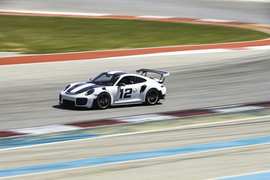 Join us as we explore the top Porsches ever driven, unraveling the reasons behind their enduring legacy and examining what makes them stand out in a crowded field of supercars and performance vehicles. Whether you are a seasoned Porsche aficionado or simply captivated by the mystique of the Stuttgart marque, this deep dive into the Porsche 911 is sure to provide a new appreciation for the enduring allure of the world’s most recognizable sports car.
The Original 930 Turbo: raw Power and Unfiltered Intensity
The journey through Porsche’s greatest hits must begin with the model that cemented the 911’s reputation as a legend: the original 930 Turbo. When I first encountered this beast, veteran journalists spoke of it in reverent, almost terrified tones, describing a car that demanded absolute respect and unwavering focus. It was a car that punished carelessness, where a single misjudgment at the limit could lead to catastrophic consequences. For years, the legendary status of the 911 Turbo remained something I could only imagine.
Finally, after thirty-five years, I had the privilege of getting behind the wheel of one of the first production Turbos ever built, a pristine example from Porsche’s revered classic fleet. Stepping into the cockpit, I was acutely aware of its fearsome reputation. I approached the experience with extreme caution, gently probing the throttle, observing the characteristic turbo surge, and trying to mentally map the power delivery curve.
To my surprise, the engine exhibited an unexpected level of tractability. The 3.0-liter flat-six felt remarkably smooth at low RPM, humming along happily at 2,000 rpm in top gear, pushing the Porsche 930 through the countryside at a relaxed 45 mph. However, the real character of the car emerged once the engine reached 3,500 rpm. A noticeable wave of acceleration surged as the turbocharger forcefully injected 0.8 bar of boost into the intake system. Yet, it wasn’t the jarring, shoulder-slamming blow I had braced myself for.
I soon discovered the trick to navigating the original 930 with both precision and speed. The key was to keep the 3.0-liter flat-six spinning above 4,000 rpm to maintain turbocharger responsiveness. While the turbo lag was undeniable by modern standards, it proved to be entirely manageable. Even more than fifty years later, this Porsche 911 remains blisteringly fast on the road. First gear stretches to 50 mph, second to 90 mph, and third to nearly 130 mph, meaning the car can efficiently navigate winding roads using only its second and third gears. Although it boasts a modest 256 horsepower, its low curb weight of just 2,513 pounds allows it to carve through corners with impressive agility. In its day, its performance was nothing short of otherworldly.
The original 930 Turbo is a masterclass in raw, unadulterated driving experience, a testament to Porsche’s ability to blend cutting-edge engineering with the visceral thrill of an iconic sports car. It remains one of the most memorable driving experiences of my career, a car that commands respect and rewards courage with unmatched exhilaration.
The 993 Generation: The Last Air-Cooled Beauty
For Porsche purists, the 993 generation holds a sacred place as the last of the line, the final embodiment of the authentic 911 experience. This is the Porsche you drive with your knuckles brushing against the dashboard, the exhilarating metallic growl of an air-cooled flat-six echoing behind you. Yet, when I first drove the 993 back in 1994, it felt like a glimpse into the future, the first iteration that dared to challenge the established laws of physics.
Join us as we explore the top Porsches ever driven, unraveling the reasons behind their enduring legacy and examining what makes them stand out in a crowded field of supercars and performance vehicles. Whether you are a seasoned Porsche aficionado or simply captivated by the mystique of the Stuttgart marque, this deep dive into the Porsche 911 is sure to provide a new appreciation for the enduring allure of the world’s most recognizable sports car.
The Original 930 Turbo: raw Power and Unfiltered Intensity
The journey through Porsche’s greatest hits must begin with the model that cemented the 911’s reputation as a legend: the original 930 Turbo. When I first encountered this beast, veteran journalists spoke of it in reverent, almost terrified tones, describing a car that demanded absolute respect and unwavering focus. It was a car that punished carelessness, where a single misjudgment at the limit could lead to catastrophic consequences. For years, the legendary status of the 911 Turbo remained something I could only imagine.
Finally, after thirty-five years, I had the privilege of getting behind the wheel of one of the first production Turbos ever built, a pristine example from Porsche’s revered classic fleet. Stepping into the cockpit, I was acutely aware of its fearsome reputation. I approached the experience with extreme caution, gently probing the throttle, observing the characteristic turbo surge, and trying to mentally map the power delivery curve.
To my surprise, the engine exhibited an unexpected level of tractability. The 3.0-liter flat-six felt remarkably smooth at low RPM, humming along happily at 2,000 rpm in top gear, pushing the Porsche 930 through the countryside at a relaxed 45 mph. However, the real character of the car emerged once the engine reached 3,500 rpm. A noticeable wave of acceleration surged as the turbocharger forcefully injected 0.8 bar of boost into the intake system. Yet, it wasn’t the jarring, shoulder-slamming blow I had braced myself for.
I soon discovered the trick to navigating the original 930 with both precision and speed. The key was to keep the 3.0-liter flat-six spinning above 4,000 rpm to maintain turbocharger responsiveness. While the turbo lag was undeniable by modern standards, it proved to be entirely manageable. Even more than fifty years later, this Porsche 911 remains blisteringly fast on the road. First gear stretches to 50 mph, second to 90 mph, and third to nearly 130 mph, meaning the car can efficiently navigate winding roads using only its second and third gears. Although it boasts a modest 256 horsepower, its low curb weight of just 2,513 pounds allows it to carve through corners with impressive agility. In its day, its performance was nothing short of otherworldly.
The original 930 Turbo is a masterclass in raw, unadulterated driving experience, a testament to Porsche’s ability to blend cutting-edge engineering with the visceral thrill of an iconic sports car. It remains one of the most memorable driving experiences of my career, a car that commands respect and rewards courage with unmatched exhilaration.
The 993 Generation: The Last Air-Cooled Beauty
For Porsche purists, the 993 generation holds a sacred place as the last of the line, the final embodiment of the authentic 911 experience. This is the Porsche you drive with your knuckles brushing against the dashboard, the exhilarating metallic growl of an air-cooled flat-six echoing behind you. Yet, when I first drove the 993 back in 1994, it felt like a glimpse into the future, the first iteration that dared to challenge the established laws of physics.
 Certainly, the 993 still possessed the distinctively reactive front end that demanded meticulous loading on corner entry to ensure precision at the apex, and the rear end retained its characteristic lively character on rough surfaces. However, a significantly improved sense of harmony existed between the front and rear axles. The 993 continued to do what 911s do best, but within a much wider margin of forgiveness.
Central to this evolution was a revolutionary rear suspension design. The semi-trailing arms of old were replaced by a sophisticated new multilink setup that allowed a slight initial toe-out on corner entry, progressively transitioning to toe-in as lateral loads increased. This not only improved handling dynamics but also significantly reduced the camber changes that had plagued 911s since their debut in 1963.
This engineering feat was complemented by a quicker steering rack, a mere 2.5 turns lock-to-lock, which made the front end feel notably more decisive. The addition of a new six-speed manual transmission allowed drivers to fully exploit the capabilities of the 3.6-liter flat-six engine, which reached its 268-hp peak at 6,100 rpm with greater vigor. This was thanks to lighter internals, a Bosch Motronic 2.0 engine management system, and a new dual exhaust setup that enhanced both power and acoustic character.
Compared to its predecessor, the 964 model, the 993-generation Porsche was a revelation. It was not merely the sum of its engineering advancements, executed under the leadership of Ulrich Bez, who later became the head of Aston Martin. The exterior redesign, directed by design chief Harm Lagaay, corrected visual imbalances in the 964, a car he felt was overly tall at the front and disproportionately low at the rear. The interior was cleaner and more user-friendly, with a more logical arrangement of controls. The 993 was, without a doubt, a Porsche 911 that was faster and more forgiving than ever before. Most importantly, it was even more desirable.
The 993 generation stands as a timeless masterpiece of automotive engineering and design, a Porsche that successfully bridged the gap between raw performance and refined sophistication. Its enduring legacy as the last of the air-cooled icons continues to inspire awe and reverence among drivers worldwide.
The 996-Generation: The Water-Cooled Revolution That Saved Porsche
At the time of its release, the decision to install a water-cooled flat-six engine in the tail of the 996-series 911 was nothing short of heresy in the eyes of purists. To aficionados, it was the automotive equivalent of Bob Dylan ditching his six-string acoustic for a Fender Stratocaster at the 1965 Newport Folk Festival. However, the 996, the first clean-sheet redesign of Porsche’s indomitable sports car in 34 years, emerged as a genuine hero in my eyes. This was the 911 that truly saved Porsche from the brink of extinction.
Engineered and developed under the visionary direction of Porsche R&D chief Horst Marchart, the 996 was an exceptionally clever design. Not least of its triumphs was the decision to share 38 percent of its components with an all-new, lower-cost mid-engine roadster that would become known to the world as the Boxster. Porsche’s visionary boss, Wendelin Wiedeking, understood the strategic necessity of the Boxster. It was designed to provide dealers with a supplementary product to sell once the aging 928 and 968 models were discontinued. “We made two cars for the price of one and a half,” design boss Lagaay noted with a wry smile after the company unveiled the 996.
However, while media attention largely focused on its kinship with the Boxster and the technical merits of the water-cooled engine, the true significance of the 996 ran far deeper. In 1994, it took 130 hours to build a 993-series 911. The 996, however, required only 60 hours to construct. The modern 911 had arrived: it was roomier, equipped with all the modern amenities expected of a late 20th-century sports car, and yet remained unmistakably Porsche’s iconic machine.
Certainly, the 993 still possessed the distinctively reactive front end that demanded meticulous loading on corner entry to ensure precision at the apex, and the rear end retained its characteristic lively character on rough surfaces. However, a significantly improved sense of harmony existed between the front and rear axles. The 993 continued to do what 911s do best, but within a much wider margin of forgiveness.
Central to this evolution was a revolutionary rear suspension design. The semi-trailing arms of old were replaced by a sophisticated new multilink setup that allowed a slight initial toe-out on corner entry, progressively transitioning to toe-in as lateral loads increased. This not only improved handling dynamics but also significantly reduced the camber changes that had plagued 911s since their debut in 1963.
This engineering feat was complemented by a quicker steering rack, a mere 2.5 turns lock-to-lock, which made the front end feel notably more decisive. The addition of a new six-speed manual transmission allowed drivers to fully exploit the capabilities of the 3.6-liter flat-six engine, which reached its 268-hp peak at 6,100 rpm with greater vigor. This was thanks to lighter internals, a Bosch Motronic 2.0 engine management system, and a new dual exhaust setup that enhanced both power and acoustic character.
Compared to its predecessor, the 964 model, the 993-generation Porsche was a revelation. It was not merely the sum of its engineering advancements, executed under the leadership of Ulrich Bez, who later became the head of Aston Martin. The exterior redesign, directed by design chief Harm Lagaay, corrected visual imbalances in the 964, a car he felt was overly tall at the front and disproportionately low at the rear. The interior was cleaner and more user-friendly, with a more logical arrangement of controls. The 993 was, without a doubt, a Porsche 911 that was faster and more forgiving than ever before. Most importantly, it was even more desirable.
The 993 generation stands as a timeless masterpiece of automotive engineering and design, a Porsche that successfully bridged the gap between raw performance and refined sophistication. Its enduring legacy as the last of the air-cooled icons continues to inspire awe and reverence among drivers worldwide.
The 996-Generation: The Water-Cooled Revolution That Saved Porsche
At the time of its release, the decision to install a water-cooled flat-six engine in the tail of the 996-series 911 was nothing short of heresy in the eyes of purists. To aficionados, it was the automotive equivalent of Bob Dylan ditching his six-string acoustic for a Fender Stratocaster at the 1965 Newport Folk Festival. However, the 996, the first clean-sheet redesign of Porsche’s indomitable sports car in 34 years, emerged as a genuine hero in my eyes. This was the 911 that truly saved Porsche from the brink of extinction.
Engineered and developed under the visionary direction of Porsche R&D chief Horst Marchart, the 996 was an exceptionally clever design. Not least of its triumphs was the decision to share 38 percent of its components with an all-new, lower-cost mid-engine roadster that would become known to the world as the Boxster. Porsche’s visionary boss, Wendelin Wiedeking, understood the strategic necessity of the Boxster. It was designed to provide dealers with a supplementary product to sell once the aging 928 and 968 models were discontinued. “We made two cars for the price of one and a half,” design boss Lagaay noted with a wry smile after the company unveiled the 996.
However, while media attention largely focused on its kinship with the Boxster and the technical merits of the water-cooled engine, the true significance of the 996 ran far deeper. In 1994, it took 130 hours to build a 993-series 911. The 996, however, required only 60 hours to construct. The modern 911 had arrived: it was roomier, equipped with all the modern amenities expected of a late 20th-century sports car, and yet remained unmistakably Porsche’s iconic machine.
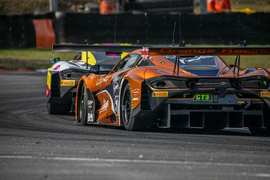 Most crucially, it still drove like a 911. Only, it drove