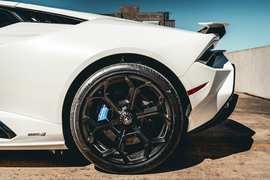
Where Speed and Street Collide: How Motorsport Inspires the World’s Most Coveted Cars
In the high-stakes arena of global motorsport, the pursuit of victory is defined by a single, relentless mantra: innovation at all costs. As an automotive professional with a decade deeply embedded in the industry, I have witnessed firsthand how the crucible of competition consistently yields the most extraordinary developments for consumer vehicles. It’s a misconception that the world of professional racing—think Formula 1, endurance prototypes, or GT championships—operates in a vacuum, disconnected from the everyday driving experience. In reality, the lessons learned on the track under the most extreme physical and engineering duress invariably trickle down, refining the cars that populate our roads.
This article delves into the fascinating crossover between professional racing and production-grade performance vehicles. We will explore ten phenomenal examples where the unmistakable DNA of the racetrack is translated into an exhilarating experience for the public. By tracing the lineage of these engineering marvels, we gain a deeper appreciation for how high-octane competition benefits the automotive enthusiast. Prepare to explore a selection of iconic machines where the very spirit of racing lives and breathes.
The Engineering Virtues of Velocity: Track Innovation in the Automotive Industry
The essence of automotive progress is inextricably linked to the roar of engines echoing around legendary circuits. Motorsport functions as the ultimate high-stakes laboratory, a proving ground where engineers are compelled to push the boundaries of materials science, aerodynamics, and powertrain technology under immense pressure. This relentless pursuit of victory necessitates innovations that often seem fantastical until they eventually transition into everyday applications. What emerges from this intense environment is far from confined to the winner’s circle; it inevitably shapes the cars we encounter daily, profoundly enhancing our driving experiences.
Consider the concept of downforce. The sophisticated aerodynamic profiles of modern high-performance cars—features like rear spoilers, diffusers, and carefully sculpted bodywork—are direct descendants of racing necessity. In professional competitions, generating aerodynamic grip at high speeds is paramount. When a racing team develops a splitter designed to push the front of the car down, reducing lift and increasing cornering stability, the principles behind it eventually find their way into the automotive industry. Manufacturers invest considerable sums in research and development for racing purposes, and when a technology proves successful, it is a matter of time before it is adapted for road-going vehicles.
Lightweight composite materials offer another prime example. High-performance racing cars have long utilized carbon fiber, titanium, and advanced composites to reduce weight while maintaining structural rigidity. These materials are not simply used for aesthetic appeal; they directly impact performance by improving acceleration, braking, and handling dynamics. When manufacturers successfully scale down the manufacturing processes of these materials for road cars, consumers benefit from lighter, more agile vehicles. Even fundamental technologies like disc brakes and paddle shifters, now ubiquitous on high-end vehicles, owe their very existence to the relentless demands of the racetrack. Early racing drivers needed a braking system that could withstand repeated high-speed deceleration without fading, leading to the development of robust disc brakes. Likewise, the rapid gear changes required to maintain optimal engine RPM during competition spurred the innovation of paddle-shift mechanisms, a feature that is now prized for convenience and responsiveness by drivers of luxury and performance vehicles.
Beyond engineering prowess, motorsport success acts as a powerful brand accelerant. When a manufacturer’s racing division achieves dominance, its road-going counterparts gain an aura of desirability and performance credibility. This “win on Sunday, sell on Monday” philosophy, a cornerstone of automotive marketing for decades, is experiencing a robust resurgence in the modern era. While the average consumer may never pilot a Formula 1 challenger or a Le Mans Prototype, the presence of race-bred powertrains under the hood of production cars allows them to participate vicariously in that thrilling world. This infusion of motorsport spirit transforms mundane commutes into moments of exhilaration, blurring the lines between the everyday and the extraordinary.
The Science of Speed: Pushing Engineering Limits
The transition from a race-winning technology to a street-legal application is a complex process. Engineers must navigate a labyrinth of regulations, safety standards, and consumer expectations. While a race car is designed for one purpose—to win—a production car must satisfy a myriad of requirements, including reliability, comfort, and emissions. However, the core engineering principles remain the same.
The engine is often the most direct beneficiary of racing development. A race car engine is designed to produce maximum power in a controlled environment, often with limited lifespans. In contrast, a production car engine must be durable enough to last for tens of thousands of miles, efficient enough to meet fuel economy standards, and clean enough to pass emissions tests. The process of adapting a race-derived engine for production involves significant compromises, but the resulting performance capabilities are often exceptional.
Aerodynamics is another area where racing plays a critical role. While race cars prioritize downforce at high speeds, production cars must also consider factors like fuel efficiency, stability in crosswinds, and pedestrian safety. The development of active aerodynamics, such as adjustable wings and active aero elements, has its roots in racing, where teams constantly tweak their cars’ aerodynamic profiles to maximize performance on different tracks.
From Track-Winning Tech to Street-Legal Thrills: A Deep Dive
The influence of motorsport on automotive engineering is a narrative of continuous evolution. Every victory, every lap, every innovative solution contributes to a richer tapestry of automotive capability. Let’s explore some iconic examples where this direct lineage from the track to the showroom is most evident, showcasing how the relentless pursuit of speed and performance has shaped some of the most compelling production cars ever built.
Alfa Romeo Montreal: The V8 Heartbeat of a Sports Prototype
The Alfa Romeo Montreal remains one of automotive history’s most captivating intersections of racing provenance and exotic design. First unveiled as a concept at the 1967 Montreal Expo, the production version arrived in 1970, bearing a name that hinted at its aspirational performance goals. While many onlookers expected a race-derived engine, Alfa Romeo opted for a more refined, road-focused powertrain. However, the truth of the Montreal’s heart lies not in its road-legal specification, but in its deep-rooted connection to the venerable Alfa Romeo Tipo 33 sports prototype.
The Montreal’s soul is embodied by its 2.6-liter V8 engine. This relatively compact, quad-cam unit was a derivative of the engine powering the formidable Tipo 33 endurance racer. The Tipo 33 was Alfa Romeo’s dedicated entry into the pinnacle of international sports car racing, routinely competing in legendary events like the grueling 24 Hours of Daytona and the treacherous Targa Florio. This competition lineage imbued the Montreal with a characteristic eagerness and a distinctly motorsport-inspired induction roar.
While recalibrated for street legality, driver comfort, and emissions compliance, the Montreal’s V8 retains a significant portion of its motorsport DNA. It readily spins to 7,000 RPM, delivering a spirited 200 horsepower. This power output, combined with the car’s lightweight construction and sleek, Bizzarrini-designed body, cemented the Montreal’s status as an understated yet potent icon of the Alfa Romeo marque. The vehicle serves as a unique example of how exotic racing technology can be successfully adapted for consumer enjoyment, offering a rare blend of performance and Italian flair. Though production numbers were limited, the Alfa Romeo Montreal price today reflects its rarity and the unique connection to a racing heritage that transcended the track.
BMW’s M Division: Engineering Excellence Forged in Competition
BMW’s M division, synonymous with performance and driver focus, has consistently leveraged its motorsport heritage to create automotive legends. For nearly five decades, the division has refined the philosophy that true driving enjoyment stems from competition-bred engineering. The most iconic example of this philosophy is the BMW M1, a mid-engined marvel that served as a homologation special and established the M division’s identity.
The M1 was powered by the legendary 3.5-liter inline-six M88 engine. This powerplant was a direct offshoot of BMW’s highly successful racing programs, notably finding a home in the exclusive M1 ProCar racing series. This series utilized customer-owned M1 chassis driven by Formula 1 drivers, creating an unparalleled spectacle of performance and competition. The racing pedigree of this engine wasn’t confined to a single model; the M88 later found its way into the esteemed E24 M6 coupe and E28 M5 sedan, bestowing them with exceptional performance capabilities and transforming them into performance benchmarks for their respective segments.
Furthermore, the iconic four-cylinder S14 engine that propelled the E30 M3, a titan of touring car racing, drew significant inspiration from the M88 and the turbocharged M12 Formula 1 engines. This cross-pollination of engineering across different racing disciplines and production cars highlights BMW’s unwavering commitment to transferring championship-winning technology directly to its performance vehicles, solidifying its reputation for producing driver-focused automobiles. The development of the BMW M3 price and the availability of high-performance parts for these classic models continue to attract enthusiasts seeking authentic motorsport experiences.
Chevrolet Camaro ZL1: A Can-Am Beast Unleashed on the Streets
The 1969 Chevrolet Camaro ZL1 represents a bold and uncompromising fusion of racing ambition and street-legal muscle that remains legendary among collectors and historians. This homologation special was the answer to a specific requirement: to compete in the increasingly competitive world of SCCA Trans-Am racing, Chevrolet needed a production car homologated with a suitable racing engine. They chose their most potent powerplant: a formidable 427 cubic-inch (7.0-liter) V8.
This all-aluminum powerhouse, a marvel of engineering for its era, was originally conceived for the demanding world of Can-Am racing. The