



Here is the rewritten article in English, optimized for SEO in 2025, with no extra explanations:
Aston Martin Valhalla: The 1,064-HP Hybrid Masterpiece That Defies Expectations
An exhilarating drive in Aston Martin’s stunning new hybrid supercar reveals a level of technological refinement and driver engagement that makes its million-dollar price tag feel utterly justified.
The question echoes through the automotive world whenever a new halo car arrives: “So, how was it?!”
For decades, reviewing the world’s most exclusive supercars has been a rite of passage for auto journalists, a tradition that has become increasingly surreal in the 2020s. When four different friends and colleagues asked about my experience with the 2026 Aston Martin Valhalla, I hesitated for a moment before answering, “Er, exactly how you expect it to be.” It’s a confusing response at first glance, but only truly makes sense if you’ve personally experienced the bleeding edge of performance engineering here in the current era.
A Long-Awaited Debut
Seven years. In automotive terms, that’s an eternity—an impression further distorted by the pandemic years that seemed to stretch time itself. It has been this long since the 2019 Geneva Motor Show, when Aston Martin first unveiled what was then known as the AM-RB 003.
The name, inspired by Norse mythology (Valhalla, the afterlife for fallen warriors, also starts with a ‘V’ to fit Aston’s tradition), reflected Aston’s partnership with Red Bull Racing Formula 1. However, much has changed since then. The partnership ended after the 2020 F1 season when Lawrence Stroll, Aston’s then-new boss, rebranded Racing Point as the Aston Martin F1 team. More significantly, the automotive landscape and Aston itself were undergoing rapid transformation.
 Internal leadership experienced significant upheaval, and the Valhalla’s hybrid powertrain, initially envisioned as an in-house turbocharged 3.0-liter V-6 to compete with cars like the LaFerrari and Porsche 918 Spyder, was reimagined. Today, it features a hybridized twin-turbo V-8 derived from the Mercedes-AMG GT Black Series. Aston has enhanced this engine with larger turbos, a revised intake manifold, stronger pistons, and different camshafts, boosting the output by nearly 100 hp and 50 lb-ft. This exclusive unit now powers the Valhalla.
Performance Redefined
When I sat in a mockup of the car at the Pebble Beach Concours in August 2022, enthralled by the F1-style reclined and elevated-leg seating position, the projected specifications for the V-8-based powertrain had increased from a combined 937 horsepower and 738 lb-ft of torque to 1,012 hp and an undisclosed torque figure. Aston insisted these were not final, but I couldn’t help but feel a sense of anticipation, requesting the opportunity to drive it whenever it was ready.
Worth the Wait… and Then Some
Based on Aston Martin’s timeline at the time, I didn’t expect another three and a half years to pass before getting behind the wheel. However, the final production hardware far exceeds those earlier projections.
The flat-plane-crank, dry-sump, twin-turbo 4.0-liter V-8 delivers 817 hp. Coupled with a total of 248 hp from two Aston-designed radial-flux permanent-magnet motors on the front axle and a third mounted to the new eight-speed dual-clutch transmission (an Aston first), the combined output stands at 1,064 hp and 811 lb-ft of torque.
The Electrified Powerhouse
The hybrid system consists of a 560-cell battery pack—engineered to be an off-the-shelf AMG unit, making it the only hybrid component not produced by Aston. The cells are submerged in dielectric oil for cooling, enabling the system to handle extreme energy demands. As chief engineer Andrew Kay explained, “We’re able to push energy into the battery and cycle it out very quickly [meaning recharge and deployment of electrical energy]. This is very good for track use, in particular.”
Unlike the initial concept and its Valkyrie big brother, the production Valhalla is also a plug-in hybrid, offering an EV-only range of up to 8.7 miles and a top speed of 80 mph.
Something Unexpected Happened Along the Way
Purists might argue about the classification of “supercar,” but Aston Martin proudly labels the Valhalla as its first mid-engine supercar. Surely, it should be classified as a hypercar?
Except, of course, for the Valkyrie’s existence. It appears that marketing language surrounding “first ever” achievements has forced Aston to label the Valhalla as a “super” rather than “hyper” car. In the grand scheme, the Valkyrie is barely a road car; its $3+ million starting price and 285-unit production run make the Valhalla’s million-and-change MSRP and 999-unit inventory seem almost pedestrian.
This sounds absurd in the real world, of course, but it speaks to a profound shift in the realm of modern high-performance automobiles, both in price and capability.
Internal leadership experienced significant upheaval, and the Valhalla’s hybrid powertrain, initially envisioned as an in-house turbocharged 3.0-liter V-6 to compete with cars like the LaFerrari and Porsche 918 Spyder, was reimagined. Today, it features a hybridized twin-turbo V-8 derived from the Mercedes-AMG GT Black Series. Aston has enhanced this engine with larger turbos, a revised intake manifold, stronger pistons, and different camshafts, boosting the output by nearly 100 hp and 50 lb-ft. This exclusive unit now powers the Valhalla.
Performance Redefined
When I sat in a mockup of the car at the Pebble Beach Concours in August 2022, enthralled by the F1-style reclined and elevated-leg seating position, the projected specifications for the V-8-based powertrain had increased from a combined 937 horsepower and 738 lb-ft of torque to 1,012 hp and an undisclosed torque figure. Aston insisted these were not final, but I couldn’t help but feel a sense of anticipation, requesting the opportunity to drive it whenever it was ready.
Worth the Wait… and Then Some
Based on Aston Martin’s timeline at the time, I didn’t expect another three and a half years to pass before getting behind the wheel. However, the final production hardware far exceeds those earlier projections.
The flat-plane-crank, dry-sump, twin-turbo 4.0-liter V-8 delivers 817 hp. Coupled with a total of 248 hp from two Aston-designed radial-flux permanent-magnet motors on the front axle and a third mounted to the new eight-speed dual-clutch transmission (an Aston first), the combined output stands at 1,064 hp and 811 lb-ft of torque.
The Electrified Powerhouse
The hybrid system consists of a 560-cell battery pack—engineered to be an off-the-shelf AMG unit, making it the only hybrid component not produced by Aston. The cells are submerged in dielectric oil for cooling, enabling the system to handle extreme energy demands. As chief engineer Andrew Kay explained, “We’re able to push energy into the battery and cycle it out very quickly [meaning recharge and deployment of electrical energy]. This is very good for track use, in particular.”
Unlike the initial concept and its Valkyrie big brother, the production Valhalla is also a plug-in hybrid, offering an EV-only range of up to 8.7 miles and a top speed of 80 mph.
Something Unexpected Happened Along the Way
Purists might argue about the classification of “supercar,” but Aston Martin proudly labels the Valhalla as its first mid-engine supercar. Surely, it should be classified as a hypercar?
Except, of course, for the Valkyrie’s existence. It appears that marketing language surrounding “first ever” achievements has forced Aston to label the Valhalla as a “super” rather than “hyper” car. In the grand scheme, the Valkyrie is barely a road car; its $3+ million starting price and 285-unit production run make the Valhalla’s million-and-change MSRP and 999-unit inventory seem almost pedestrian.
This sounds absurd in the real world, of course, but it speaks to a profound shift in the realm of modern high-performance automobiles, both in price and capability.
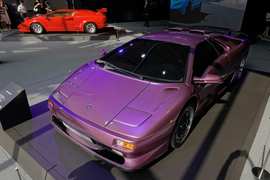 Millennials, Gen Z, and Alpha consumers are accustomed to seeing new million-dollar cars flood their social media feeds on a seemingly monthly basis, each boasting unheard-of power, torque, and lap times. For those of us with more vintage sensibilities, however, it’s hard to forget the shockwave caused by cars like the 627-hp McLaren F1 in the mid-1990s, or the Bugatti Veyron just two decades ago, widely considered the first million-dollar, 1,000-hp hypercar.
The Evolving Landscape of Exotic Performance
Since I first sat in the Valhalla prototype at Pebble Beach, the automotive landscape has transformed dramatically. We’ve driven the Porsche 911 GT3 RS, which offers half the horsepower and less “exotic” tech, yet demands pro-level skills to maximize on track—though its suitability as a daily driver is debatable.
Stepping up in price, construction, and technological prowess, we’ve recently sampled the Ferrari F80, 849 Testarossa, Czinger 21C VMax, and even the deceptively quick Porsche 911 Turbo S. Furthermore, there’s the incoming hybrid Corvette ZR1X with 1,250 hp, a machine few envisioned back when the Valhalla was conceived by Aston Martin and Adrian Newey, its now-former partner.
The Joy of the Drive
In the current era of ultra-performance, “comparison is the thief of joy” has never been more relevant. This is especially true for cars like the Valhalla, where orchestrating a true head-to-head comparison is nearly impossible, largely due to Ferrari’s historical reluctance to provide cars for head-to-head showdowns. (Shame on you, Ferrari.)
Regardless, with such high dynamic limits, it’s far more satisfying to experience these machines on their own merits and for the unique experience they provide.
A True All-Rounder
The overall driving experience matters more than ever. No longer is it sufficient to be thrilling on the road but handle poorly on track, or vice versa. Aston Martin’s commitment to producing a car that excels on all fronts was evident from the outset, a fact confirmed by Angus MacKenzie’s prior test drive of a near-finished prototype.
On the Road: The Surprise of Comfort
Unlike Angus, who drove the car on Silverstone Circuit’s short Stowe layout, Aston provided a 50-minute road loop. While the Valhalla’s Le Mans-inspired aesthetics might suggest a compromised daily driver, that is far from the case. The only significant drawback is the lack of luggage space; small door cubbies provide storage, but there is no frunk due to the space being consumed by three high-temperature radiators, the electric motors, and a racing-style, pushrod-actuated inboard suspension layout.
This suspension design was driven by the F1-inspired seating position. The seats are positioned so low that a conventional suspension would have elevated the bodywork, obscuring the driver’s forward view. There is no backrest angle adjustment, so the driver must adapt to the seating position. Furthermore, the seats are bolted low into the carbon-fiber monocoque tub, meaning there is no motorized slide mechanism. Instead, the driver pulls a leather strap between their legs to adjust the seat position.
Once you become accustomed to the seating position—it’s surprisingly comfortable—you realize within the first two miles that the Valhalla’s bespoke Bilstein DTX active damper system and overall suspension setup (the rear features a five-link layout) provide a remarkably comfortable ride for a car of this caliber. The Spanish road route we drove was far from perfect, yet the difference between the suspension’s Sport and Sport+ settings remained negligible, a welcome characteristic found in other new Aston Martins like the Vantage. Race mode introduces a harsher ride that might become tiresome in mundane driving, but it’s entirely usable, especially on a well-maintained, fast-flowing road during spirited driving.
Millennials, Gen Z, and Alpha consumers are accustomed to seeing new million-dollar cars flood their social media feeds on a seemingly monthly basis, each boasting unheard-of power, torque, and lap times. For those of us with more vintage sensibilities, however, it’s hard to forget the shockwave caused by cars like the 627-hp McLaren F1 in the mid-1990s, or the Bugatti Veyron just two decades ago, widely considered the first million-dollar, 1,000-hp hypercar.
The Evolving Landscape of Exotic Performance
Since I first sat in the Valhalla prototype at Pebble Beach, the automotive landscape has transformed dramatically. We’ve driven the Porsche 911 GT3 RS, which offers half the horsepower and less “exotic” tech, yet demands pro-level skills to maximize on track—though its suitability as a daily driver is debatable.
Stepping up in price, construction, and technological prowess, we’ve recently sampled the Ferrari F80, 849 Testarossa, Czinger 21C VMax, and even the deceptively quick Porsche 911 Turbo S. Furthermore, there’s the incoming hybrid Corvette ZR1X with 1,250 hp, a machine few envisioned back when the Valhalla was conceived by Aston Martin and Adrian Newey, its now-former partner.
The Joy of the Drive
In the current era of ultra-performance, “comparison is the thief of joy” has never been more relevant. This is especially true for cars like the Valhalla, where orchestrating a true head-to-head comparison is nearly impossible, largely due to Ferrari’s historical reluctance to provide cars for head-to-head showdowns. (Shame on you, Ferrari.)
Regardless, with such high dynamic limits, it’s far more satisfying to experience these machines on their own merits and for the unique experience they provide.
A True All-Rounder
The overall driving experience matters more than ever. No longer is it sufficient to be thrilling on the road but handle poorly on track, or vice versa. Aston Martin’s commitment to producing a car that excels on all fronts was evident from the outset, a fact confirmed by Angus MacKenzie’s prior test drive of a near-finished prototype.
On the Road: The Surprise of Comfort
Unlike Angus, who drove the car on Silverstone Circuit’s short Stowe layout, Aston provided a 50-minute road loop. While the Valhalla’s Le Mans-inspired aesthetics might suggest a compromised daily driver, that is far from the case. The only significant drawback is the lack of luggage space; small door cubbies provide storage, but there is no frunk due to the space being consumed by three high-temperature radiators, the electric motors, and a racing-style, pushrod-actuated inboard suspension layout.
This suspension design was driven by the F1-inspired seating position. The seats are positioned so low that a conventional suspension would have elevated the bodywork, obscuring the driver’s forward view. There is no backrest angle adjustment, so the driver must adapt to the seating position. Furthermore, the seats are bolted low into the carbon-fiber monocoque tub, meaning there is no motorized slide mechanism. Instead, the driver pulls a leather strap between their legs to adjust the seat position.
Once you become accustomed to the seating position—it’s surprisingly comfortable—you realize within the first two miles that the Valhalla’s bespoke Bilstein DTX active damper system and overall suspension setup (the rear features a five-link layout) provide a remarkably comfortable ride for a car of this caliber. The Spanish road route we drove was far from perfect, yet the difference between the suspension’s Sport and Sport+ settings remained negligible, a welcome characteristic found in other new Aston Martins like the Vantage. Race mode introduces a harsher ride that might become tiresome in mundane driving, but it’s entirely usable, especially on a well-maintained, fast-flowing road during spirited driving.
 The square-shaped steering wheel feels mostly pleasant, but the molded crease/edge running vertically up the back of the grip—intended to provide a more secure hold than a rounded surface—might not suit everyone. The steering feel itself is intuitive, maintaining a satisfying weight that remains consistent across various