



The 2025 Aston Martin Valhalla: Modern Performance in Its Most Dramatic Form
“So, how was it?!”
This is the question that follows any drive of an Aston Martin Valhalla. But let’s be honest, that tradition of reviewing supercars has taken an even more surreal turn in recent times.
When four different friends and colleagues asked me this the day after driving the 2026 Aston Martin Valhalla, I hesitated to reply. It occurred to me that while I can describe my experience, it’s almost meaningless if you haven’t experienced these hypercars in the mid-2020s firsthand. They are, simply put, a different breed of automotive than what we knew a decade ago.
The Road to Valhalla: Seven Years in the Making
Seven years feels like both a lifetime and yesterday. The pandemic years blurred time, but it’s been that long since Aston Martin first introduced the AM-RB 003 at the 2019 Geneva Motor Show. That name, named after the Norse afterlife for fallen heroes, became a reflection of their then-sponsorship with the Red Bull Racing F1 team.
Significant changes followed. Aston Martin and Red Bull ended their sponsorship after the 2020 F1 season when Lawrence Stroll rebranded Racing Point as the Aston Martin Formula 1 team. The automotive world, and Aston Martin itself, were evolving rapidly. Internal leadership turnover led to a pivotal decision regarding the Valhalla’s hybrid powertrain. Initially slated to be an in-house-designed 3.0-liter V-6, it was ultimately upgraded to a hybridized version of the Mercedes-AMG GT Black Series twin-turbo V-8.
 To differentiate it further, Aston gave it larger turbos, a new inlet manifold, stronger pistons, and revised camshafts, boosting power output by nearly 100 hp and 50 lb-ft. The 2026 Aston Martin Valhalla is the only car to house this specific engine.
A Long-Anticipated Arrival
When I saw the mockup at the Pebble Beach Concours in August 2022, I was already intrigued by the F1-style reclined seating. At the time, the projected specs for the V-8 powertrain had jumped to 1,012 hp and an undisclosed torque figure. Aston emphasized that these numbers were not finalized, but it was enough for me to say, “Please, I want to drive it, whenever it’s ready.”
Based on Aston Martin’s development timeline, I didn’t expect another three and a half years to pass before I got that chance. However, the production version’s hardware exceeds all those earlier expectations.
The 4.0-liter twin-turbo V-8, featuring a flat-plane crank and dry-sump design, produces 817 hp. Combined with 248 hp from three Aston-designed radial-flux permanent-magnet motors—one on the front axle and a third integrated into the new eight-speed dual-clutch gearbox—the Valhalla delivers a peak output of 1,064 hp and 811 lb-ft of torque.
The hybrid system also includes a 560-cell battery pack. Aston engineers utilize an off-the-shelf AMG battery for this component, making it the only part of the hybrid system not developed in-house. Chief engineer Andrew Kay explained the benefit of this all-weather battery: “We’re able to push energy into the battery and cycle it out very quickly [meaning recharge and deployment of electrical energy]. This is very good for track use, in particular.”
Unlike its big brother, the Valkyrie, and the original concept, the production Valhalla is a plug-in hybrid (PHEV). It’s capable of driving in EV-only mode for up to 8.7 miles with a maximum speed of 80 mph.
Beyond the Name: Supercar or Hypercar?
Many enthusiasts might quibble over the terminology. The company calls the Valhalla its first mid-engine supercar, but with its 1,000+ hp output, it feels more like a hypercar.
This semantic debate is a direct result of the Valkyrie’s existence. Aston Martin is limited in its marketing descriptions because the Valkyrie is essentially barely a street car. Its price tag—$3+ million—and limited production run of 285 units make the Valhalla’s million-and-change MSRP and 999-unit inventory seem relatively pedestrian.
This absurdity speaks to a larger trend in the modern high-performance automotive landscape. For younger generations—Millennials, Zoomers, and Gen Alpha—the arrival of yet another $1 million supercar on social media feeds feels routine. Each car pushes the boundaries of power, torque, acceleration, and technological features that were once unimaginable.
However, those of us with a few more years under our belts can recall the McLaren F1 from 1993–94, or the Bugatti Veyron just 20 years ago—generally considered the first million-dollar, 1,000-hp hypercar.
Today, the landscape is even more crowded. Since I sat in the Valhalla prototype at Pebble Beach, we’ve driven the Porsche 911 GT3 RS, which has roughly half the horsepower but brings so much racing-derived aerodynamics and advanced hardware that it requires a professional driver to maximize its performance on track. Its suitability as a road car is up for debate given its suspension setup.
To differentiate it further, Aston gave it larger turbos, a new inlet manifold, stronger pistons, and revised camshafts, boosting power output by nearly 100 hp and 50 lb-ft. The 2026 Aston Martin Valhalla is the only car to house this specific engine.
A Long-Anticipated Arrival
When I saw the mockup at the Pebble Beach Concours in August 2022, I was already intrigued by the F1-style reclined seating. At the time, the projected specs for the V-8 powertrain had jumped to 1,012 hp and an undisclosed torque figure. Aston emphasized that these numbers were not finalized, but it was enough for me to say, “Please, I want to drive it, whenever it’s ready.”
Based on Aston Martin’s development timeline, I didn’t expect another three and a half years to pass before I got that chance. However, the production version’s hardware exceeds all those earlier expectations.
The 4.0-liter twin-turbo V-8, featuring a flat-plane crank and dry-sump design, produces 817 hp. Combined with 248 hp from three Aston-designed radial-flux permanent-magnet motors—one on the front axle and a third integrated into the new eight-speed dual-clutch gearbox—the Valhalla delivers a peak output of 1,064 hp and 811 lb-ft of torque.
The hybrid system also includes a 560-cell battery pack. Aston engineers utilize an off-the-shelf AMG battery for this component, making it the only part of the hybrid system not developed in-house. Chief engineer Andrew Kay explained the benefit of this all-weather battery: “We’re able to push energy into the battery and cycle it out very quickly [meaning recharge and deployment of electrical energy]. This is very good for track use, in particular.”
Unlike its big brother, the Valkyrie, and the original concept, the production Valhalla is a plug-in hybrid (PHEV). It’s capable of driving in EV-only mode for up to 8.7 miles with a maximum speed of 80 mph.
Beyond the Name: Supercar or Hypercar?
Many enthusiasts might quibble over the terminology. The company calls the Valhalla its first mid-engine supercar, but with its 1,000+ hp output, it feels more like a hypercar.
This semantic debate is a direct result of the Valkyrie’s existence. Aston Martin is limited in its marketing descriptions because the Valkyrie is essentially barely a street car. Its price tag—$3+ million—and limited production run of 285 units make the Valhalla’s million-and-change MSRP and 999-unit inventory seem relatively pedestrian.
This absurdity speaks to a larger trend in the modern high-performance automotive landscape. For younger generations—Millennials, Zoomers, and Gen Alpha—the arrival of yet another $1 million supercar on social media feeds feels routine. Each car pushes the boundaries of power, torque, acceleration, and technological features that were once unimaginable.
However, those of us with a few more years under our belts can recall the McLaren F1 from 1993–94, or the Bugatti Veyron just 20 years ago—generally considered the first million-dollar, 1,000-hp hypercar.
Today, the landscape is even more crowded. Since I sat in the Valhalla prototype at Pebble Beach, we’ve driven the Porsche 911 GT3 RS, which has roughly half the horsepower but brings so much racing-derived aerodynamics and advanced hardware that it requires a professional driver to maximize its performance on track. Its suitability as a road car is up for debate given its suspension setup.
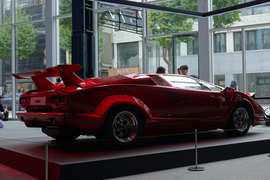 Stepping up in price, construction, and tech war chest, MotorTrend has recently sampled the Ferrari F80, the 849 Testarossa, the Czinger 21C VMax, and the Porsche 911 Turbo S. And don’t forget the hybrid Corvette ZR1X with 1,250 hp—something no one saw coming when the Valhalla was just a brilliant spark in Aston Martin’s and Adrian Newey’s collective eyes.
Drive the Valhalla, Forget the Comparisons
Given the extreme capabilities of modern supercars and hypercars, “comparison is the thief of joy” has never been more relevant. It’s also coincidental because orchestrating a true comparison test among the vehicles listed above, perhaps other than the ZR1X, is virtually impossible. Ferrari rarely lends cars to publications for head-to-head showdowns.
Regardless, with such high dynamic limits, it’s far more rewarding to drive something like the Valhalla on its own merits, appreciating whatever experience it provides.
The overall experience is paramount in these cars. It’s no longer enough to be thrilling on the road but perform like an understeering mess on the track, or vice versa. Angus MacKenzie of MotorTrend sampled a “prototype” that was nearly the finished article, save for some transmission calibration, a few months back and confirmed that the Valhalla is a winner on all fronts.
A Surprisingly Comfortable Ride
I was given a 50-minute road loop to start. You might naturally assume that a car with a Le Mans hypercar appearance and a low, wide stance would be uncomfortable for daily use, but that’s not the case.
Except for the lack of luggage storage—small cubbies exist in the door cards, but there’s no frunk due to the space being taken up by three high-temperature radiators, electric motors, and a racing-style, pushrod-actuated inboard suspension—the Valhalla is surprisingly compliant.
The engineers opted for this suspension layout due to the F1-style seating position. You sit so low that a conventional suspension would raise the body too high to maintain a clear forward sightline. There’s no backrest angle adjustment, so you must adapt to the seating. Since the seats are bolted so low into the carbon-fiber monocoque tub, there’s no motor beneath them to slide yourself forward and back. Instead, you pull a leather strap between your legs to make those adjustments.
Driving Dynamics: A Seamless Blend of Comfort and Power
You get used to the driving position quickly—it’s not extreme at all. Within two miles, you realize the Bilstein DTX active damper system and the overall suspension setup make for a remarkably comfortable megacar. The Spanish roads we drove weren’t perfectly smooth, yet there was no significant gap between the suspension’s Sport and Sport+ settings—a welcome, usable trait we’ve praised in other new Astons like the Vantage. Race mode introduces a harsher ride you might tire of in mundane scenarios, but it’s perfectly usable on a well-maintained, fast-sweeping road when it’s playtime.
The square-ish steering wheel feels good in hand. However, the molded-in crease/edge running vertically up the back of the grip—designed to provide a more positive feel than a rounded surface—might not suit everyone’s hands. The steering itself is intuitive, maintaining a lovely weight that’s neither too light nor heavy across the various drive modes.
Stepping up in price, construction, and tech war chest, MotorTrend has recently sampled the Ferrari F80, the 849 Testarossa, the Czinger 21C VMax, and the Porsche 911 Turbo S. And don’t forget the hybrid Corvette ZR1X with 1,250 hp—something no one saw coming when the Valhalla was just a brilliant spark in Aston Martin’s and Adrian Newey’s collective eyes.
Drive the Valhalla, Forget the Comparisons
Given the extreme capabilities of modern supercars and hypercars, “comparison is the thief of joy” has never been more relevant. It’s also coincidental because orchestrating a true comparison test among the vehicles listed above, perhaps other than the ZR1X, is virtually impossible. Ferrari rarely lends cars to publications for head-to-head showdowns.
Regardless, with such high dynamic limits, it’s far more rewarding to drive something like the Valhalla on its own merits, appreciating whatever experience it provides.
The overall experience is paramount in these cars. It’s no longer enough to be thrilling on the road but perform like an understeering mess on the track, or vice versa. Angus MacKenzie of MotorTrend sampled a “prototype” that was nearly the finished article, save for some transmission calibration, a few months back and confirmed that the Valhalla is a winner on all fronts.
A Surprisingly Comfortable Ride
I was given a 50-minute road loop to start. You might naturally assume that a car with a Le Mans hypercar appearance and a low, wide stance would be uncomfortable for daily use, but that’s not the case.
Except for the lack of luggage storage—small cubbies exist in the door cards, but there’s no frunk due to the space being taken up by three high-temperature radiators, electric motors, and a racing-style, pushrod-actuated inboard suspension—the Valhalla is surprisingly compliant.
The engineers opted for this suspension layout due to the F1-style seating position. You sit so low that a conventional suspension would raise the body too high to maintain a clear forward sightline. There’s no backrest angle adjustment, so you must adapt to the seating. Since the seats are bolted so low into the carbon-fiber monocoque tub, there’s no motor beneath them to slide yourself forward and back. Instead, you pull a leather strap between your legs to make those adjustments.
Driving Dynamics: A Seamless Blend of Comfort and Power
You get used to the driving position quickly—it’s not extreme at all. Within two miles, you realize the Bilstein DTX active damper system and the overall suspension setup make for a remarkably comfortable megacar. The Spanish roads we drove weren’t perfectly smooth, yet there was no significant gap between the suspension’s Sport and Sport+ settings—a welcome, usable trait we’ve praised in other new Astons like the Vantage. Race mode introduces a harsher ride you might tire of in mundane scenarios, but it’s perfectly usable on a well-maintained, fast-sweeping road when it’s playtime.
The square-ish steering wheel feels good in hand. However, the molded-in crease/edge running vertically up the back of the grip—designed to provide a more positive feel than a rounded surface—might not suit everyone’s hands. The steering itself is intuitive, maintaining a lovely weight that’s neither too light nor heavy across the various drive modes.
 When I found a long, open stretch of country road with no one in sight, I brought the car to a stop, stood on the brake and throttle pedals, and launched the Valhalla as hard as it would go. Other than a slight, slidy wiggle from the rear as the tires hooked up, it was pure acceleration. Aston claims 0–62 mph takes 2.5 seconds, so expect a 0–60 run in 2.4