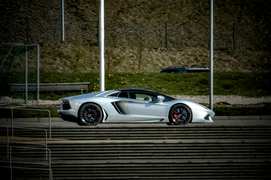
Track Beasts on the Pavement: A Deep Dive into 10 Production Cars with Motorsport Engines
For generations, the primal roar of a finely tuned engine has echoed not just through the hallowed grounds of legendary racetracks but also through the concrete canyons of our cities. There’s an ineffable allure, a raw, visceral thrill, that permeates the experience of piloting a vehicle imbued with genuine motorsport DNA. This transcends mere superficial performance enhancements or flashy aesthetics; we are talking about production automobiles that proudly wear engines conceived and honed in the relentless crucible of elite competition. These powerhouses, born from the unyielding pursuit of speed and victory, deliver a high-octane, adrenaline-fueled experience to everyday drivers, forging a direct and potent link to their racing counterparts.
In this exhaustive exploration, we delve into ten production vehicles that masterfully blur the demarcation lines between the racetrack and the public highway. From the operatic crescendo of naturally aspirated V12s to the guttural bellow of turbocharged titans, these machines offer a tangible taste of racing pedigree. But before we immerse ourselves in the specific nuances of these exceptional vehicles, it is crucial to comprehend the fundamental rationale behind why automotive manufacturers invest astronomical sums into the costly and demanding world of motorsport, and how those hard-won lessons invariably translate into the cars that grace our driveways.
The Symbiotic Fusion: Motorsport DNA in Road-Going Vehicles
The intertwined destiny of motorsport and road car development is a narrative as ancient as the automobile itself. Racing serves as the ultimate proving ground, pushing the boundaries of engineering ingenuity and subjecting vehicles and their components to unparalleled stress. The unforgiving environment of competition demands absolute reliability and peak performance; there is simply no room for failure when victory hangs in the balance. The invaluable knowledge gleaned from these high-stakes endeavors invariably finds its way back to the design and production of the cars we rely on daily. Whether it is the implementation of sophisticated aerodynamic principles, the strategic use of advanced lightweight materials, or the direct trickle-down of cutting-edge engine technology, innovation forged in the heat of racing pioneers the creation of superior road cars.
Consider, for instance, the widespread adoption of disc brakes and the ubiquity of paddle shifters; both technologies began their journey on the racetrack before becoming standard features in contemporary production vehicles. Furthermore, the prestige and brand enhancement derived from motorsport success are immeasurable. When a manufacturer’s racing machine consistently dominates the competition, its road-going counterparts are perceived as inherently more desirable and capable. While the vast majority of enthusiasts will never have the opportunity to pilot a Formula 1 car or a Le Mans prototype, the presence of a race-bred engine thrumming beneath the hood offers a profound sense of connection to the action, allowing us to experience a sliver of that exhilarating world.
Why Manufacturers Invest in Racing
The commitment of major automotive brands to competitive motorsports is a strategic imperative rather than a mere hobby. This commitment is driven by several interlocking factors, all of which are integral to a manufacturer’s long-term success and brand equity.
Firstly, technology transfer remains a critical driver. The constraints of racing mandate the development of revolutionary solutions for performance, efficiency, and durability that would be difficult to justify under the slower, less extreme development cycles of consumer vehicles. For instance, the development of advanced kinetic energy recovery systems (KERS) in Formula 1 directly led to hybrid road car technologies. Similarly, the push for lighter yet stronger chassis materials in endurance racing informs the use of carbon fiber composites in high-end supercars and mainstream sedans alike.
Secondly, brand prestige and marketing are fundamentally intertwined with racing success. When a manufacturer’s badge crosses the finish line first in a major event like the 24 Hours of Le Mans, the Monaco Grand Prix, or the Daytona 500, it generates invaluable media coverage and reinforces the perception of the brand as a leader in engineering prowess and high performance. For high-performance car brands like Ferrari, Lamborghini, or Porsche, motorsport success is the very foundation of their identity and pricing power.
Finally, talent development is a crucial, often overlooked, benefit. The pressure-cooker environment of competitive racing attracts the sharpest engineers, designers, and drivers in the automotive industry. By fielding race teams, manufacturers create a proving ground for talent, identifying and nurturing individuals who can then contribute to the development of road-going vehicles. A skilled motorsport engineer understands the nuances of lightweight materials, chassis dynamics, and thermal management in a way that is difficult to replicate in a standard development environment.
The trickle-down effect of motorsport technology in production cars
The technical dividends of motorsports are pervasive across the automotive industry, influencing everything from the cooling systems in your daily driver to the aerodynamic profile of luxury sedans. This is where the rubber truly meets the road in terms of value for consumers.
One of the most apparent transfers is in aerodynamics. Every curve and vent on a modern sports car is likely informed by wind tunnel testing conducted for racing prototypes. The concept of active aero, which allows a car to adjust its wings and spoilers in real-time for optimal downforce or minimal drag, was pioneered in motorsport before trickling down to high-end production vehicles.
Another significant impact is felt in material science. Formula 1 cars utilize exotic composites like carbon fiber and ceramic brakes because their lives are measured in laps, not miles. These materials are lighter and more robust than traditional steel and carbon-ceramic counterparts, and as their manufacturing processes become more cost-effective, they transition from the racetrack to luxury performance cars, making them faster, more fuel-efficient, and safer.
A Legacy of Speed: 10 Production Cars Fuelled by Racing Engines
Our journey begins with vehicles that represent the pinnacle of this motorsport-to-road philosophy. These are not simply cars with racing stripes; they are machines carrying the very heart and soul of their track-honed ancestors.
Alfa Romeo Montreal: The V8 Heartbeat of a Legend
The Alfa Romeo Montreal, a captivating creation from the late 1960s and early 1970s, houses a remarkable 2.6-liter Tipo 33 naturally aspirated V8 engine. This powerhouse was directly derived from Alfa Romeo’s highly successful Tipo 33 sports prototype racer, a formidable competitor in grueling endurance events such as the Targa Florio and the 24 Hours of Daytona. While meticulously retuned for civilian duty, the engine in the Montreal remarkably preserves its motorsport character. It willingly spins to an impressive 7,000 RPM, delivering a spirited 200 horsepower. The intoxicating symphony of its V8, coupled with its strikingly avant-garde styling, cemented the Montreal’s status as one of the most captivating, albeit frequently overlooked, Alfa Romeo creations. This Italian performance car exemplifies the charm of vintage racing-derived engines.
While the Montreal was ultimately presented as a grand tourer rather than a pure sports racer, the V8 engine it featured was a high-strung masterpiece adapted from the factory’s racing program. The 2.6-liter V8, officially rated at 200 horsepower at 6,500 RPM, was a significant engineering achievement for its era. Unlike many contemporary Italian V8s, the Tipo 33-derived unit featured an oversquare design, giving it a high-revving nature that demanded to be driven hard. The soundtrack produced by this engine is often described as a distinctively high-pitched wail, a sound that perfectly complements the car’s otherworldly styling. The car’s chassis, with its double-wishbone suspension at the front and semi-trailing arms at the rear, provided handling that was praised for its poise, even if the overall package was heavy by modern standards. The Montreal remains one of the most distinctive examples of a production car bearing the full imprimatur of its racing heritage.
BMW M1, M3 (E30), M5 (E28), M6 (E24): The M Division’s Motorsport Foundation
BMW’s profound motorsport lineage is indelibly etched into the DNA of its most iconic models. The legendary BMW M1, a mid-engine marvel, was propelled by the potent 3.5-liter M88 inline-six engine. This powerplant was a direct descendant of the brand’s highly successful racing programs, most notably finding its application in the BMW M1 ProCar series. Remarkably, this same formidable engine later found its way into the E24 M6 and the E28 M5, bestowing them with exceptional performance credentials. Concurrently, the four-cylinder S14 engine powering the E30 M3 was also deeply rooted in the M88 and the turbocharged M12 Formula 1 engines. This engine drew significant inspiration from BMW’s dominance in touring car racing, sharing critical components and engineering principles with the cars that consistently conquered the Deutsche Tourenwagen Masters (DTM) series. These BMW performance cars are testaments to the brand’s racing heritage.
The story of the M1 is a compelling illustration of motorsport ambition translating into production reality. Originally conceived as a homologation special for Group 4 racing, the M1 was actually built by Lamborghini during its development phase due to production capacity constraints. However, the true genius lay in the engine: the M88/1. This inline-six engine was essentially a road-legal version of the M88/3 used in the M1 ProCar racing series. At the time, it was one of the most powerful naturally aspirated six-cylinder engines produced, revving to 7,000 RPM and delivering 277 horsepower. Its contribution to BMW’s success in the late 70s and early 80s in touring car racing was undeniable, establishing the M division as a powerhouse in performance.