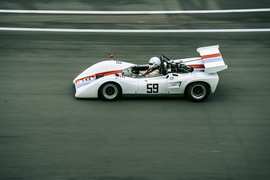
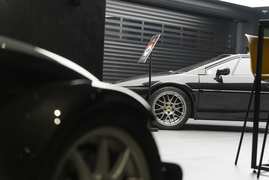
For decades, the pulse of high-performance racing has echoed beyond the circuits, filtering into the very streets we navigate. There is a raw, visceral appeal in piloting a machine born from the intensity of the track. This isn’t about superficial cosmetic tweaks; it’s about road cars that proudly carry engines conceived and honed in the unforgiving crucible of elite competition. These powerhouses, products of a relentless pursuit of speed and victory, deliver a high-octane, adrenaline-fueled experience that brings racing pedigree to everyday driving, forging a potent link to their competition-bred brethren.
In this deep dive, we explore ten production vehicles that artfully blur the lines between the racetrack and the public road. From the operatic crescendo of naturally aspirated V12s to the guttural bellow of turbocharged titans, these machines offer a tangible taste of racing heritage. But before we dissect these exceptional vehicles, it is crucial to understand the fundamental rationale behind why automotive manufacturers invest astronomical resources into the costly and demanding world of motorsport, and how those hard-won lessons translate into the cars that populate our driveways.
The Intimate Symbiosis: Engineering Lineage Between Track and Road
The intertwined destiny of motorsport and road car development is a narrative as old as the automobile itself. Racing serves as the ultimate proving ground, pushing the boundaries of engineering ingenuity and subjecting vehicles and their components to unparalleled stress. The brutal environment of competition demands absolute reliability and peak performance; there is simply no margin for error when victory hangs in the balance. The invaluable knowledge forged in these high-stakes endeavors inevitably flows back into the design and production of the cars we rely on daily. Whether it is the implementation of sophisticated aerodynamic principles, the strategic deployment of advanced lightweight materials, or the direct trickle-down of cutting-edge engine technology, innovation conceived in the heat of racing pioneers superior road cars.
Consider, for example, the widespread adoption of disc brakes and the ubiquity of paddle shifters; both technologies began their journey on the racetrack before becoming standard features in contemporary production vehicles. Furthermore, the prestige and brand enhancement derived from motorsport success are immeasurable. When a manufacturer’s racing machine consistently dominates the competition, its road-going counterparts are perceived as inherently more desirable and capable. While the vast majority of enthusiasts will never have the opportunity to pilot a Formula 1 car or a Le Mans prototype, the presence of a race-bred engine thrumming beneath the hood offers a profound sense of connection to the action, allowing us to experience a sliver of that exhilarating world.
The Strategic Imperative: Why Major Manufacturers Invest Billions in Racing
The commitment of automotive giants like Ferrari, Porsche, and Ford to motorsport extends far beyond the thrill of the race. It is a strategic investment in innovation, brand identity, and long-term technological advancement. Every dollar invested in a Formula 1 or Le Mans program is an investment in the future of their production vehicles.
Innovation and Advanced Technology: Motorsport pushes the envelope of what is physically possible. Engineers are forced to develop solutions to extreme challenges—aerodynamic efficiency at triple-digit speeds, energy management in hybrid systems, and lightweight materials that maintain structural integrity. These technological breakthroughs are often the precursors to technologies that eventually find their way into consumer cars. For example, hybrid powertrain technology, now common in production vehicles, was heavily refined in endurance racing to improve efficiency without sacrificing performance.
Engineering and Testing: Racing provides a real-world laboratory where vehicles are pushed to their breaking points in a controlled manner. When manufacturers can achieve consistent wins at events like the 24 Hours of Le Mans or in Formula 1, it validates their engineering prowess. This rigorous testing ensures that the technologies being developed are reliable and effective under extreme stress. The reliability demonstrated on the track translates to confidence in the showroom, giving consumers a tangible assurance of quality and durability. This is especially critical in the supercar segment, where consumers expect cutting-edge technology and race-proven performance.
Marketing and Brand Image: Motorsport is a powerful marketing tool. A successful racing program builds a brand’s reputation for performance, innovation, and winning. When a manufacturer is associated with victory and cutting-edge technology, its road cars are seen as more desirable. This creates a Halo Effect, where the prestige of the racing program elevates the entire brand. For enthusiasts, driving a car powered by a race-derived engine is a badge of honor, a tangible connection to the world of professional competition. This association is invaluable for brands that want to be perceived as leaders in automotive technology and performance.
The Apex Predators: 10 Production Cars That Carry the DNA of Racing
Our journey begins with vehicles that represent the pinnacle of this motorsport-to-road philosophy. These are not merely cars with racing stripes; they are machines carrying the very heart and soul of their track-honed ancestors. Whether you are searching for track-inspired cars or supercars with motorsport engines, this selection represents the best of both worlds.
The Operatic Debutante: Alfa Romeo Montreal (1970–1977)
The Alfa Romeo Montreal, a gem from the late 1960s and early 1970s, houses a remarkable 2.6-liter Tipo 33 naturally aspirated V8 engine. This power unit was directly derived from Alfa Romeo’s highly successful Tipo 33 sports prototype racer, a formidable competitor in grueling endurance events such as the Targa Florio and the 24 Hours of Daytona. While meticulously retuned for civilian duty, the engine in the Montreal remarkably preserves its motorsport character. It willingly spins to an impressive 7,000 RPM, delivering a spirited 200 horsepower. The intoxicating symphony of its V8, coupled with its strikingly avant-garde styling, cemented the Montreal’s status as one of the most captivating, albeit frequently overlooked, Alfa Romeo creations. This Italian performance car exemplifies the charm of vintage racing-derived engines.
Engineering Pedigree and Design Philosophy
The Montreal was designed to showcase Alfa Romeo’s engineering prowess and design innovation. Conceived by Marcello Gandini at Bertone, the car’s styling was a bold departure from contemporary designs. The rear-hinged engine cover, inspired by race car aerodynamics, was a functional element that also served as a striking design feature. The engine itself was a technological marvel for its time, featuring an oversquare bore-to-stroke ratio and advanced cylinder head design that allowed it to rev freely. This vintage racing-derived engine ensured a thrilling driving experience that was unique to the Montreal.
The M Division’s Foundations: BMW M1, M3 (E30), M5 (E28), M6 (E24)
BMW’s profound motorsport lineage is indelibly etched into the DNA of its most iconic models. The legendary BMW M1, a mid-engine marvel, was propelled by the potent 3.5-liter M88 inline-six engine. This powerplant was a direct descendant of the brand’s highly successful racing programs, most notably finding its application in the BMW M1 ProCar series. Remarkably, this same formidable engine later found its way into the E24 M6 and the E28 M5, bestowing them with exceptional performance credentials. Concurrently, the four-cylinder S14 engine powering the E30 M3 was also deeply rooted in the M88 and the turbocharged M12 Formula 1 engines. This engine drew significant inspiration from BMW’s dominance in touring car racing, sharing critical components and engineering principles with the cars that consistently conquered the Deutsche Tourenwagen Masters (DTM) series. These BMW performance cars are testaments to the brand’s racing heritage.
The BMW M1: A Racing Homologation Masterpiece
The BMW M1 was born out of necessity. German racing regulations required road-legal versions of sports prototypes to homologate their racing counterparts. The result was a mid-engine supercar that, while initially conceived for racing, quickly became an icon of road-going performance. The M1’s 3.5-liter inline-six engine was a masterpiece of engineering, producing 277 horsepower and revving to 7,000 RPM. The M88 engine later found its way into the E28 M5, creating one of the fastest sedans of its time. These German sports cars remain highly sought after by collectors and enthusiasts.
The Can-Am Leviathan: Chevrolet Camaro ZL1 (1969)
The 1969 Chevrolet Camaro ZL1 was a different breed entirely, equipped with a colossal 427 cubic-inch (7.0-liter) V8 engine originally conceived for the demanding world of Can-Am racing. Featuring an all-aluminum construction, this engine was remarkably lightweight for its imposing displacement, delivering a mind-boggling amount of power. While officially rated at 430 horsepower for its road-going iteration, its true output was closer to a staggering 500 hp. The ZL1 package transformed the already potent Camaro into a street-legal drag strip annihilator. Its formidable engine also found its way into numerous race cars competing in the SCCA Trans-Am series. With a production run of a mere 69 units, the Camaro ZL1 stands today as an exceptionally rare and highly coveted automotive artifact, representing the pinnacle of American muscle cars with racing roots.
The Power of Pure Muscle
The 1969 Camaro ZL1 is the ultimate example of raw, unfiltered power. The 427 V8 engine, developed for the high-revving demands of the Can-Am series, was a technological marvel of its time. Its all-aluminum construction made it lighter than cast-iron engines of similar displacement, allowing