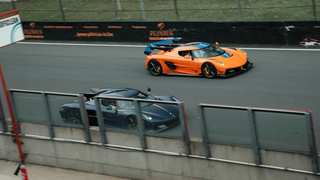
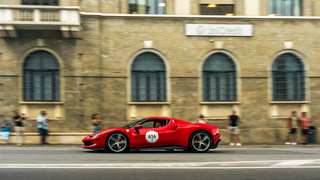
In the landscape of modern automotive engineering, the pursuit of speed, efficiency, and technological advancement has consistently blurred the lines between the laboratory and the live competition. This phenomenon is nowhere more evident than in the automotive sector, where advancements initially conceived for the rigors of motorsport have found their way into production vehicles, transforming the driving experience for consumers.
One of the most compelling manifestations of this convergence is the proliferation of race-derived engines in production cars. Historically, motorsports have served as an extreme testing ground, pushing the boundaries of engineering and subjecting components to unparalleled stress. From the early days of Formula 1 to the endurance challenges of Le Mans, the pursuit of victory has driven innovation, leading to the development of advanced technologies that have subsequently become standard features in contemporary road-going vehicles.
The historical trajectory of motorsport has been intrinsically linked to the evolution of the automobile. As early as the 20th century, races were not merely sporting events but also crucial platforms for testing new technologies, materials, and performance concepts. The demanding conditions of the racetrack demanded reliability and peak performance, and any lessons learned on the circuit inevitably found their way back to the design and production of road cars.
One of the most significant contributions of motorsport to the automotive industry is the concept of aerodynamics. The principles of airflow management, which began as essential tools to reduce drag and increase downforce on race cars, are now fundamental to the design of modern vehicles, from family sedans to supercars. Similarly, the widespread adoption of disc brakes, first pioneered in racing, has become a standard safety feature in virtually every vehicle on the road today.
Beyond these structural and technological impacts, motorsport also plays a crucial role in brand identity and marketing. A manufacturer’s racing pedigree serves as a powerful endorsement of its engineering capabilities. When a brand achieves consistent success on the track, its road-going counterparts are perceived as inherently more desirable and capable. This prestige attracts a discerning clientele who appreciate the heritage and performance credentials that motorsport provides.
Furthermore, the emotional connection between racing and road cars is palpable. While the vast majority of enthusiasts will never have the opportunity to pilot a Formula 1 car or a Le Mans prototype, the presence of a race-bred engine thrumming beneath the hood of a production vehicle offers a profound sense of connection to the world of elite competition. This allows consumers to experience a sliver of that exhilarating world, even if only for a brief moment on a winding country road.
This article delves into ten production vehicles that artfully blur the demarcation lines between the racetrack and the public highway. From the operatic crescendo of naturally aspirated V12s to the guttural bellow of turbocharged titans, these machines offer a tangible taste of racing pedigree, bridging the gap between the grandstands and the garage.
A Legacy of Speed: 10 Production Cars Fuelled by Racing Engines
Our journey begins with vehicles that represent the pinnacle of this motorsport-to-road philosophy. These are not simply cars with racing stripes; they are machines carrying the very heart and soul of their track-honed ancestors.
Alfa Romeo Montreal: The V8 Heartbeat of a Legend
The Alfa Romeo Montreal, a gem from the late 1960s and early 1970s, houses a remarkable 2.6-liter Tipo 33 naturally aspirated V8 engine. This power unit was directly derived from Alfa Romeo’s highly successful Tipo 33 sports prototype racer, a formidable competitor in grueling endurance events such as the Targa Florio and the 24 Hours of Daytona.
While meticulously retuned for civilian duty, the engine in the Montreal remarkably preserves its motorsport character. It willingly spins to an impressive 7,000 RPM, delivering a spirited 200 horsepower. The intoxicating symphony of its V8, coupled with its strikingly avant-garde styling, cemented the Montreal’s status as one of the most captivating, albeit frequently overlooked, Alfa Romeo creations. This Italian performance car exemplifies the charm of vintage racing-derived engines.
The Montreal was initially designed to showcase Alfa Romeo’s commitment to performance and design, and the V8 engine played a central role in this endeavor. Its development was a direct extension of Alfa Romeo’s ongoing efforts in motorsport, specifically in the 2.0-liter class where the Tipo 33 competed. The resulting road car captured the essence of racing, offering drivers a visceral connection to the track through its potent engine and sophisticated handling.
BMW M1, M3 (E30), M5 (E28), M6 (E24): The M Division’s Motorsport Foundation
BMW’s profound motorsport lineage is indelibly etched into the DNA of its most iconic models. The legendary BMW M1, a mid-engine marvel, was propelled by the potent 3.5-liter M88 inline-six engine. This powerplant was a direct descendant of the brand’s highly successful racing programs, most notably finding its application in the BMW M1 ProCar series.
Remarkably, this same formidable engine later found its way into the E24 M6 and the E28 M5, bestowing them with exceptional performance credentials. Concurrently, the four-cylinder S14 engine powering the E30 M3 was also deeply rooted in the M88 and the turbocharged M12 Formula 1 engines. This engine drew significant inspiration from BMW’s dominance in touring car racing, sharing critical components and engineering principles with the cars that consistently conquered the Deutsche Tourenwagen Masters (DTM) series.
These BMW performance cars are testaments to the brand’s racing heritage. The M division was established in 1972 with the explicit purpose of enhancing BMW’s motorsport endeavors and producing high-performance vehicles for public sale. The M1, produced between 1978 and 1981, was the first vehicle developed independently by the M division.
Chevrolet Camaro ZL1 (1969): A Can-Am Monster Unleashed
The 1969 Chevrolet Camaro ZL1 was a different breed entirely, equipped with a colossal 427 cubic-inch (7.0-liter) V8 engine originally conceived for the demanding world of Can-Am racing. Featuring an all-aluminum construction, this engine was remarkably lightweight for its imposing displacement, delivering a mind-boggling amount of power. While officially rated at 430 horsepower for its road-going iteration, its true output was closer to a staggering 500 hp.
The ZL1 package transformed the already potent Camaro into a street-legal drag strip annihilator. Its formidable engine also found its way into numerous race cars competing in the SCCA Trans-Am series. With a production run of a mere 69 units, the Camaro ZL1 stands today as an exceptionally rare and highly coveted automotive artifact, representing the pinnacle of American muscle cars with racing roots.
The Chevrolet Camaro ZL1 is an automotive legend, a symbol of American engineering prowess and a testament to the unwavering pursuit of performance. Born from the crucible of Can-Am racing, the 1969 ZL1 represents a rare confluence of raw power, advanced materials, and limited production, making it one of the most coveted collector cars in the world. This article explores the history, engineering, and lasting impact of this iconic machine.
Engineering Marvel: The L88 427 Engine
At the heart of the 1969 Camaro ZL1 lies the legendary L88 427 cubic-inch V8 engine. Developed by the Chevrolet Corvette racing program, the L88 was a powerhouse of innovation. Its all-aluminum construction was revolutionary for its time, reducing weight while maintaining exceptional strength and durability. The engine featured high-compression pistons, oversized valves, and a robust crankshaft, all designed to withstand the extreme demands of competition.
Unlike standard production engines, the L88 was not designed for low-end torque or fuel efficiency. Its focus was on peak power, with a redline approaching 7,000 RPM. This extreme performance profile made it a formidable weapon on the track, where the slightest advantage in power or acceleration could determine the outcome of a race.
The Can-Am Connection: Pushing the Limits of Performance
The Chevrolet Camaro ZL1’s L88 engine was initially conceived for the Can-Am racing series, a high-stakes competition known for its unrestricted regulations and cutting-edge technology. Can-Am racing was the proving ground for the most innovative and powerful engines of the era, and Chevrolet’s L88 stood out among the best.
In the world of Can-Am racing, teams constantly pushed the boundaries of engineering, vying for dominance in a league that prioritized raw power and cutting-edge innovation. The Chevrolet Camaro ZL1 stands as a rare outlier in this realm—a production vehicle that captured the spirit of these legendary machines while remaining accessible to the average enthusiast. This article explores the history, engineering, and lasting impact of this iconic American muscle car.
Ferrari Dino 206 GT: A Gracious Nod to Formula 2 Prowess
The elegant Ferrari Dino 206 GT, though often considered a marque apart, harbored a sophisticated 2.0-liter Dino naturally aspirated V6 engine. This powerplant was meticulously developed for Ferrari’s Formula 2 racing endeavors during the 1960s. While carefully calibrated for road use, the engine retained its characteristic high-revving nature, imbuing the Dino with a palpable racing spirit that made it an absolute delight to navigate on winding country roads.
Producing a respectable 180 horsepower, this output was more than adequate for a car weighing just over