



The World’s 10 Most Extreme Hypercars of 2025
The line between a supercar and a hypercar is notoriously blurry. Forget rigid specifications; we’re talking about machines that redefine performance, aesthetics, and the very essence of automotive engineering. These aren’t just fast cars; they are rolling works of art, engineering masterpieces pushed to their absolute limits.
Welcome to the arena of the world’s elite automobiles—a realm where innovation meets the road and where money buys access to a level of speed that borders on physics-defying. As we enter 2025, the pursuit of automotive perfection continues unabated, with manufacturers vying to deliver the ultimate driving experience. We’ve sifted through the crème de la crème to bring you the definitive list of the most breathtaking hypercars currently available or about to hit the pavement.
Let’s dive into a world where 1,000-horsepower figures are commonplace, aerodynamic efficiency is a religion, and exclusivity is the only currency that truly matters.
Bugatti Chiron
Bugatti isn’t just a brand; it’s a legacy of automotive extremity. With one of the most potent and luxurious lineups in the hypercar world, the Chiron stands tall as the direct successor to the legendary Veyron. More than just a replacement, the Chiron has become the archetype for modern hypercar engineering, influencing countless subsequent designs.
The Chiron’s engineering concept is nothing short of revolutionary. It merges lightweight construction with a monstrous powerplant, enabling it to achieve top speeds that shatter existing records. Powering this beast is the iconic quad-turbocharged 8.0-liter W16 engine. In its most potent iteration, this engine unleashes a staggering 1,500 horsepower at 6,000 rpm, propelling the Chiron from 0 to 60 mph in approximately 2.5 seconds.
But the Chiron is more than just raw numbers. Its design is a testament to aerodynamic artistry. The sculpted body flows with purpose, creating a silhouette that is both aggressive and elegant—a true hypercar aesthetic. This masterpiece of engineering is offered in a strictly limited series of 500 units. While the base price starts around $3 million, buyer-specific customizations and options can push the final price significantly higher, making the Chiron a trophy reserved for the ultra-elite.
Bugatti Bolide
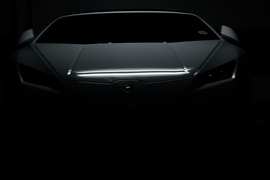 For those who thought the Chiron couldn’t get any crazier, Bugatti presented the Bolide. Externally, this vehicle is a radical departure from its Chiron sibling, but internally, it remains a raging beast of speed. When powered by racing fuel, the Bolide’s W16 engine generates an incredible 1,850 horsepower.
This immense power allows the hypercar to reach a theoretical top speed of 499 km/h (about 310 mph), though real-world testing has shown figures slightly below this mark. Nevertheless, shattering the 400 km/h barrier is more than enough to stake its claim among the fastest cars on the planet.
The Bolide’s design is where it truly shines. Built around an ultra-lightweight carbon fiber monocoque, its aerodynamic elements are extreme, reminiscent of a fighter jet rather than a road car. Looking at the Bolide, it’s easy to imagine it as something out of a high-octane video game, yet it’s brutally real. The production run is extremely limited, with only 40 units planned, which explains the steep starting price of $4.7 million.
McLaren Speedtail
McLaren’s contribution to the hypercar pantheon is the Speedtail, a vehicle that embodies elegance, speed, and technological innovation. It features a striking exterior that evokes the image of a droplet cutting through the air at supersonic speeds. The cabin design is particularly noteworthy, with the driver positioned centrally in the front, flanked by two passenger seats located behind.
This hybrid marvel combines a twin-turbocharged V8 engine with an electric motor system, generating a combined output of 1,050 horsepower. This powertrain enables the Speedtail to hit a top speed of 403 km/h (250 mph), with an acceleration time from 0 to 60 mph of just 2.9 seconds.
McLaren plans to produce only 106 examples of the Speedtail, maintaining its exclusivity and high demand. The starting price exceeds $2 million, varying significantly based on individual customization and specifications.
Aston Martin Valkyrie
The Aston Martin Valkyrie is another stunning hybrid hypercar that stands out for its astonishing lightness and explosive acceleration. This engineering marvel can sprint from 0 to 60 mph in around 2.5 seconds, thanks to its hybrid powertrain that delivers a combined 1,176 horsepower.
What truly sets the Valkyrie apart is its weight. Weighing in at a mere 1,030 kg (2,270 lbs), it is one of the lightest hypercars ever produced. The carbon fiber body, complete with active aerodynamic elements, allows for extreme speeds well over 400 km/h. The cockpit features a two-seat layout with dihedral doors that open upwards, adding to its exotic allure.
Aston Martin plans a total production run of 175 units, with starting prices around $3.2 million. It has been reported that all allocated slots were sold out long before production began, testament to the overwhelming global demand for this hypercar.
Koenigsegg One:1
The philosophy of the One:1, conceptualized by the Swedish manufacturer Koenigsegg, is encapsulated in its name. The core idea is to achieve a one-to-one power-to-weight ratio. In this case, each kilogram of the car’s weight is matched by nearly one horsepower (precisely 0.99974 hp per kg).
This philosophy allows the hypercar to achieve blistering speeds despite having what might appear to be less brute force compared to some of its competitors. The Koenigsegg One:1 accelerates from 0 to 60 mph in 2.6 seconds, with a claimed top speed of 430 km/h (267 mph). The weight and power figures coincide remarkably, standing at 1,360 hp and 1,360 kg.
For those who thought the Chiron couldn’t get any crazier, Bugatti presented the Bolide. Externally, this vehicle is a radical departure from its Chiron sibling, but internally, it remains a raging beast of speed. When powered by racing fuel, the Bolide’s W16 engine generates an incredible 1,850 horsepower.
This immense power allows the hypercar to reach a theoretical top speed of 499 km/h (about 310 mph), though real-world testing has shown figures slightly below this mark. Nevertheless, shattering the 400 km/h barrier is more than enough to stake its claim among the fastest cars on the planet.
The Bolide’s design is where it truly shines. Built around an ultra-lightweight carbon fiber monocoque, its aerodynamic elements are extreme, reminiscent of a fighter jet rather than a road car. Looking at the Bolide, it’s easy to imagine it as something out of a high-octane video game, yet it’s brutally real. The production run is extremely limited, with only 40 units planned, which explains the steep starting price of $4.7 million.
McLaren Speedtail
McLaren’s contribution to the hypercar pantheon is the Speedtail, a vehicle that embodies elegance, speed, and technological innovation. It features a striking exterior that evokes the image of a droplet cutting through the air at supersonic speeds. The cabin design is particularly noteworthy, with the driver positioned centrally in the front, flanked by two passenger seats located behind.
This hybrid marvel combines a twin-turbocharged V8 engine with an electric motor system, generating a combined output of 1,050 horsepower. This powertrain enables the Speedtail to hit a top speed of 403 km/h (250 mph), with an acceleration time from 0 to 60 mph of just 2.9 seconds.
McLaren plans to produce only 106 examples of the Speedtail, maintaining its exclusivity and high demand. The starting price exceeds $2 million, varying significantly based on individual customization and specifications.
Aston Martin Valkyrie
The Aston Martin Valkyrie is another stunning hybrid hypercar that stands out for its astonishing lightness and explosive acceleration. This engineering marvel can sprint from 0 to 60 mph in around 2.5 seconds, thanks to its hybrid powertrain that delivers a combined 1,176 horsepower.
What truly sets the Valkyrie apart is its weight. Weighing in at a mere 1,030 kg (2,270 lbs), it is one of the lightest hypercars ever produced. The carbon fiber body, complete with active aerodynamic elements, allows for extreme speeds well over 400 km/h. The cockpit features a two-seat layout with dihedral doors that open upwards, adding to its exotic allure.
Aston Martin plans a total production run of 175 units, with starting prices around $3.2 million. It has been reported that all allocated slots were sold out long before production began, testament to the overwhelming global demand for this hypercar.
Koenigsegg One:1
The philosophy of the One:1, conceptualized by the Swedish manufacturer Koenigsegg, is encapsulated in its name. The core idea is to achieve a one-to-one power-to-weight ratio. In this case, each kilogram of the car’s weight is matched by nearly one horsepower (precisely 0.99974 hp per kg).
This philosophy allows the hypercar to achieve blistering speeds despite having what might appear to be less brute force compared to some of its competitors. The Koenigsegg One:1 accelerates from 0 to 60 mph in 2.6 seconds, with a claimed top speed of 430 km/h (267 mph). The weight and power figures coincide remarkably, standing at 1,360 hp and 1,360 kg.
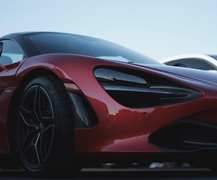 An interesting detail is the large rear spoiler—a design element that is often minimized in modern hypercars. Koenigsegg chose to emphasize tradition with this feature, making the One:1 instantly recognizable. Production was extremely limited, with only seven units ever built. Each one commanded a price well over $2 million.
Koenigsegg Jesko Absolute
The Jesko Absolute is the undisputed speed demon from Koenigsegg, a machine that manages to outpace all its predecessors. The 5.0-liter twin-turbocharged V8 engine produces a mind-boggling 1,622 horsepower when fed with E85 racing fuel, enabling the car to hit speeds of 483 km/h (300 mph).
The manufacturer boldly claims that the Jesko Absolute can exceed the 530 km/h (330 mph) barrier under ideal conditions, though such a record has not yet been officially confirmed. This hypercar boasts an impressively low curb weight of only 1,290 kg (2,844 lbs), ensuring rapid acceleration and exceptional high-speed stability.
The sleek, aerodynamic bodywork emphasizes the car’s status and capabilities. Koenigsegg plans to produce 125 units, with prices starting from $3 million. As with most hypercars, more than 75% of the production slots were reportedly spoken for by pre-order.
Hennessey Venom F5
Regularly featured in top rankings, the Hennessey Venom F5 is a testament to American engineering prowess and raw power. It’s not just about speed; it’s about brute force delivered with stunning precision.
The Venom F5 is powered by a V8 engine with a colossal output of 1,817 horsepower. It accelerates from 0 to 60 mph in a mere 2.4 seconds and reaches 300 km/h in 13.63 seconds. In terms of weight, it’s among the lightest on the market, tipping the scales at just 1 ton.
The production run for this series of high-performance vehicles is extremely limited, with only 24 units planned. Despite the staggering price tag starting at $2.1 million, all cars have reportedly been sold out.
SSC Tuatara
Another consistent contender in the realm of extreme speed and luxury is the SSC Tuatara. Developed by SSC North America, the Tuatara has become a symbol of modern hypercar excellence, blending cutting-edge technology with breathtaking design.
The turbocharged V8 engine allows the SSC Tuatara to reach an impressive top speed of 455 km/h (283 mph). The car accelerates from 0 to 60 mph in a blistering 2.5 seconds. Its seven-speed robotic manual transmission ensures not only fast but also comfortable driving in this luxurious hypercar.
The SSC Tuatara is produced in a limited run of 100 units, with prices starting from $2 million.
McLaren Senna
An interesting detail is the large rear spoiler—a design element that is often minimized in modern hypercars. Koenigsegg chose to emphasize tradition with this feature, making the One:1 instantly recognizable. Production was extremely limited, with only seven units ever built. Each one commanded a price well over $2 million.
Koenigsegg Jesko Absolute
The Jesko Absolute is the undisputed speed demon from Koenigsegg, a machine that manages to outpace all its predecessors. The 5.0-liter twin-turbocharged V8 engine produces a mind-boggling 1,622 horsepower when fed with E85 racing fuel, enabling the car to hit speeds of 483 km/h (300 mph).
The manufacturer boldly claims that the Jesko Absolute can exceed the 530 km/h (330 mph) barrier under ideal conditions, though such a record has not yet been officially confirmed. This hypercar boasts an impressively low curb weight of only 1,290 kg (2,844 lbs), ensuring rapid acceleration and exceptional high-speed stability.
The sleek, aerodynamic bodywork emphasizes the car’s status and capabilities. Koenigsegg plans to produce 125 units, with prices starting from $3 million. As with most hypercars, more than 75% of the production slots were reportedly spoken for by pre-order.
Hennessey Venom F5
Regularly featured in top rankings, the Hennessey Venom F5 is a testament to American engineering prowess and raw power. It’s not just about speed; it’s about brute force delivered with stunning precision.
The Venom F5 is powered by a V8 engine with a colossal output of 1,817 horsepower. It accelerates from 0 to 60 mph in a mere 2.4 seconds and reaches 300 km/h in 13.63 seconds. In terms of weight, it’s among the lightest on the market, tipping the scales at just 1 ton.
The production run for this series of high-performance vehicles is extremely limited, with only 24 units planned. Despite the staggering price tag starting at $2.1 million, all cars have reportedly been sold out.
SSC Tuatara
Another consistent contender in the realm of extreme speed and luxury is the SSC Tuatara. Developed by SSC North America, the Tuatara has become a symbol of modern hypercar excellence, blending cutting-edge technology with breathtaking design.
The turbocharged V8 engine allows the SSC Tuatara to reach an impressive top speed of 455 km/h (283 mph). The car accelerates from 0 to 60 mph in a blistering 2.5 seconds. Its seven-speed robotic manual transmission ensures not only fast but also comfortable driving in this luxurious hypercar.
The SSC Tuatara is produced in a limited run of 100 units, with prices starting from $2 million.
McLaren Senna
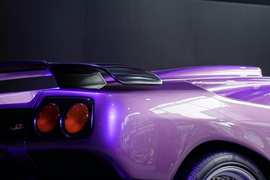 Named in honor of the legendary Formula 1 driver Ayrton Senna, the McLaren Senna is a hypercar designed with one purpose: unadulterated track performance. This isn’t a vehicle for casual Sunday drives; it’s a race car homolog