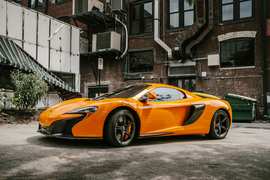
The Track-Born Titans: 10 Production Cars Driven by Motorsport Engines
For generations, the siren song of a finely tuned engine has resonated not just on world-renowned racetracks, but also along the arteries of our cities. There’s an undeniable magnetism, a visceral rush, that comes from piloting a machine imbued with authentic motorsport heritage. This is not merely about aesthetics or superficial performance enhancements; we are speaking of production automobiles that proudly bear power plants conceived and perfected in the unforgiving crucible of elite competition. These titans, born from the relentless pursuit of velocity and victory, deliver a high-revving, adrenaline-fueled experience to everyday drivers, forging a direct and potent link to their racing brethren.
In this extensive exploration, we delve into ten production vehicles that artfully blur the demarcation lines between the racetrack and the public highway. From the operatic crescendo of naturally aspirated V12s to the guttural bellow of turbocharged titans, these machines offer a tangible taste of racing pedigree. But before we immerse ourselves in the specifics of these exceptional vehicles, it is crucial to understand the fundamental rationale behind why automotive manufacturers invest astronomical sums into the costly and demanding world of motorsport, and how those hard-won lessons translate into the cars that grace our driveways.
The Symbiotic Relationship: Motorsport DNA in Road-Going Vehicles
The intertwined destiny of motorsport and road car development is a narrative as old as the automobile itself. Racing serves as an extreme proving ground, pushing the boundaries of engineering ingenuity and subjecting vehicles and their components to unparalleled stress. The unforgiving environment of competition demands absolute reliability and peak performance; there is simply no room for failure when victory hangs in the balance. The invaluable knowledge gleaned from these high-stakes endeavors inevitably finds its way back to the design and production of the cars we rely on daily. Whether it is the implementation of sophisticated aerodynamic principles, the strategic use of advanced lightweight materials, or the direct trickle-down of cutting-edge engine technology, innovation forged in the heat of racing pioneers the creation of superior road cars.
Consider, for instance, the widespread adoption of disc brakes and the ubiquity of paddle shifters; both technologies began their journey on the racetrack before becoming standard features in contemporary production vehicles. Furthermore, the prestige and brand enhancement derived from motorsport success are immeasurable. When a manufacturer’s racing machine consistently dominates the competition, its road-going counterparts are perceived as inherently more desirable and capable. While the vast majority of enthusiasts will never have the opportunity to pilot a Formula 1 car or a Le Mans prototype, the presence of a race-bred engine thrumming beneath the hood offers a profound sense of connection to the action, allowing us to experience a sliver of that exhilarating world. Cars driven by motorsport engines represent a pinnacle of engineering.
For the average consumer, the connection to motorsport engines is often subtle yet profound. The sports car with racing engine you drive today likely benefited from decades of research in aerodynamics, materials science, and powertrain efficiency driven by racing programs. These lessons are often invisible in the final product, but they contribute to better performance, greater fuel efficiency, and enhanced safety. The development of high-performance tires, for example, has been heavily influenced by racing, leading to the sticky, grippy rubber we rely on for daily driving. Similarly, the European exotic car with racing engine technology, once reserved for elite race teams, now powers the very supercars that define performance boundaries.
The financial commitment of automotive manufacturers investing in motorsport is enormous. The costs associated with running teams in Formula 1, Le Mans, or NASCAR are staggering, often running into hundreds of millions of dollars annually. So, what drives this investment? It is a complex equation involving brand prestige, technology development, and marketing. The marketing ROI of a race win or a championship title is immeasurable. It builds brand loyalty, creates emotional connections with consumers, and positions the brand at the forefront of automotive innovation. When a manufacturer wins a prestigious race, it validates its engineering prowess and builds a halo effect that permeates its entire product line.
Furthermore, motorsport serves as a vital proving ground for new technologies. Racing is an extreme environment that pushes components to their breaking point, forcing engineers to innovate and find solutions that would never be considered in a normal production environment. The lessons learned from these experiments are then trickled down to road cars, leading to significant improvements in performance, reliability, and efficiency. Race-derived engine in production cars technology is a prime example of this phenomenon.
The racing technology in road cars is evident in countless features that we now take for granted. The development of disc brakes, for instance, was spurred by racing, where stopping power and reliability were critical. Similarly, the widespread adoption of paddle shifters and dual-clutch transmissions can be traced back to racing, where drivers needed to shift gears faster and more precisely than ever before. These advancements in automotive technology have had a profound impact on the way we drive, making our cars safer, faster, and more engaging.
For enthusiasts, the connection to motorsport engines is deeply emotional. The roar of a race-bred engine is a sound that resonates with a primal part of our being. It speaks of speed, power, and the thrill of competition. While most of us will never have the opportunity to pilot a Formula 1 car or a Le Mans prototype, the presence of a race-derived engine in a production car allows us to experience a small taste of that exhilarating world. Cars with motorsports engines offer a tangible link to the world of professional racing, providing an exhilarating driving experience that is both refined and raw.
In the subsequent sections, we will explore ten remarkable production cars that carry the heart and soul of their racing brethren, showcasing the enduring legacy of motorsport technology in the automotive world.
A Legacy of Speed: 10 Production Cars Fuelled by Racing Engines
Our journey begins with vehicles that represent the pinnacle of this motorsport-to-road philosophy. These are not simply cars with racing stripes; they are machines carrying the very heart and soul of their track-honed ancestors.
Alfa Romeo Montreal: The V8 Heartbeat of a Legend
The Alfa Romeo Montreal, a gem from the late 1960s and early 1970s, houses a remarkable 2.6-liter Tipo 33 naturally aspirated V8 engine. This power unit was directly derived from Alfa Romeo’s highly successful Tipo 33 sports prototype racer, a formidable competitor in grueling endurance events such as the Targa Florio and the 24 Hours of Daytona. While meticulously retuned for civilian duty, the engine in the Montreal remarkably preserves its motorsport character. It willingly spins to an impressive 7,000 RPM, delivering a spirited 200 horsepower. The intoxicating symphony of its V8, coupled with its strikingly avant-garde styling, cemented the Montreal’s status as one of the most captivating, albeit frequently overlooked, Alfa Romeo creations. This Italian performance car exemplifies the charm of vintage racing-derived engines.
The development of the Montreal’s engine was a direct result of Alfa Romeo’s racing aspirations in the 1960s. The company was actively competing in prototype sports car racing with its Tipo 33 series, which achieved significant success in events like the 24 Hours of Daytona and the Targa Florio. To support these efforts, Alfa Romeo developed a highly advanced V8 engine that combined high-revving performance with a compact and lightweight design. This engine, known as the Tipo 33/2, eventually found its way into the Montreal production car, giving it a genuine motorsport pedigree that few other cars of its era could match.
While the Montreal was designed for road use, its engine was still very much a racing engine at heart. It was a high-revving unit that produced a healthy 200 horsepower, which was more than enough power for a lightweight sports car. The engine’s soundtrack was also a key part of its appeal, with the V8 producing a symphony of high-pitched whines and guttural roars that few other cars could match. The combination of its exotic styling and race-derived engine made the Montreal a truly unique and captivating automobile that continues to be celebrated by collectors and enthusiasts today. This Italian sports car remains a sought-after classic.
BMW M1, M3 (E30), M5 (E28), M6 (E24): The M Division’s Motorsport Foundation
BMW’s profound motorsport lineage is indelibly etched into the DNA of its most iconic models. The legendary BMW M1, a mid-engine marvel, was propelled by the potent 3.5-liter M88 inline-six engine. This powerplant was a direct descendant of the brand’s highly successful racing programs, most notably finding its application in the BMW M1 ProCar series. Remarkably, this same formidable engine later found its way into the E24 M6 and the E28 M5, bestowing them with exceptional performance credentials. Concurrently, the four-cylinder S14 engine powering the E30 M3 was also deeply rooted in the M88 and the turbocharged M12 Formula 1 engines. This engine drew significant inspiration from BMW’s dominance in touring car racing, sharing critical components and engineering principles with the cars that consistently conquered the Deutsche Tourenwagen Masters (DTM) series. These BMW performance cars are testaments to the brand’s racing heritage.
The story of the BMW M1 is one of ambitious engineering and motorsport-driven innovation. Initially intended as a homologation special for a racing series that never materialized, the M1 became a standalone supercar that showcased the pinnacle of BMW’s engineering capabilities. Its 3.5-liter M88 inline-six engine was a powerful and high-revving unit that was designed to compete with the best sports cars of the era