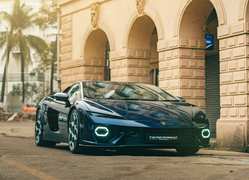
Toyota’s Motorsports Ambitions: A Deep Dive into the GR GT, GR GT3, and Next-Gen LFA
The world of high-performance automobiles is entering a thrilling new era, marked by Toyota’s bold announcement of a “sports car onslaught” that has enthusiasts buzzing. At the heart of this strategy lies a trio of groundbreaking machines: the production-ready GR GT, the competitive GR GT3 race car, and the hotly anticipated next-generation Lexus LFA. These vehicles represent more than just performance upgrades; they embody a philosophical shift for Toyota, rooted in preserving traditional craftsmanship while embracing cutting-edge technology.
This comprehensive analysis delves into the specifics of each model, examining their design, powertrain innovations, performance projections, and market positioning. By exploring the insights shared by Toyota’s chief program manager, Takashi Doi, and the engineering teams, we can begin to understand the full scope of Toyota’s vision and what it means for the future of their sports car lineup.
The Toyota GR GT: A High-Performance GT for the Future
The Toyota GR GT stands as the production cornerstone of this new sports car dynasty, slated to arrive in 2027, likely as a 2028 model. As the road-legal counterpart to the GR GT3 race car, the GR GT is engineered to compete directly with some of the most prestigious grand tourers on the market. With a claimed output of 641 horsepower and a curb weight of 3858 pounds, the GR GT boasts a weight-to-power ratio of 6.0 lb/hp, putting it squarely in the crosshairs of formidable rivals like the Porsche 911 GT3, Porsche 911 Turbo S, AMG GT Pro 4Matic, and Aston Martin Vantage S.
Pricing and Market Positioning
Determining the precise price of the GR GT has been a subject of much speculation. Project Manager Doi suggested that interested buyers should compare the specifications of existing high-performance GT models to gauge potential pricing. Given the GR GT’s impressive performance figures, it is reasonable to expect that the vehicle will be positioned in the premium segment, likely exceeding the $200,000 mark.
Competitive Comparison:
| Vehicle | Curb Weight | Horsepower | Weight/Power Ratio | Estimated Base Price |
| :— | :— | :— | :— | :— |
| 2028 Toyota GR GT | 3858 lb | 641 hp | 6.0 lb/hp | N/A |
| 2026 Porsche 911 GT3 | 3278 lb | 502 hp | 6.2 lb/hp | $235,500 |
| 2026 Porsche 911 Turbo S | 3859 lb | 701 hp | 5.5 lb/hp | $275,650 |
| 2026 AMG GT Pro 4Matic | 4299 lb | 603 hp | 7.1 lb/hp | $202,200 |
| 2026 Aston Martin Vantage S | 3847 lb | 671 hp | 5.7 lb/hp | $235,000 |
Note: Prices for competitor models may vary by trim and optional features.
Powertrain and Driving Dynamics
The GR GT features a sophisticated hybrid powertrain that combines a twin-turbocharged 4.0-liter V-8 engine with an electric motor and an eight-speed dual-clutch transmission. The engineers have designed a highly engaging driving experience, incorporating a mechanical limited-slip differential (LSD) to ensure optimal traction and control during high-performance driving maneuvers.
When questioned about the possibility of a drift mode, Doi-san confirmed that the team is developing various driving modes to enhance versatility. Clues from the steering wheel reveal a “Sport Boost” button, suggesting a boost in performance during spirited driving. Additionally, the GR GT will offer traction and stability control settings that can be fully disabled, catering to experienced drivers seeking maximum control.
Performance Modes and Models
The development team is carefully considering future performance variants and potential upgrades for the GR GT. While details remain under wraps, the possibility of a Nürburgring Edition, GRMN, GT R, or GT3 RS model is actively being explored. These variations would allow Toyota to cater to a wider range of performance enthusiasts and keep the GR GT line fresh and competitive.
The Nürburgring Nordschleife: A Test of Redemption
Toyota Chairman Akio “Master Driver Morizo” Toyoda has placed the Nürburgring Nordschleife at the center of the GR GT’s development. During the launch event, Toyoda highlighted a past experience of being passed by faster, better-handling sports cars at the Nürburgring, referring to it as “humiliation.” He emphasized that this experience drove the development of the GR GT and GR GT3, with a clear mission to compete and win on the world’s most demanding race track.
When asked about specific lap time targets, such as breaking the 7-minute barrier set by recent competitors like the Mustang GTD, Corvette ZR1, and Corvette ZR1X, Doi-san declined to comment directly. However, he reaffirmed the importance of the Nürburgring to Toyota and the GR brand, signaling a clear intention for the GR GT to outperform the best in class.
Given the technical capabilities of the GR GT and the historical performance of similarly equipped German sports cars, it is highly probable that the vehicle will achieve a lap time of under 7 minutes on the Nürburgring Nordschleife.
The Next-Generation Lexus LFA: A Technological Masterpiece
The Lexus LFA Concept unveiled at the launch event has ignited speculation about the return of the legendary V-10 supercar. While no official release date or pricing has been announced, Toyota representatives indicated that the next-generation LFA is “several years” away. The expectation is that the new LFA will be significantly less expensive than its predecessor, which debuted in 2010 at a striking $375,000.
Pricing and Market Dynamics
The automotive landscape has evolved since the original LFA’s departure, and the shift to electric powertrains has further complicated the market. Toyota’s representatives suggested that the new LFA must be priced considerably below $350,000.
The market for luxury sports coupes is already niche, and there are currently few electric sports coupes commanding prices north of $200,000. While vehicles like the Lucid Air Sapphire, Rolls-Royce Spectre, and Cadillac Celestiq fall into the high-end electric category, they do not align with the LFA’s competitive profile. The electric hypercar segment, including the Rimac Nevera and Lotus Evija, represents a much higher price point, far removed from Lexus territory.
The second-generation Tesla Roadster has been rumored to be in the $200,000 to $250,000 range, but its production status remains uncertain. If the next-generation LFA is to compete effectively, it must offer compelling value while delivering the exotic performance expected of a Lexus flagship.
Solid-State Batteries and Design Challenges
One factor that could significantly impact the LFA’s pricing and packaging is the potential integration of solid-state battery (SSB) technology. While Toyota has not confirmed this, the company has been a pioneer in SSB development since its joint venture with Panasonic.
In 2024, Toyota announced plans for SSB technology to be available by 2027 to 2028, offering a range of 621 miles (1000 km) and charging times of approximately 10 minutes. Such technology would represent a massive leap in performance and could address the packaging challenges of the electric LFA.
The current industry standard for electric vehicles is a skateboard chassis, where the battery pack is positioned low in the floor to maximize range and handling. However, the GR GT, GR GT3, and LFA Concept share an all-aluminum spaceframe chassis that lacks a traditional floorpan. The cabin space is limited, making it difficult to accommodate traditional lithium-ion battery packs.
The use of smaller, lighter, and more energy-dense SSB technology could provide a solution. It is plausible that the LFA will utilize SSB technology to achieve the necessary range and performance without compromising the vehicle’s design and handling characteristics. This technological advantage could justify the LFA’s premium positioning in the market.
Toyota GR GT3: The Apex of Racing Engineering
The GR GT3 race car is designed to compete at the highest levels of global motorsport, serving as the benchmark for the production GR GT. Built on the same all-aluminum spaceframe platform as the GR GT, the GR GT3 features an optimized aerodynamics package, lightweight materials, and a highly refined racing suspension.
Performance and Reliability
Toyota’s engineers have prioritized reliability and durability in the development of the GR GT3. The vehicle incorporates advanced telemetry systems and real-time data monitoring to ensure consistent performance throughout extended endurance races. The focus on these details ensures that the GR GT3 remains competitive lap after lap, day after day.
When asked about the specific technical specifications of the GR GT3, Toyota representatives remained tight-lipped. However, the vehicle’s design and engineering suggest a strong emphasis on aerodynamic efficiency and downforce generation. The use of carbon fiber and other lightweight materials ensures that the GR GT3 remains agile and responsive under high-stress racing conditions.