Toyota’s Grand Tourer Trinity: A Deep Dive into the Future of Performance
The landscape of the automotive world is in constant flux, with automakers across the globe pushing the boundaries of what’s possible. Toyota, long synonymous with reliability and efficiency, has recently thrown down three gauntlets, signaling a bold shift towards high-performance vehicles that challenge the status quo. This move, driven by the visionary leadership of Akio Toyoda, marks a significant departure from the company’s traditional ethos.
At the heart of this revolution is the unveiling of a “holy trinity” of sports cars that have captivated enthusiasts and industry insiders alike. These vehicles, each embodying different facets of modern automotive engineering, hint at Toyota’s commitment to preserving traditional craftsmanship while embracing cutting-edge technology.
The GR GT: A New Dawn for Toyota Performance
The GR GT is perhaps the most significant of the three, serving as a preview of Toyota’s homologation version of the GR GT3 race car. Scheduled for a market release in 2027, this grand tourer is positioned to compete with the best from Germany and beyond.
Pricing and Availability: A Premium Position
When it comes to pricing, Toyota has been tight-lipped, but the available information suggests a premium positioning for the GR GT. Based on the claimed specifications, the vehicle features a curb weight of 3858 pounds and 641 horsepower, resulting in a weight-to-power ratio of 6.0 lb/hp.
| Vehicle | Curb Weight | Horsepower | Weight/Power | Base Price |
| ——————– | ———– | ———- | ———— | ————— |
| 2028 Toyota GR GT | 3858 lb | 641 hp | 6.0 lb/hp | N/A |
| 2026 Porsche 911 GT3 | 3278 lb | 502 hp | 6.2 lb/hp | $235,500 |
| 2026 Porsche 911 Turbo S | 3859 lb | 701 hp | 5.5 lb/hp | $275,650 |
| 2026 AMG GT Pro 4Matic | 4299 lb | 603 hp | 7.1 lb/hp | $202,200 |
| 2026 Aston Martin Vantage S | 3847 lb | 671 hp | 5.7 lb/hp | $235,000 |
Note: These competitors are listed for reference and may not directly mirror the GR GT’s specifications or trim level.
Given this competitive set, it’s highly probable that the GR GT will be priced well over $200,000. This positions it as a true competitor to established luxury sports coupes.
Performance Modes and Driving Dynamics
The GR GT is equipped with a fiendishly complicated hybrid powertrain that includes a mechanical limited-slip differential (LSD). This setup allows for not only engaging driving dynamics but also a full suite of tire-scorching shenanigans, including thick black burnouts, smoky donuts, and eye-watering drifts.
When asked about the possibility of a drift mode, project manager Takashi Doi confirmed that the team is developing different driving modes, though he declined to specify their names. A closer look at the GR GT’s steering wheel reveals a knob labeled ‘Sport Boost,’ which suggests a mode designed to enhance performance.
Mirroring this on the lower left side is a button for traction and stability control, labeled ‘TRC/VSC’ and marked ‘Off.’ Doi eventually confirmed that drivers will be able to turn these systems off completely, catering to those who enjoy pushing the limits.
Future Performance Models
Regarding future performance models, Doi remained elusive, citing Toyota’s policy of not discussing future products. However, he acknowledged that variations and improvements are always under consideration, which is crucial for the long-term success of a sports car.
The market is hungry for more powerful versions of the GR GT, with some speculating about a Nürburgring Edition, GRMN, GT R, or GT3 RS version. While these remain theoretical, the GR GT is positioned to serve as the foundation for future performance variants.
The Nürburgring Nordschleife: A Quest for Redemption
The Nürburgring Nordschleife, often referred to as the Green Hell, plays a significant role in the story of Toyota’s sports car development. Akio Toyoda, the grandson of Toyota’s founder, spoke at length about his past experiences at the ’Ring, where Toyota sports cars were frequently passed by faster, better-handling rivals.
This experience of “humiliation” has become a driving force for improvement within Toyota. The GR GT and GR GT3 were developed with the explicit goal of proving that Toyota can build sports cars capable of competing with the best in the world.
Targeting Sub-7-Minute Lap Times
When asked about the importance of the Nürburgring and whether the team is targeting a specific lap time, such as under 7 minutes, Doi was noncommittal. However, he affirmed the ’Ring’s importance to Toyota and the GR brand, reiterating that the GR GT would not be the one getting passed on the Green Hell.
Given the modesty of Japanese engineers and the performance of comparable vehicles, it’s likely that the GR GT will achieve a sub-7-minute lap time. Both the Mustang GTD and Corvette ZR1 have recently recorded impressive lap times well below the 7-minute mark, setting a high bar for Toyota to meet.
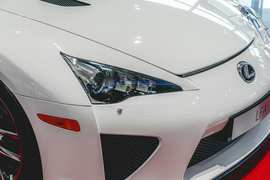
The Lexus LFA: The Next-Generation Supercar
If you’re a fan of the Lexus LFA and are eager to know when it’s coming, you may need to be patient. Toyota has indicated that the new LFA will be available in “several years,” and its pricing is expected to be considerably lower than the original model, which debuted in 2010 at a staggering $375,000.
Navigating the Electric Future
The world has changed significantly since the first LFA’s production ended. The transition to electric vehicles has complicated the development of a new generation LFA, which will likely be priced below $350,000.
This positions the LFA as an exotic luxury sports flagship that challenges the electric hypercar market, which is currently dominated by vehicles priced in the multi-million-dollar range. While the second-gen Tesla Roadster is rumored to be in the $200,000 to $250,000 range, it remains vaporware until proven otherwise.
The Potential of Solid-State Batteries
One factor that could significantly impact the LFA’s pricing and positioning is the potential use of solid-state battery (SSB) technology. While no one at the event confirmed this, it’s a possibility that makes sense from a performance and packaging perspective.
Toyota has been working on solid-state batteries since 2020 and released an update in 2024 showing SSB arriving in 2027 to 2028 with a range of 621 miles (1000 km) and recharging times of approximately 10 minutes. This technology would represent a huge leap forward, offering the range and charging speed needed to compete with gasoline-powered sports cars.
Packaging Challenges and Solutions
The current best practice in EV manufacturing is to place the battery pack as low as possible in the vehicle’s floor, creating a “skateboard” chassis. However, the all-aluminum spaceframe chassis shared between the GR GT and LFA Concept does not have a traditional floorpan. Instead, it features thick structural members that end at the rear bulkhead.
Could traditional lithium-ion cells be sandwiched ahead of the firewall or under the cabin? Or perhaps the batteries could occupy the space in the engine bay and transmission tunnel, once the GR GT’s hybrid V-8 powertrain is removed?
The use of “T-shaped” battery packs, common in the aftermarket, is also a possibility. This could potentially solve the packaging problem while allowing for high performance. However, for packaging, performance, and marketing reasons, game-changing solid-state batteries debuting in the Lexus flagship seems to make a lot of sense.
Fiendish Electromechanical Complexity: A Future-Focused Statement
The GR GT powertrain cutaway reveals a fiendishly complex system. Starting with an all-aluminum engine and forged internals, output is boosted by twin turbochargers to a claimed 641 horsepower and 627 lb-ft of torque.
All that power is sent via a driveshaft enclosed in a carbon-fiber-reinforced plastic (CFRP) “torque tube” to a bell housing at the rear of the vehicle that contains the hybrid system’s electric motor and eight-speed transmission. The sharply cut and polished shafts and gearsets look like something out of a watchmaker’s fever dream.
The U-Turn: Performance and Strategy
Why the complicated U-turn? The powertrain engineers claim it reduces the overall length of the powertrain, but we think Akio is making a bigger statement.
In the last 15 years, we’ve seen the rise of electric vehicles with vastly simplified powertrains. We’ve also seen the death of the V-8 and its recent revival, particularly in America, thanks to dramatic shifts in consumer sentiment and government policies. While other automakers scrambled to cover their ICE, EV,