The Electrified Speedsters: A New Breed of Supercar
For years, the term “hybrid” conjured images of fuel-efficient sedans and eco-friendly family haulers, driven by necessity rather than desire. Vehicles like the early Toyota Prius and Honda Insight became synonymous with practicality, leaving automotive enthusiasts scoffing at the very notion of merging electric technology with high-performance driving. But times have changed, and the automotive landscape has undergone a dramatic transformation. Today, electrification isn’t just about saving gasoline; it’s about unlocking unprecedented levels of power, precision, and performance.
The demand for fully electric vehicles (EVs) has cooled slightly, but this has not dampened the enthusiasm for performance-oriented hybrids. In fact, as battery technology advances and automakers push the boundaries of what’s possible, the percentage of electrified vehicles on the road is expected to climb even higher. For driving enthusiasts, this means more incredible machines that prove that speed, style, and cutting-edge technology are not mutually exclusive. From the thunderous roar of a twin-turbo V-8 augmented by electric motors to the seamless delivery of instant torque, these vehicles are rewriting the rulebook for what a performance car can be.
This is a world where electrifying power meets raw, unadulterated speed. It’s where the hum of an electric motor seamlessly blends with the visceral crackle of a combustion engine. It’s where horsepower figures soar into the stratosphere, and acceleration times make even the most experienced drivers question reality. The days of “boring” hybrids are over. Welcome to the era of electrified speedsters, where performance is king and the future of driving is already here.
American Muscle, Electrified: The Chevrolet Corvette ZR1X
Corvettes have a long-standing reputation for punching far above their weight class, often outperforming cars that cost two or three times as much. But the Chevrolet Corvette ZR1X doesn’t just punch above its weight class; it completely redesigns the weight class itself. This isn’t your grandfather’s Corvette; it’s a track-focused monster that pushes the boundaries of performance technology into uncharted territory.
Under the hood lies the heart of the ZR1: a 5.5-liter, twin-turbo flat-plane crank V-8. This engine is a work of art, developed with the lessons learned from Chevrolet’s own race cars. But what truly sets the ZR1X apart is the enhanced version of the Corvette E-Ray’s hybrid system. This isn’t just an afterthought; it’s a critical component of the car’s performance DNA.
Equipped with all-wheel drive and a massive hybrid system, the ZR1X cranks out a staggering 1,250 horsepower and 973 lb-ft of torque. This isn’t just enough to make it fast; it’s enough to make it one of the quickest production cars in the world. In testing, the ZR1X launched from 0 to 60 mph in less than 1.7 seconds, a number that was once reserved for million-dollar hypercars. It also laid down a 6:49.275 lap time at the Nürburgring in July 2025, currently making it the fastest American production car on that legendary track.
While its $207,305 base MSRP also makes it the most expensive production Corvette in history, the ZR1X is still a performance bargain. How? Because it has the audacity to embarrass exotics that cost several times more. In a world where carbon fiber and carbon fiber monocoques are expected, this car remains true to its American roots with a traditional chassis that has been reinforced to handle the immense power. But don’t be fooled by its heritage; the ZR1X is a technological tour de force.
The car’s aero is optimized for downforce, pushing the rear end into the pavement during hard cornering to ensure maximum grip. The tires are sticky, the brakes are massive, and the suspension is tuned to handle the car’s brutal acceleration. This is a car that demands respect, a car that challenges the driver to step up and meet its formidable capabilities. The Corvette ZR1X is a statement piece, a testament to American engineering prowess, and a terrifyingly fast machine that proves hybrids can be exciting.
The Electric Heart of a Legend: The Porsche 911 GTS T-Hybrid
For years, Porsche purists lived in fear of the day the iconic 911 would receive an electric heart. The very idea of hybridization on the sacred 911 platform sent shivers down the spines of enthusiasts who had come to associate the 911 with purity, simplicity, and the raw, unfiltered emotion of a rear-mounted boxer engine. But as the automotive world evolved, Porsche realized that electrification wasn’t a threat; it was an opportunity.
The 2025 Porsche 911 GTS T-Hybrid is the car that proved the hand-wringing was unnecessary. In fact, it might be the best 911 Porsche has ever built. Unlike many other hybrid models that offer a plug-in option, the 911 GTS T-Hybrid focuses purely on performance. There’s no all-electric driving range; the focus is on using the electric motor to enhance the driving experience in every conceivable way.
One of the most significant innovations is the electric turbocharger. This isn’t just a simple electric motor tacked on for extra power. Porsche integrated the motor directly into the turbocharger’s design. What this does is eliminate turbo lag. By spinning the turbo independently of exhaust gas flow, the engine can produce boost pressure almost instantly. The result? A car that feels responsive, eager, and brutally quick off the line.
Power recovered during deceleration is stored in a small 1.9-kWh battery pack. This battery charges itself via regenerative braking and can then be used to assist the engine through the transmission. The weight penalty of this system is negligible, and the driving experience is seamless. The car feels balanced, planted, and ready to tackle any corner with surgical precision.
The T-Hybrid system transforms the 911 into a technological masterpiece. The power delivery is smoother, the acceleration is more immediate, and the car feels more connected to the road than ever before. The fact that you probably wouldn’t even notice that this car is a hybrid without looking at the badge speaks volumes about the driving experience. Porsche has managed to enhance the 911’s legendary performance without compromising its soul, and that’s a remarkable achievement. The 911 GTS T-Hybrid is a triumph of engineering, a car that proves hybridization can elevate a legend rather than dilute it.
When Lamborghini Goes Electric: The Revuelto
Lamborghini has always been associated with excess, noise, and breathtaking performance. The Aventador, the automaker’s flagship model, was a symbol of that philosophy: a massive, naturally aspirated V-12 that revved to a screaming 10,000 rpm and offered a truly visceral driving experience. But as Lamborghini looked toward the future, they faced a dilemma. How could they maintain that visceral connection while meeting stricter emissions regulations and embracing electrification?
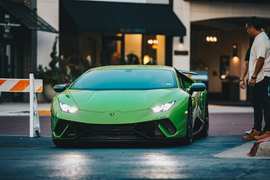
The answer is the Lamborghini Revuelto. This car represents a fundamental shift for the Raging Bull, but it doesn’t sacrifice the madness that defines the brand. The Revuelto manages to join the 1,000-horsepower club without ditching its naturally aspirated V-12. This is made possible by the Revuelto’s plug-in hybrid system, which seamlessly integrates three electric motors with the iconic engine.
Two electric motors drive the front wheels, providing all-wheel drive and instant torque when needed. The third electric motor is integrated into the transmission and assists the 6.5-liter V-12. This combination produces a system output of 1,000 horsepower, allowing the Revuelto to accelerate from 0 to 60 mph in a mere 2.5 seconds and reach a top speed of over 217 mph. The engine itself is a masterpiece, capable of revving to nearly 10,000 rpm while the hybrid system keeps the battery topped off via regenerative braking.
But the Revuelto is more than just a performance machine. It’s also a far easier car to live with than its predecessor, the Aventador. The Aventador’s automated single-clutch transmission was notoriously unrefined during everyday driving, often lurching and shuddering at low speeds. The Revuelto, however, features a new eight-speed dual-clutch transmission that provides near seamless power delivery. The shift quality is smooth, the gear changes are quick, and the car feels much more refined when driven normally.
Beyond the powertrain, Lamborghini has significantly improved the ergonomics and interior design. The cabin is driver-focused, futuristic, and packed with the latest technology. But it also retains a sense of luxury and exclusivity that Lamborghini is known for. Add some seriously stunning styling to the mix, and you’ve got a compelling Italian hybrid that requires very little compromise—provided your pockets are deep enough. The Revuelto is a true successor to the Aventador, a car that proves that Lamborghini isn’t afraid to embrace the future while remaining true to its DNA.
A Track Legend Reborn: The Aston Martin Valkyrie
Aston Martin has always been synonymous with luxury, style, and performance. But the Aston Martin Valkyrie is a different beast entirely. This isn’t a luxury sports car; it’s a road-legal hypercar designed to dominate the racetrack. The Valkyrie looks more at home in a Formula 1 paddock than on public roads, and it’s designed to