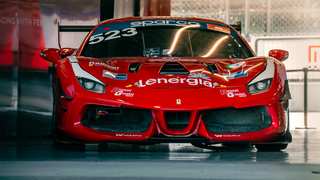
From Boring to Breathtaking: The 2025 Supercar Revolution
Think hybrids are just about fuel efficiency and sensible driving? Think again. The automotive world has undergone a seismic shift in the last decade, with hybrid technology moving from the commuter segment into the rarefied air of the supercar. Gone are the days when the mere mention of “hybrid” conjured images of staid sedans. Today, the most exclusive, high-performance vehicles on the planet are embracing electrification, proving that power, style, and sustainability can go hand-in-hand.
Driven by fierce competition, environmental regulations, and the relentless pursuit of performance, automakers have integrated hybrid systems into everything from track-focused hypercars to luxurious grand tourers. These machines aren’t just about reducing emissions; they’re about fundamentally reimagining what’s possible on four wheels. Electric motors provide instant torque, instant throttle response, and a surge of power that traditional combustion engines simply can’t match. When combined with cutting-edge aerodynamics, carbon-fiber construction, and bespoke engineering, these electrified marvels are not only faster but also more sophisticated than ever.
The market has clearly spoken. While some consumers might still be hesitant about the transition to electric vehicles, the allure of the hybrid supercar is undeniable. These vehicles offer the best of both worlds: the visceral thrill of a high-revving engine and the instant punch of electric assistance, all wrapped in stunning design and meticulous craftsmanship. As the demand for high-performance, eco-friendly vehicles continues to grow, the hybrid supercar has cemented its place as the pinnacle of automotive engineering.
So, if you’ve dismissed hybrids as boring, get ready to have your perceptions shattered. The following list explores some of the most electrifying examples of how hybrid technology is transforming the supercar landscape in 2025. These cars aren’t just fast; they’re revolutionary.
The New Breed of Speed: Elite Hybrid Supercars in 2025
Chevrolet Corvette ZR1X
The Chevrolet Corvette has always been known for punching above its weight, but the ZR1X takes this legacy to an entirely new level. This is not your average Corvette; it is a track weapon that combines brute force with surgical precision, wrapped in a package that challenges cars costing several times more.
Under the hood, the ZR1X boasts a modified version of the ZR1’s 5.5-liter twin-turbo flat-plane crank V-8 engine, which is augmented by an advanced hybrid system derived from the Corvette E-Ray. This synergy of internal combustion and electric power produces a staggering 1,250 horsepower and 973 lb-ft of torque, pushing this American marvel to 60 mph from a dead stop in under 1.7 seconds. The ZR1X’s performance prowess was further proven when it set a new track record for American production cars at the Nürburgring in July 2025, clocking an incredible 6:49.275.
Despite its world-class performance, the ZR1X remains an accessible option compared to its international rivals. With a base MSRP of $207,305, it is the most expensive production Corvette ever built, but in the realm of hypercars, it offers an unparalleled performance-to-price ratio. While its predecessor, the C8 generation, was a major leap forward for American sports cars, the ZR1X represents the ultimate evolution of that platform. The use of a carbon-fiber monocoque construction contributes to a low curb weight, ensuring that every ounce of power translates into blistering speed. The chassis has been meticulously tuned for aerodynamic efficiency, providing the downforce necessary to maintain stability during high-speed corners. The hybrid system doesn’t just add power; it enhances handling through its precise torque vectoring capabilities, distributing power to each wheel for optimal grip.
This blend of American muscle and advanced hybrid technology showcases a new era for Corvette, one that competes not just on speed but on overall technological sophistication. It stands as a testament to what the Chevrolet performance division can achieve when unburdened by traditional constraints, proving that American engineering can produce world-class hybrid supercars that leave even the most established European marques scrambling to keep up.
Porsche 911 GTS T-Hybrid
For years, Porsche purists feared the day the legendary 911 would be hybridized, but the 992.2 911 GTS has proven that such concerns were unfounded. This vehicle masterfully integrates hybrid technology without sacrificing the purity of the driving experience.
Unlike many hybrids, the 911 GTS T-Hybrid offers no all-electric driving range. Instead, it utilizes a tiny 1.9-kWh battery pack that serves as a performance enhancer rather than a primary power source. The most revolutionary aspect of this system is its integration into the turbocharger. An electric motor spins the turbo independently of exhaust gas flow, virtually eliminating turbo lag and delivering boost pressure almost instantaneously. Excess power recovered by the eTurbo charges the battery, which in turn assists the engine through the gearbox.
While this sounds complex, the results speak for themselves. The T-Hybrid system boosts the 911 GTS, delivering power with unprecedented smoothness and responsiveness. The fact that the car looks and feels like a traditional 911, with only the badge revealing its electrified nature, speaks volumes about Porsche’s engineering prowess. The iconic rear-engine layout remains intact, providing the signature handling characteristics that 911 drivers love. The integration of the hybrid system has been done with such finesse that it feels like a natural extension of the engine rather than an afterthought. The battery placement has been carefully optimized to maintain the car’s legendary weight distribution, ensuring that the handling dynamics remain razor-sharp.
The Porsche 911 GTS T-Hybrid sets a new benchmark for how manufacturers can embrace electrification without compromising the driving experience. It retains the soulful connection that has defined the 911 for generations while incorporating cutting-edge technology to stay ahead of the curve. This car is a masterclass in integration, proving that hybrid power can enhance performance without diluting the essence of what makes a sports car truly special.
Lamborghini Revuelto
Lamborghini’s successor to the iconic Aventador has joined the 1,000-horsepower club, and remarkably, it has done so without sacrificing its beloved naturally aspirated V-12 engine. The Revuelto achieves this feat through a plug-in hybrid system that revolutionizes the supercar experience.
The Revuelto features three electric motors: two driving the front wheels and one integrated into the eight-speed dual-clutch transmission. These motors work in harmony with the 6.5-liter V-12, which revs to an astonishing 10,000 rpm. The hybrid system not only provides a significant power boost but also helps keep the 3.8-kWh lithium-ion battery pack topped off, ensuring relentless performance delivery. The design of the Revuelto is a testament to Lamborghini’s commitment to aerodynamic excellence. The sharp lines and aggressive styling are not just for show; they are meticulously engineered to manage airflow, providing downforce and stability at extreme speeds.
Setting aside the Revuelto’s absolutely stunning performance and outrageous styling, its most significant improvement is its refinement during everyday driving. The predecessor, the Aventador, was notoriously unrefined, but the Revuelto is an entirely different story. Much of this can be attributed to the new dual-clutch transmission, but the hybrid system deserves equal credit for the near-seamless power delivery. When driven gently, the car operates quietly and smoothly, offering a level of comfort that was previously unthinkable in a Lamborghini. Add in vastly improved ergonomics and the unmistakable Lamborghini flair, and you have a seriously compelling Italian hybrid that requires very little compromise—provided you have the resources to afford it.
The Lamborghini Revuelto represents a paradigm shift for the iconic Italian automaker. It demonstrates that hybrid technology can be seamlessly integrated into a flagship supercar without compromising its soul. By pairing a naturally aspirated V-12 with electric power, Lamborghini has created a vehicle that is both technologically advanced and emotionally resonant. The Revuelto is not just a fast car; it is a work of art that pushes the boundaries of design and engineering, setting a new standard for what a hybrid supercar can be.
Aston Martin Valkyrie
The Aston Martin Valkyrie looks like something straight out of a Le Mans paddock, but this jaw-dropping halo car is a street-legal hypercar designed for the most demanding drivers. It is a masterpiece of engineering that pushes the boundaries of performance and aerodynamics.
The Valkyrie is powered by a 6.5-liter naturally aspirated V-12 that generates 1,001 horsepower on its own and revs to a blistering 11,000 rpm. This monster mill is supplemented by a KERS-style hybrid system that adds another 141 hp and 207 lb-ft of torque for a total system output of 1,139 horsepower and 682 lb-ft of torque. All of this power is sent to the rear wheels in a car that weighs less than 3,000 pounds, providing an astonishing power-to-weight ratio.
The aero figures of this track-bred car are equally staggering: 2,425 pounds of downforce from 137 to 220 mph, which is nearly half a ton more than a Formula 1 car. It is an extreme machine by any measure, and to say we were smitten with it from the get-go would be an understatement. The integration of the hybrid system into the Valkyrie is a testament to Aston Martin’s commitment to pushing