



The Pinnacle of Performance: My Top 5 Most Unforgettable Porsche 911 Driving Experiences
For over four decades, I’ve had the privilege of putting Porsche 911s through their paces. From the raw, analog purity of early models to the hyper-aerodynamic precision of the latest GT RS, the 911 has been my constant companion on the road and track. It’s more than just a car to me; it’s a benchmark for sports car engineering and driver engagement. In an era of electrification and automation, the 911 remains a symbol of what happens when automotive perfection meets pure driving passion.
My first encounter with the 911 was four decades ago in Australia, behind the wheel of a white 3.0-liter Carrera. It was a time of stiff competition, where performance was measured in pure horsepower. The Carrera had 200 hp, and while it was quick, it wasn’t faster than the 944 Turbo I was testing alongside it. The 944 Turbo had more power, more torque, and was faster with less effort. Yet, I chose the Carrera. I chose it for the visceral connection, the unfiltered feedback through the narrow body, and the delicate dance of loading the front end before dancing through corners. The 911 demanded respect, and I was willing to give it. It was imperfect, but it was real. That connection has never faded.
Over the years, I’ve watched Porsche refine its icon, keeping it relevant and exciting. While other sports cars have fallen by the wayside, the 911 has evolved, adapting to new technologies while preserving its soul. Today, I still buy Porsches with my own money, and after 40 years, I still believe they’re the benchmark. Here are the five 911s that have left the deepest impression on me.
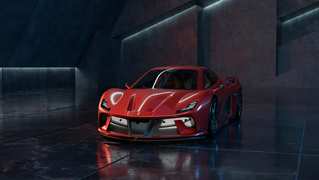 The Original 911 Turbo (930): The Widowmaker’s Legacy
The original Porsche 911 Turbo (930) wasn’t just a car; it was a legend whispered in hushed tones among veteran journalists. The stories spoke of a car that demanded absolute respect, a machine where the line between precision and peril was razor-thin. They called it the “widowmaker.” For 35 years, I heard these tales, but I never experienced it myself.
Finally, I got my chance. It was one of the first 30 production Turbos ever built, now a prized asset in Porsche’s classic collection. Sitting in the driver’s seat, the reputation loomed large in my mind. I started gently, feeling the throttle, watching the tachometer, trying to understand the 3.0-liter engine’s behavior. To my surprise, it wasn’t the savage beast I expected. At low revs, the engine was tractable, the 911 Turbo purring along at 45 mph in top gear.
Once the needle hit 3,500 rpm, though, the magic happened. The turbocharger spooled up, forcing 0.8 bar of boost into the engine. The surge of acceleration was there, but it wasn’t the violent sledgehammer blow I’d anticipated. The real trick to mastering the original 911 Turbo was keeping the 3.0-liter flat-six spinning above 4,000 rpm. This kept the turbocharger energized and the power flowing smoothly.
By modern standards, the turbo lag is noticeable, but it’s completely manageable. Even after half a century, this 911 remains impressively fast. First gear tops out at 50 mph, second at 90 mph, and third reaches nearly 130 mph. This means you can carve up winding roads using only second and third gears. And while the 3.6-liter engine produces a modest 256 hp, the car weighs just 2,513 pounds, allowing it to dance through corners with surprising agility. In its era, this performance was otherworldly.
The 993: The Last Air-Cooled Icon
For Porsche purists, the 993 generation is the true end of the line—the last of the “real” 911s. This is the car you drive with your knuckles skimming the dashboard, the visceral growl of an air-cooled flat-six echoing behind you. But back in 1994, when I first experienced it, the 993 was the 911 of the future, the first iteration to push the boundaries of physics.
While the 993 still featured that signature pat-pat-pattery front end that required careful loading to hit apexes, and the rear end still danced through rough turns, the connection between the front and rear was much more refined. The 993 still felt like a 911, but within a much better margin of control.
The secret lay in a revolutionary new rear suspension. The old semi-trailing arms were replaced with a sophisticated multi-link setup. This allowed for very slight initial toe-out on corner entry, which then progressive toe-in as cornering loads increased. Crucially, it reduced the camber change that had been the Achilles’ heel of 911s since their debut in 1963.
This engineering masterpiece was combined with a new six-speed manual transmission and a steering system that was 16 percent quicker, with 2.5 turns lock-to-lock. This made the front end feel much more decisive. The 3.6-liter flat-six also received upgrades, including a Bosch Motronic 2.0 engine management system and a new dual-exhaust system, allowing it to deliver 268 hp at 6,100 rpm.
The Original 911 Turbo (930): The Widowmaker’s Legacy
The original Porsche 911 Turbo (930) wasn’t just a car; it was a legend whispered in hushed tones among veteran journalists. The stories spoke of a car that demanded absolute respect, a machine where the line between precision and peril was razor-thin. They called it the “widowmaker.” For 35 years, I heard these tales, but I never experienced it myself.
Finally, I got my chance. It was one of the first 30 production Turbos ever built, now a prized asset in Porsche’s classic collection. Sitting in the driver’s seat, the reputation loomed large in my mind. I started gently, feeling the throttle, watching the tachometer, trying to understand the 3.0-liter engine’s behavior. To my surprise, it wasn’t the savage beast I expected. At low revs, the engine was tractable, the 911 Turbo purring along at 45 mph in top gear.
Once the needle hit 3,500 rpm, though, the magic happened. The turbocharger spooled up, forcing 0.8 bar of boost into the engine. The surge of acceleration was there, but it wasn’t the violent sledgehammer blow I’d anticipated. The real trick to mastering the original 911 Turbo was keeping the 3.0-liter flat-six spinning above 4,000 rpm. This kept the turbocharger energized and the power flowing smoothly.
By modern standards, the turbo lag is noticeable, but it’s completely manageable. Even after half a century, this 911 remains impressively fast. First gear tops out at 50 mph, second at 90 mph, and third reaches nearly 130 mph. This means you can carve up winding roads using only second and third gears. And while the 3.6-liter engine produces a modest 256 hp, the car weighs just 2,513 pounds, allowing it to dance through corners with surprising agility. In its era, this performance was otherworldly.
The 993: The Last Air-Cooled Icon
For Porsche purists, the 993 generation is the true end of the line—the last of the “real” 911s. This is the car you drive with your knuckles skimming the dashboard, the visceral growl of an air-cooled flat-six echoing behind you. But back in 1994, when I first experienced it, the 993 was the 911 of the future, the first iteration to push the boundaries of physics.
While the 993 still featured that signature pat-pat-pattery front end that required careful loading to hit apexes, and the rear end still danced through rough turns, the connection between the front and rear was much more refined. The 993 still felt like a 911, but within a much better margin of control.
The secret lay in a revolutionary new rear suspension. The old semi-trailing arms were replaced with a sophisticated multi-link setup. This allowed for very slight initial toe-out on corner entry, which then progressive toe-in as cornering loads increased. Crucially, it reduced the camber change that had been the Achilles’ heel of 911s since their debut in 1963.
This engineering masterpiece was combined with a new six-speed manual transmission and a steering system that was 16 percent quicker, with 2.5 turns lock-to-lock. This made the front end feel much more decisive. The 3.6-liter flat-six also received upgrades, including a Bosch Motronic 2.0 engine management system and a new dual-exhaust system, allowing it to deliver 268 hp at 6,100 rpm.
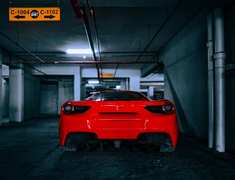 Compared to the 964 model it replaced, the 993 was a revelation. It wasn’t just the engineering—though that was groundbreaking. Under the leadership of Ulrich Bez (later CEO of Aston Martin), the exterior was redesigned by Harm Lagaay, who corrected the visual flaws of the 964, which he thought was too tall at the front and too low at the rear. The interior was also cleaner, with fewer buttons in random locations.
The 993 was faster, more forgiving, and infinitely more desirable. It was a 911 that managed to feel modern without losing its soul. For many, this remains the most beautiful and balanced 911 ever made.
The 996: The Savior of Porsche
When Porsche unveiled the 996 generation, it was heresy. Replacing the air-cooled flat-six with a water-cooled engine in the rear of the 911 was, for aficionados, the automotive equivalent of Bob Dylan swapping his acoustic guitar for an electric one at the 1965 Newport Folk Festival. But the 996, the first clean-sheet redesign in 34 years, was a hero car in my eyes. It was the 911 that saved Porsche.
Engineered and developed under the direction of R&D chief Horst Marchart, the 996 was a masterpiece of clever engineering. It shared 38 percent of its parts with the all-new, less expensive mid-engine roadster that would become the Boxster. Iconoclastic Porsche boss Wendelin Weideking knew the Boxster was essential to give dealers something else to sell after the aging 928 and 968 models were discontinued. “We did two cars for the price of one-and-a-half,” design chief Harm Lagaay said with a smile after the launch.
But while the media focused on the Boxster connection and the new engine, the 996’s real story was about efficiency and accessibility. In 1994, a 993-series 911 took 130 hours to build. The 996 took just 60 hours. The modern 911 had arrived: roomier, equipped with all the features of a late 20th-century sports car, and still recognizably a 911.
Most importantly, it still drove like a 911—only better. Yes, there was a new veneer of sophistication, but the 996 retained the delicious tactility and urgent response that defined the 911. Along with the original Boxster, it saved Porsche from extinction. It was the car that made the 911 accessible to a new generation of drivers while preserving the performance that made the marque legendary.
The 991.2 Carrera: The Enthusiast’s Choice
Of all the 911s I’ve driven, it was a base 991.2 Carrera that truly stole my heart. It stole everyone else’s, too, judging by the feedback I got from colleagues at the time. Most press fleets are loaded with high-spec vehicles, presumably because PR teams think we’re impressed by expensive options. So Porsche Cars North America’s decision to include a base 911 Carrera in the lineup for our 2017 MotorTrend Car of the Year testing seemed brave. In truth, it was an inspired move.
Compared to the 964 model it replaced, the 993 was a revelation. It wasn’t just the engineering—though that was groundbreaking. Under the leadership of Ulrich Bez (later CEO of Aston Martin), the exterior was redesigned by Harm Lagaay, who corrected the visual flaws of the 964, which he thought was too tall at the front and too low at the rear. The interior was also cleaner, with fewer buttons in random locations.
The 993 was faster, more forgiving, and infinitely more desirable. It was a 911 that managed to feel modern without losing its soul. For many, this remains the most beautiful and balanced 911 ever made.
The 996: The Savior of Porsche
When Porsche unveiled the 996 generation, it was heresy. Replacing the air-cooled flat-six with a water-cooled engine in the rear of the 911 was, for aficionados, the automotive equivalent of Bob Dylan swapping his acoustic guitar for an electric one at the 1965 Newport Folk Festival. But the 996, the first clean-sheet redesign in 34 years, was a hero car in my eyes. It was the 911 that saved Porsche.
Engineered and developed under the direction of R&D chief Horst Marchart, the 996 was a masterpiece of clever engineering. It shared 38 percent of its parts with the all-new, less expensive mid-engine roadster that would become the Boxster. Iconoclastic Porsche boss Wendelin Weideking knew the Boxster was essential to give dealers something else to sell after the aging 928 and 968 models were discontinued. “We did two cars for the price of one-and-a-half,” design chief Harm Lagaay said with a smile after the launch.
But while the media focused on the Boxster connection and the new engine, the 996’s real story was about efficiency and accessibility. In 1994, a 993-series 911 took 130 hours to build. The 996 took just 60 hours. The modern 911 had arrived: roomier, equipped with all the features of a late 20th-century sports car, and still recognizably a 911.
Most importantly, it still drove like a 911—only better. Yes, there was a new veneer of sophistication, but the 996 retained the delicious tactility and urgent response that defined the 911. Along with the original Boxster, it saved Porsche from extinction. It was the car that made the 911 accessible to a new generation of drivers while preserving the performance that made the marque legendary.
The 991.2 Carrera: The Enthusiast’s Choice
Of all the 911s I’ve driven, it was a base 991.2 Carrera that truly stole my heart. It stole everyone else’s, too, judging by the feedback I got from colleagues at the time. Most press fleets are loaded with high-spec vehicles, presumably because PR teams think we’re impressed by expensive options. So Porsche Cars North America’s decision to include a base 911 Carrera in the lineup for our 2017 MotorTrend Car of the Year testing seemed brave. In truth, it was an inspired move.
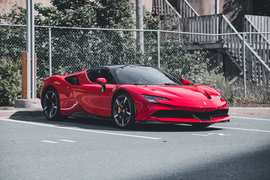 The 991.2 introduced a new 3.4-liter turbocharged engine, offering 370 hp in the base model or 420 hp in the Carrera S. Even in 370-hp trim, it delivered a broad band of torque and impressive efficiency. This Carrera also demonstrated that even on the standard wheel/tire