

Top 5 Porsche 911s That Defined a Generation: From Road Legend to Track Dominator
For over half a century, the Porsche 911 has stood as the benchmark for sports car performance, a machine that has continuously evolved while retaining its unmistakable soul. As someone who has dedicated decades to testing these German legends, the 911 has never ceased to amaze. It’s one of the few new cars I’d still buy with my own money today.
While the 911 has undergone massive transformations—from its earliest, rawest forms to the sophisticated, computer-aided masterpieces of the modern era—its allure has never faded. From the first time I laid hands on a classic Carrera to the recent experience with the jaw-dropping GT3 RS, the 911 has never stopped pulling at the heartstrings.
Throughout its history, the 911 has occasionally stumbled. The 964 era, in the early 1990s, momentarily cast doubt on the car’s continued relevance. But each time the 911 seemed poised to be left behind by the relentless march of technology, Porsche managed to polish the icon until it shone even brighter, remaining thrilling, engaging, and undeniably 911.
 After more than 40 years of driving Porsche 911s, I’ve narrowed down my list to five models that truly stand out as the most memorable. These are the cars that pushed the boundaries of what a road car could do, changed the course of the company, and cemented the 911’s legacy in the annals of automotive history.
The Raw Power: 1975 Porsche 930 Turbo
The original Porsche 911 Turbo, or 930, is a legend whispered among veteran enthusiasts in hushed, respectful tones. Back in its day, it was more than just a fast car; it was a rite of passage. Drivers spoke of the 930 with a mix of awe and trepidation, describing a car that demanded absolute focus and a heavy dose of bravery. Its twin-stage boost system meant there was no gentle transition into the powerband—it was a sudden, violent surge that tested even the most experienced drivers.
The original Porsche 930 was infamous for its aggressive handling characteristics. Corner-entry understeer gave way to explosive oversteer if the throttle wasn’t managed with surgical precision. It didn’t forgive mistakes; it punished them. This reputation as a widowmaker persisted for decades, and it took me 35 years to finally get behind the wheel of an original Porsche 930 Turbo and see for myself if the legend was true.
The car I drove was one of the very first 30 production Turbos ever built, now part of Porsche’s stunning classic collection. Out on the road, acutely aware of its fearsome reputation, I started cautiously. I played with the throttle, feeling the distinctive turbo lag build before the boost kicked in, trying to build a mental map of the power curve.
To my surprise, the engine was incredibly smooth at low revs. Cruising at 45 mph in top gear, the 911 Turbo settled into a comfortable murmur at around 2,000 rpm. However, once the engine hit 3,500 rpm, the experience transformed completely. The turbocharger roared to life, pumping 0.8 bar of boost into the intake system, and the acceleration was exhilarating. But the sledgehammer blow I had anticipated never truly materialized.
I quickly discovered the secret to driving the original 911 Turbo smoothly and quickly: keep the 3.0-liter flat-six spinning at 4,000 rpm or higher. This keeps the turbo spooled up, minimizing the delay between throttle input and power delivery. While turbo lag is very noticeable by modern standards, it is manageable once you adapt to it.
Even half a century later, this Porsche 930 is a staggeringly fast car. First gear reaches 50 mph, second gear pulls up to 90 mph, and third gear stretches past 130 mph. This means you can absolutely destroy most winding two-lane roads using only second and third gears. And even though it boasts a modest 256 horsepower, the car weighs just 2,513 pounds, making it remarkably agile in corners. In its day, this level of performance would have seemed almost extraterrestrial. The 930 Turbo is not just a car; it’s a historical milestone that every Porsche 911 enthusiast should experience.
The Purist’s Choice: 1996 Porsche 911 (993 Generation)
After more than 40 years of driving Porsche 911s, I’ve narrowed down my list to five models that truly stand out as the most memorable. These are the cars that pushed the boundaries of what a road car could do, changed the course of the company, and cemented the 911’s legacy in the annals of automotive history.
The Raw Power: 1975 Porsche 930 Turbo
The original Porsche 911 Turbo, or 930, is a legend whispered among veteran enthusiasts in hushed, respectful tones. Back in its day, it was more than just a fast car; it was a rite of passage. Drivers spoke of the 930 with a mix of awe and trepidation, describing a car that demanded absolute focus and a heavy dose of bravery. Its twin-stage boost system meant there was no gentle transition into the powerband—it was a sudden, violent surge that tested even the most experienced drivers.
The original Porsche 930 was infamous for its aggressive handling characteristics. Corner-entry understeer gave way to explosive oversteer if the throttle wasn’t managed with surgical precision. It didn’t forgive mistakes; it punished them. This reputation as a widowmaker persisted for decades, and it took me 35 years to finally get behind the wheel of an original Porsche 930 Turbo and see for myself if the legend was true.
The car I drove was one of the very first 30 production Turbos ever built, now part of Porsche’s stunning classic collection. Out on the road, acutely aware of its fearsome reputation, I started cautiously. I played with the throttle, feeling the distinctive turbo lag build before the boost kicked in, trying to build a mental map of the power curve.
To my surprise, the engine was incredibly smooth at low revs. Cruising at 45 mph in top gear, the 911 Turbo settled into a comfortable murmur at around 2,000 rpm. However, once the engine hit 3,500 rpm, the experience transformed completely. The turbocharger roared to life, pumping 0.8 bar of boost into the intake system, and the acceleration was exhilarating. But the sledgehammer blow I had anticipated never truly materialized.
I quickly discovered the secret to driving the original 911 Turbo smoothly and quickly: keep the 3.0-liter flat-six spinning at 4,000 rpm or higher. This keeps the turbo spooled up, minimizing the delay between throttle input and power delivery. While turbo lag is very noticeable by modern standards, it is manageable once you adapt to it.
Even half a century later, this Porsche 930 is a staggeringly fast car. First gear reaches 50 mph, second gear pulls up to 90 mph, and third gear stretches past 130 mph. This means you can absolutely destroy most winding two-lane roads using only second and third gears. And even though it boasts a modest 256 horsepower, the car weighs just 2,513 pounds, making it remarkably agile in corners. In its day, this level of performance would have seemed almost extraterrestrial. The 930 Turbo is not just a car; it’s a historical milestone that every Porsche 911 enthusiast should experience.
The Purist’s Choice: 1996 Porsche 911 (993 Generation)
 For Porsche purists, the 993-generation Porsche 911 represents the end of an era—the last air-cooled 911. It’s the Porsche you drive with the engine’s metallic roar reverberating right behind your head, the feel of the road transmitted directly to your hands through a skinny steering wheel. But when I first drove the 993 back in 1994, it wasn’t the end; it was the future. This was the 911 that finally challenged Isaac Newton’s laws with physics that felt modern and approachable.
Sure, the 993 still had that distinctly 911 character: the pat-pat-pattery front end that demanded to be loaded on corner entry to ensure you hit the apex, and the rear end still exhibited a lively rhumba through the rougher turns. But the mechanical symphony between the front and rear was infinitely more harmonious. The 993 still behaved like a 911, but with a much wider margin for error. It was the ultimate Porsche that bridged the gap between raw heritage and modern capability.
The secret behind this transformation lay in a groundbreaking rear suspension redesign. Porsche replaced the old semi-trailing arms with a new multilink setup. This was a quantum leap in 911 engineering. It allowed for subtle initial toe-out on corner entry, which then transitioned to progressive toe-in as lateral loads increased. This system dramatically reduced the camber change that had plagued the 911 since its introduction in 1963.
Combined with a new steering system—a quicker 2.5-turn lock-to-lock rack that made the front end feel incredibly decisive—the 993 felt more planted than ever. It was also equipped with a new six-speed manual transmission that made the most of the 3.6-liter flat-six. This engine was a marvel of precision engineering. Thanks to lighter internals, a Bosch Motronic 2.0 engine management system, and a new dual exhaust, it delivered 268 horsepower at 6,100 rpm with a smoothness and response that simply stunned me.
Compared to the 964 model it replaced, the 993 was a revelation. But it wasn’t just the technical upgrades, orchestrated under the leadership of Ulrich Bez, who later became the head of Aston Martin: the exterior redesign, led by design chief Harm Lagaay, corrected what he saw as the 964’s visual flaws—a front end he considered too tall and a rear end that appeared dragged down. The interior was cleaner and more logical, with fewer buttons scattered randomly.
The 993 was a Porsche 911 that was faster, more forgiving, and significantly more desirable. It was, and still is, the perfect air-cooled Porsche that many enthusiasts believe is the purest embodiment of the 911 DNA. Its timeless design and visceral driving experience have made it one of the most sought-after classic Porsches on the market today.
The Revolution: 1996 Porsche 911 (996 Generation)
At the time, Porsche’s decision to install a water-cooled flat-six in the 996-series 911 was considered nothing short of heresy. To the aficionados, it was the automotive equivalent of Bob Dylan trading his six-string acoustic for a Fender Stratocaster at the 1965 Newport Folk Festival—a betrayal of tradition. Yet, the 996, the first clean-sheet redesign of Porsche’s indefatigable sports car in 34 years, was a hero car to me. More than just a new model, the 996 was the 911 that saved Porsche from financial ruin.
For Porsche purists, the 993-generation Porsche 911 represents the end of an era—the last air-cooled 911. It’s the Porsche you drive with the engine’s metallic roar reverberating right behind your head, the feel of the road transmitted directly to your hands through a skinny steering wheel. But when I first drove the 993 back in 1994, it wasn’t the end; it was the future. This was the 911 that finally challenged Isaac Newton’s laws with physics that felt modern and approachable.
Sure, the 993 still had that distinctly 911 character: the pat-pat-pattery front end that demanded to be loaded on corner entry to ensure you hit the apex, and the rear end still exhibited a lively rhumba through the rougher turns. But the mechanical symphony between the front and rear was infinitely more harmonious. The 993 still behaved like a 911, but with a much wider margin for error. It was the ultimate Porsche that bridged the gap between raw heritage and modern capability.
The secret behind this transformation lay in a groundbreaking rear suspension redesign. Porsche replaced the old semi-trailing arms with a new multilink setup. This was a quantum leap in 911 engineering. It allowed for subtle initial toe-out on corner entry, which then transitioned to progressive toe-in as lateral loads increased. This system dramatically reduced the camber change that had plagued the 911 since its introduction in 1963.
Combined with a new steering system—a quicker 2.5-turn lock-to-lock rack that made the front end feel incredibly decisive—the 993 felt more planted than ever. It was also equipped with a new six-speed manual transmission that made the most of the 3.6-liter flat-six. This engine was a marvel of precision engineering. Thanks to lighter internals, a Bosch Motronic 2.0 engine management system, and a new dual exhaust, it delivered 268 horsepower at 6,100 rpm with a smoothness and response that simply stunned me.
Compared to the 964 model it replaced, the 993 was a revelation. But it wasn’t just the technical upgrades, orchestrated under the leadership of Ulrich Bez, who later became the head of Aston Martin: the exterior redesign, led by design chief Harm Lagaay, corrected what he saw as the 964’s visual flaws—a front end he considered too tall and a rear end that appeared dragged down. The interior was cleaner and more logical, with fewer buttons scattered randomly.
The 993 was a Porsche 911 that was faster, more forgiving, and significantly more desirable. It was, and still is, the perfect air-cooled Porsche that many enthusiasts believe is the purest embodiment of the 911 DNA. Its timeless design and visceral driving experience have made it one of the most sought-after classic Porsches on the market today.
The Revolution: 1996 Porsche 911 (996 Generation)
At the time, Porsche’s decision to install a water-cooled flat-six in the 996-series 911 was considered nothing short of heresy. To the aficionados, it was the automotive equivalent of Bob Dylan trading his six-string acoustic for a Fender Stratocaster at the 1965 Newport Folk Festival—a betrayal of tradition. Yet, the 996, the first clean-sheet redesign of Porsche’s indefatigable sports car in 34 years, was a hero car to me. More than just a new model, the 996 was the 911 that saved Porsche from financial ruin.
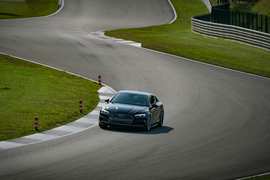 The Porsche 996 was engineered and developed under the direction of Porsche R&D chief Horst Marchart. It was an incredibly clever 911, not least because it shared 38 percent of its components with an all-new, less expensive mid-engine roadster that the world would soon come to know as the Boxster. Iconoclastic Porsche boss Wendelin Weideking knew the Boxster was essential to give dealers something to sell when the aging 928 and 968 models were discontinued. Design boss Lagaay summed it up perfectly with a smile after the company unveiled the 996: “We did two cars for the price of one-and-a-half.”