



The Pinnacle of Automotive Engineering: A Deep Dive into the World’s 10 Best Supercars and Hypercars
In the rarefied atmosphere where horsepower meets art, the distinction between a supercar and a hypercar often becomes a whisper on the wind. These automotive titans aren’t just machines; they are declarations of intent, extensions of the human psyche translated into carbon fiber, titanium, and blistering speed. Defining a precise threshold where a supercar transforms into a hypercar is a fool’s errand, yet we can agree that the cars that dominate these elite rankings transcend the ordinary. They possess an almost otherworldly grace, an aggressive beauty, and performance metrics that warp the fabric of physics.
For over a decade, car enthusiasts, engineers, and collectors have been captivated by the escalating battle for dominance at the cutting edge of automotive technology. From the heart-stopping acceleration of a Bugatti to the surgical precision of a McLaren, the 2025 automotive landscape showcases a maturity in engineering that previous generations could only dream of. This year, the arena is dominated by hybrids, electrification, and extreme aerodynamics, forcing even the titans of the past to evolve or fade away.
As we analyze the absolute apex of automotive excellence, we look beyond raw numbers. We examine the fusion of heritage and innovation, the artistry of design, and the psychology of the driver seeking the ultimate driving experience. This is not just a list of fast cars; it is a curated journey through the most desirable, most powerful, and most aspirational vehicles on the planet.
The Reigning Monarch: Bugatti Chiron
No conversation about automotive royalty is complete without acknowledging the legacy of Bugatti. The Chiron, the esteemed successor to the legendary Veyron, continues to define what a hypercar should be. It represents a watershed moment in automotive history, where the pursuit of ultimate speed finally met the demands of luxury and refinement.
The Chiron’s engineering philosophy is a masterclass in automotive overkill. At its heart beats the iconic W16 engine, a quad-turbocharged masterpiece that produces a staggering 1,500 horsepower at 6,000 rpm. This monumental power plant allows the Chiron to accelerate from 0 to 60 mph in approximately 2.4 seconds, pushing the boundaries of what was once thought possible for road-legal vehicles. Its top speed of 261 mph is governed, but with aerodynamic optimization, the Chiron is capable of reaching speeds upwards of 271 mph, leaving other hypercars gasping in its wake.
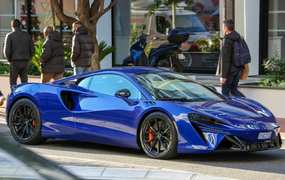 However, the Chiron is more than just a straight-line monster. Its advanced chassis control system and all-wheel-drive architecture ensure that this immense power is manageable. The driving experience is a paradox: simultaneously brutal and delicate. The cabin is a testament to Bugatti’s commitment to craftsmanship, featuring exquisite leather, meticulously machined aluminum, and a design that is both minimalist and sophisticated.
Production of the Chiron is capped at just 500 units, each a rolling work of art that commands a significant investment. While the standard model starts around $3 million, customizations and special editions can push the price far higher. The Bugatti Chiron is not just a car; it is a statement of power, precision, and unparalleled luxury.
The Track Weapon: Bugatti Bolide
While the Chiron represents the pinnacle of road-going hypercars, Bugatti introduced a machine specifically designed for the racetrack: the Bolide. This radical creation represents a distillation of Bugatti’s engineering prowess into a raw, track-focused experience that pushes the absolute limits of performance.
The Bolide is an entirely different beast from the Chiron. Its construction is centered around an ultra-lightweight carbon fiber monocoque and body panels, resulting in an astonishing power-to-weight ratio. At its heart is an uprated 8.0-liter W16 engine, capable of producing 1,600 horsepower when fueled with high-octane racing fuel. This immense power allows the Bolide to theoretically achieve speeds of nearly 310 mph (499 km/h), although official testing has demonstrated slightly lower but still breathtaking results.
The design of the Bolide is a departure from Bugatti’s traditional elegance. It is aggressively aerodynamic, featuring a low-slung body, massive air intakes, and a prominent rear wing that generates enormous downforce. Looking at the Bolide, one could easily mistake it for a prototype from a racing video game—a testament to its extreme capabilities.
Bugatti has limited the production of the Bolide to just 40 units, ensuring its exclusivity. The price for this track-only marvel starts at approximately $4.7 million, reflecting the extreme engineering and scarcity of the machine. The Bolide is not for the faint of heart; it is a machine built for those who seek the ultimate track experience without compromise.
The Hybrid Pioneer: McLaren Speedtail
McLaren has long been synonymous with Formula 1 technology and lightweight engineering, and the Speedtail is the ultimate embodiment of that philosophy. This hybrid hypercar represents a fusion of cutting-edge performance and futuristic design, pushing the boundaries of what is possible for both electric and gasoline-powered vehicles.
The Speedtail’s most striking feature is its aerodynamic profile, often referred to as a “hyper-GT” due to its blend of high performance and long-distance capability. Its teardrop-shaped body is designed to minimize drag, allowing it to achieve a breathtaking top speed of 250 mph (403 km/h).
Powering the Speedtail is a hybrid powertrain that combines a twin-turbocharged 4.0-liter V8 engine with an electric motor. The combined output reaches a massive 1,050 horsepower, propelling the car from 0 to 60 mph in a blistering 2.9 seconds. This rapid acceleration is complemented by a comfortable and luxurious interior, featuring an innovative central driving position with two passenger seats located behind, echoing the classic McLaren F1 layout.
McLaren has produced only 106 units of the Speedtail, making it an extremely rare and desirable collectible. The price for this exceptional hybrid exceeds $2 million, depending on the level of customization and specification chosen by the discerning buyer.
However, the Chiron is more than just a straight-line monster. Its advanced chassis control system and all-wheel-drive architecture ensure that this immense power is manageable. The driving experience is a paradox: simultaneously brutal and delicate. The cabin is a testament to Bugatti’s commitment to craftsmanship, featuring exquisite leather, meticulously machined aluminum, and a design that is both minimalist and sophisticated.
Production of the Chiron is capped at just 500 units, each a rolling work of art that commands a significant investment. While the standard model starts around $3 million, customizations and special editions can push the price far higher. The Bugatti Chiron is not just a car; it is a statement of power, precision, and unparalleled luxury.
The Track Weapon: Bugatti Bolide
While the Chiron represents the pinnacle of road-going hypercars, Bugatti introduced a machine specifically designed for the racetrack: the Bolide. This radical creation represents a distillation of Bugatti’s engineering prowess into a raw, track-focused experience that pushes the absolute limits of performance.
The Bolide is an entirely different beast from the Chiron. Its construction is centered around an ultra-lightweight carbon fiber monocoque and body panels, resulting in an astonishing power-to-weight ratio. At its heart is an uprated 8.0-liter W16 engine, capable of producing 1,600 horsepower when fueled with high-octane racing fuel. This immense power allows the Bolide to theoretically achieve speeds of nearly 310 mph (499 km/h), although official testing has demonstrated slightly lower but still breathtaking results.
The design of the Bolide is a departure from Bugatti’s traditional elegance. It is aggressively aerodynamic, featuring a low-slung body, massive air intakes, and a prominent rear wing that generates enormous downforce. Looking at the Bolide, one could easily mistake it for a prototype from a racing video game—a testament to its extreme capabilities.
Bugatti has limited the production of the Bolide to just 40 units, ensuring its exclusivity. The price for this track-only marvel starts at approximately $4.7 million, reflecting the extreme engineering and scarcity of the machine. The Bolide is not for the faint of heart; it is a machine built for those who seek the ultimate track experience without compromise.
The Hybrid Pioneer: McLaren Speedtail
McLaren has long been synonymous with Formula 1 technology and lightweight engineering, and the Speedtail is the ultimate embodiment of that philosophy. This hybrid hypercar represents a fusion of cutting-edge performance and futuristic design, pushing the boundaries of what is possible for both electric and gasoline-powered vehicles.
The Speedtail’s most striking feature is its aerodynamic profile, often referred to as a “hyper-GT” due to its blend of high performance and long-distance capability. Its teardrop-shaped body is designed to minimize drag, allowing it to achieve a breathtaking top speed of 250 mph (403 km/h).
Powering the Speedtail is a hybrid powertrain that combines a twin-turbocharged 4.0-liter V8 engine with an electric motor. The combined output reaches a massive 1,050 horsepower, propelling the car from 0 to 60 mph in a blistering 2.9 seconds. This rapid acceleration is complemented by a comfortable and luxurious interior, featuring an innovative central driving position with two passenger seats located behind, echoing the classic McLaren F1 layout.
McLaren has produced only 106 units of the Speedtail, making it an extremely rare and desirable collectible. The price for this exceptional hybrid exceeds $2 million, depending on the level of customization and specification chosen by the discerning buyer.
 The Lightweight Powerhouse: Aston Martin Valkyrie
From the collaboration between Aston Martin and Red Bull Racing’s Adrian Newey, the Aston Martin Valkyrie was born—a hypercar conceived to bridge the gap between the racetrack and the road. This hybrid beast represents the pinnacle of lightweight engineering and aerodynamic optimization.
The Valkyrie is astonishingly lightweight, tipping the scales at just 2,300 pounds (1,030 kg). This low curb weight, combined with its hybrid powertrain, results in a performance that borders on the supernatural. The heart of the Valkyrie is a 6.5-liter naturally aspirated V12 engine developed by Cosworth, delivering a staggering 1,176 horsepower.
This immense power allows the Valkyrie to accelerate from 0 to 60 mph in approximately 2.5 seconds, and its advanced aerodynamics enable it to exceed 250 mph (400 km/h). The cabin features a minimalist, fighter-jet-inspired design with upward-opening doors, adding to the car’s dramatic presence.
Aston Martin plans to produce only 175 units of the Valkyrie, and the starting price exceeds $3.2 million. The demand has been astronomical, with all units reportedly sold out to pre-order customers. The Valkyrie is a testament to what can be achieved when the world’s most talented aerodynamicist collaborates with a luxury carmaker.
The Power-to-Weight Equation: Koenigsegg One:1
Koenigsegg, the Swedish automaker renowned for pushing the boundaries of automotive engineering, introduced a concept that defined the term “extreme.” The One:1, as its name suggests, is engineered to achieve a perfect 1:1 ratio of power to weight—600 horsepower per metric ton, which translates to approximately 1,360 horsepower and 1,360 kilograms (2,998 pounds).
This incredible balance of power and lightness allows the One:1 to achieve astonishing performance figures. It accelerates from 0 to 60 mph in just 2.6 seconds, and its theoretical top speed is an astonishing 273 mph (440 km/h). Unlike many modern hypercars that rely on complex aerodynamic aids, the One:1 features a prominent rear wing that generates substantial downforce, essential for stability at such extreme speeds.
Production of the One:1 was strictly limited to just seven units, making it one of the most exclusive hypercars ever produced. Each car commands a price of over $2 million, solidifying its place as an icon of automotive engineering and collector desirability.
The Speed Demon: Koenigsegg Jesko Absolute
While the One:1 was groundbreaking, Koenigsegg didn’t stop there. The company’s pursuit of ultimate speed culminated in the development of the Jesko Absolute, a hypercar engineered to challenge the 300 mph barrier. The Jesko is a testament to Koenigsegg’s relentless drive to push the limits of performance and aerodynamics.
At the heart of the Jesko Absolute lies a 5.0-liter twin-turbocharged V8 engine that can produce a staggering 1,622 horsepower when running on E85 fuel. This immense power allows the Jesko to theoretically reach speeds of 330 mph (531 km/h). While this record is yet to be officially confirmed, the car’s aerodynamic design suggests that it is more than capable of achieving such speeds under ideal conditions.
The Lightweight Powerhouse: Aston Martin Valkyrie
From the collaboration between Aston Martin and Red Bull Racing’s Adrian Newey, the Aston Martin Valkyrie was born—a hypercar conceived to bridge the gap between the racetrack and the road. This hybrid beast represents the pinnacle of lightweight engineering and aerodynamic optimization.
The Valkyrie is astonishingly lightweight, tipping the scales at just 2,300 pounds (1,030 kg). This low curb weight, combined with its hybrid powertrain, results in a performance that borders on the supernatural. The heart of the Valkyrie is a 6.5-liter naturally aspirated V12 engine developed by Cosworth, delivering a staggering 1,176 horsepower.
This immense power allows the Valkyrie to accelerate from 0 to 60 mph in approximately 2.5 seconds, and its advanced aerodynamics enable it to exceed 250 mph (400 km/h). The cabin features a minimalist, fighter-jet-inspired design with upward-opening doors, adding to the car’s dramatic presence.
Aston Martin plans to produce only 175 units of the Valkyrie, and the starting price exceeds $3.2 million. The demand has been astronomical, with all units reportedly sold out to pre-order customers. The Valkyrie is a testament to what can be achieved when the world’s most talented aerodynamicist collaborates with a luxury carmaker.
The Power-to-Weight Equation: Koenigsegg One:1
Koenigsegg, the Swedish automaker renowned for pushing the boundaries of automotive engineering, introduced a concept that defined the term “extreme.” The One:1, as its name suggests, is engineered to achieve a perfect 1:1 ratio of power to weight—600 horsepower per metric ton, which translates to approximately 1,360 horsepower and 1,360 kilograms (2,998 pounds).
This incredible balance of power and lightness allows the One:1 to achieve astonishing performance figures. It accelerates from 0 to 60 mph in just 2.6 seconds, and its theoretical top speed is an astonishing 273 mph (440 km/h). Unlike many modern hypercars that rely on complex aerodynamic aids, the One:1 features a prominent rear wing that generates substantial downforce, essential for stability at such extreme speeds.
Production of the One:1 was strictly limited to just seven units, making it one of the most exclusive hypercars ever produced. Each car commands a price of over $2 million, solidifying its place as an icon of automotive engineering and collector desirability.
The Speed Demon: Koenigsegg Jesko Absolute
While the One:1 was groundbreaking, Koenigsegg didn’t stop there. The company’s pursuit of ultimate speed culminated in the development of the Jesko Absolute, a hypercar engineered to challenge the 300 mph barrier. The Jesko is a testament to Koenigsegg’s relentless drive to push the limits of performance and aerodynamics.
At the heart of the Jesko Absolute lies a 5.0-liter twin-turbocharged V8 engine that can produce a staggering 1,622 horsepower when running on E85 fuel. This immense power allows the Jesko to theoretically reach speeds of 330 mph (531 km/h). While this record is yet to be officially confirmed, the car’s aerodynamic design suggests that it is more than capable of achieving such speeds under ideal conditions.
 Despite its immense power, Koenigsegg has managed to keep the weight remarkably