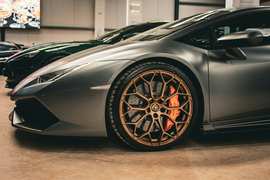
From Track Dominance to Showroom Success: Elite Sports Cars Inheriting Motorsport Legacy
As an automotive insider with a decade of hands-on experience in the high-stakes world of specialty vehicles, I have observed firsthand the fundamental connection that binds elite sports cars with the demanding arena of motorsport. This relationship transcends mere aesthetic mimicry; it signifies the intelligent application of pure engineering innovation honed under intense pressure to deliver an unadulterated sense of performance to the discerning driver. This deep examination explores ten extraordinary production vehicles that embody the indelible DNA of competitive racing, offering an exhilarating connection to the machines that push the boundaries of automotive performance. We will analyze how the crucibles of motorsport development enrich the experience of enthusiasts on public roads, culminating in a curated compilation of automobiles where the spirit of competition truly thrives.
The very essence of automotive progress is inextricably linked to the roar of engines on the track. Motorsport serves as the ultimate proving ground, a high-stakes laboratory where engineers are compelled to innovate under extreme duress. The relentless pursuit of victory necessitates pushing materials, aerodynamics, and powertrain technology to their absolute limits. What emerges from this intense environment isn’t confined to the winner’s circle; it inevitably trickles down, refining the cars we encounter daily. From the sophisticated aerodynamic profiles that enhance stability at speed to the lightweight composites that improve efficiency and handling, the lessons learned in the heat of competition translate directly into superior road-going vehicles. Even fundamental technologies like disc brakes and paddle shifters, now ubiquitous, owe their origins to the demands of racing circuits.
Beyond engineering prowess, motorsport success acts as a powerful brand accelerant. When a manufacturer’s racing division achieves dominance, its road-going counterparts gain an aura of desirability and performance credibility. This \”win on Sunday, sell on Monday\” philosophy, a cornerstone of automotive marketing for decades, is experiencing a robust resurgence. While the average consumer may never pilot a Formula 1 challenger or a Le Mans Prototype, the presence of race-bred powertrains under the hood of production cars allows them to participate vicariously in that thrilling world. This infusion of motorsport spirit transforms mundane commutes into moments of exhilaration, blurring the lines between the everyday and the extraordinary. The market for high-performance vehicles, especially race cars for sale, remains strong as enthusiasts seek direct connections to these iconic lineages.
From Race-Winning Technology to Street-Legal Thrills: A Comprehensive Analysis
The influence of motorsport on automotive engineering is a narrative of continuous evolution. Every victory, every lap, every innovative solution contributes to a richer tapestry of automotive capability. Let’s explore some iconic examples where this direct lineage from the track to the showroom is most evident, showcasing how the relentless pursuit of speed and performance has shaped some of the most compelling sports cars with racing heritage ever built.
The Art of the Engine Swap: A Deep Dive into Racing Powerplants in Production Cars
For an enthusiast with over ten years immersed in the world of rare sports cars and performance modifications, one of the most compelling aspects of these automotive legends is the direct translation of motorsport-developed engines into street-legal vehicles. The development of performance car engines for racing is a brutal process, eliminating the luxury of compromise that often plagues road cars. This pressure-cooker environment forces engineers to push materials and thermal dynamics to their absolute breaking points, often resulting in powerplants that are not only incredibly powerful but also have a raw, mechanical character rarely found in conventional production vehicles.
Consider the engineering challenges associated with transferring a Formula 1 engine to a road-legal car. The Formula 1 engine cost is astronomical, and the engine is designed for an ultra-short lifespan—often just a few hundred kilometers—under highly controlled conditions. Adapting such a design for street use requires extensive re-engineering of cooling systems, lubrication, and durability, often necessitating concessions to meet strict emissions and drivability standards. For example, while Formula 1 engines in the 1980s were turbocharged beasts pushing well over 1,000 horsepower, their road-legal equivalents, such as the Ferrari F50, had to be significantly re-tuned to operate reliably for thousands of kilometers. This adaptation, however, often retains much of the original racing engine’s ferocity and high-revving character, making the road car an extension of the racetrack itself.
Furthermore, the transition of NASCAR engine technology to street cars provides another compelling case study. The Plymouth Hemi engine for sale is a prime example. The original 426 Hemi was essentially a race engine built for stock car racing, essentially creating a factory hot rod that dominated the tracks of the 1960s. The manufacturing of these sports cars with racing DNA often involved partnerships with racing teams and divisions, such as BMW’s M division development of the BMW M3 price and BMW M1 engine, which were direct derivatives of their racing endeavors.
Alfa Romeo Montreal: The V8 Heartbeat of a Sports Prototype
The Alfa Romeo Montreal stands as a testament to the enduring appeal of a sonorous V8 engine. Nestled beneath its sculpted hood lies a 2.6-liter V8, a powerplant with direct lineage to Alfa Romeo’s formidable Tipo 33 sports prototype. This endurance racer was a regular competitor in legendary events like the Targa Florio and the grueling 24 Hours of Daytona, embodying the pinnacle of sports car racing in its era. While recalibrated for street legality and comfort, the Montreal’s V8 retains a significant portion of its motorsport character. It eagerly spins to 7,000 RPM, delivering a spirited 200 horsepower that, when combined with its striking design, cemented the Montreal’s status as an understated yet potent icon of the Alfa Romeo marque. This vehicle exemplifies how exotic racing technology can be successfully adapted for consumer enjoyment, offering a unique blend of performance and Italian flair.
The evolution of this V8 from the race track to the showroom is a prime example of Alfa Romeo’s engineering philosophy. The Tipo 33 prototype was a technological marvel for its time, featuring advanced aerodynamics and a lightweight construction that allowed it to compete effectively against powerful American competitors. The adaptation of this engine to the Montreal was a strategic decision to offer a high-performance vehicle that still retained a level of practicality and drivability suitable for daily use. This move was ahead of its time, foreshadowing the trend of manufacturers incorporating motorsport technology into their road cars to meet increasing consumer demand for performance.
BMW’s M Division: Engineering Excellence Forged in Competition
BMW’s M division, synonymous with performance, has consistently leveraged its motorsport heritage to create automotive legends. The iconic BMW M1, a mid-engined marvel, was powered by the legendary 3.5-liter inline-six M88 engine. This powerplant was a direct offshoot of BMW’s highly successful racing programs, most notably finding a home in the M1 ProCar series. This racing pedigree wasn’t confined to a single model; the M88 engine later found its way into the esteemed E24 M6 and E28 M5, bestowing them with exceptional performance capabilities. Furthermore, the four-cylinder S14 engine that propelled the E30 M3, a titan of touring car racing, drew significant inspiration from the M88 and the turbocharged M12 Formula 1 engines. This cross-pollination of engineering across different racing disciplines and production cars highlights BMW’s commitment to transferring championship-winning technology directly to its performance vehicles, solidifying its reputation for producing driver-focused automobiles. The development of the BMW M3 price and the availability of high-performance parts for these classic models continue to attract enthusiasts seeking authentic motorsport experiences.
The legacy of BMW’s M division is particularly evident in the M3 price market. As one of the most successful touring cars in history, the E30 M3 has become a highly sought-after collector’s item. Its iconic silhouette and racing provenance make it a favorite among enthusiasts seeking rare performance cars. The availability of performance car engines and parts for these vehicles continues to attract interest from collectors looking to restore or modify these classics.
Chevrolet Camaro ZL1: A Can-Am Beast Unleashed on the Streets
The 1969 Chevrolet Camaro ZL1 represents a bold fusion of racing ambition and street-legal muscle. Its heart is a formidable 427 cubic-inch (7.0-liter) V8, an engine originally conceived for the demanding world of Can-Am racing. This all-aluminum powerhouse, remarkable for its era, was engineered for extreme performance. While capable of an astonishing 500 horsepower in its race trim, the road-going version was artfully detuned to a still-impressive 430 horsepower. The ZL1 package transformed the Camaro from a mere pony car into a legitimate drag strip terror, a street-legal monster capable of exhilarating acceleration. This engine’s prowess also extended to the competitive arena, finding its way into various race cars competing in the SCCA Trans-Am series. With a production run of only 69 units, the Camaro ZL1 remains an exceptionally rare and highly coveted collector’s item, a tangible link to an era of uncompromising American performance. For collectors and enthusiasts interested in the Chevrolet Camaro ZL1 price, it represents a significant investment in automotive history.
The development of the Camaro ZL1 showcases Chevrolet’s commitment to offering customers the highest level of performance. By adapting the Can-Am racing engine for street use, Chevrolet effectively offered a race car for the masses. The ZL1’s rarity has only added to its mystique, making it one of the most desirable muscle cars ever produced. The Chevrolet Camaro ZL1 price has